
InteleGates Guide
Commercial Gate Access Control Systems Planning Guide
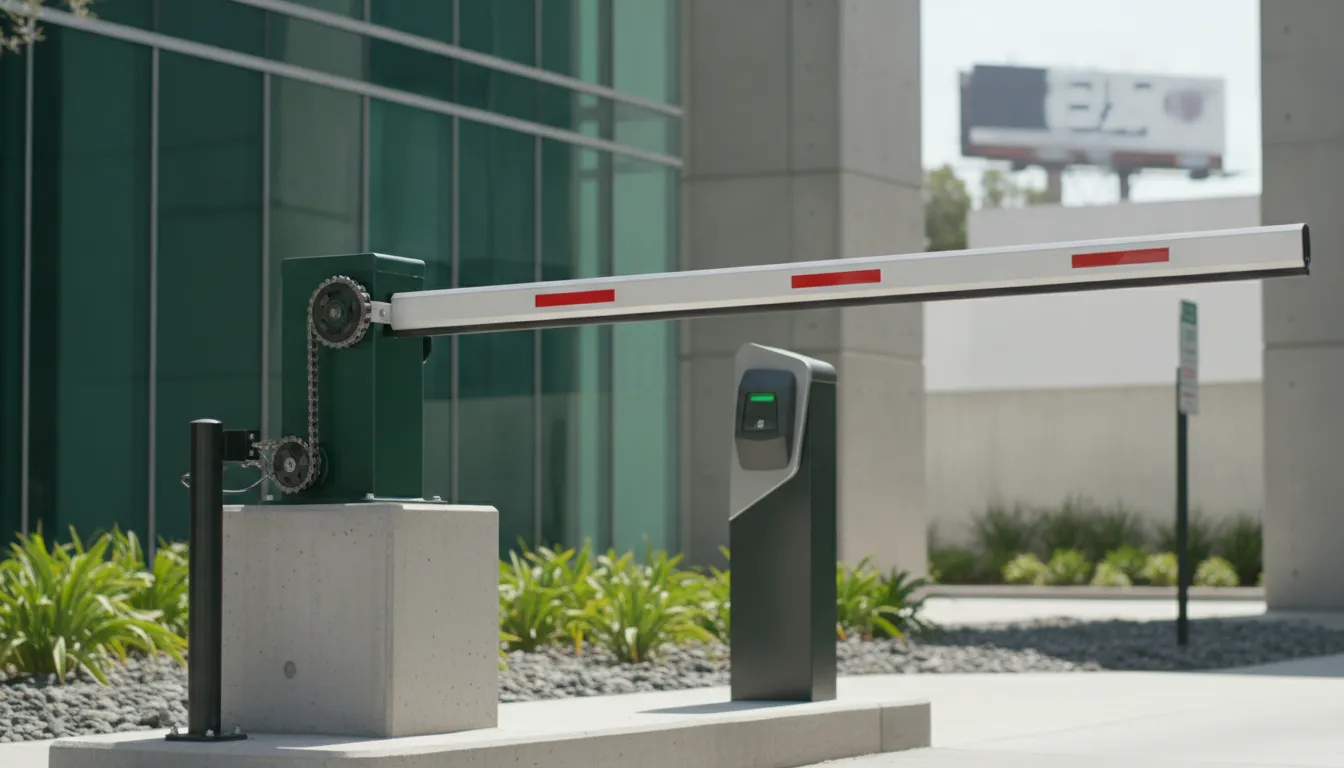
Commercial properties rarely have one access need. An office may need controlled employee entry, while a warehouse, parking facility, or multi-tenant site must also manage visitors, deliveries, peak traffic, and after-hours access. The electric motor and operator are central to making that movement reliable.
Commercial gate access control systems combine user credentials, visitor communication, vehicle detection, access hardware, and an electric gate operator to manage who enters and exits a property. The right plan matches those components to traffic volume, site layout, user groups, and daily operations.
Planning starts before anyone selects a keypad, card reader, intercom, or barrier arm. First, clarify how people and vehicles move through the property, then build the access system around those real operating conditions. That foundation makes the system easier to use, maintain, and expand across Los Angeles and Orange County properties.
Talk with InteleGates about your commercial access plan
What Are Commercial Gate Access Control Systems?
Commercial gate access control systems coordinate who can enter or leave a property, when access is allowed, and how the gate responds. They support offices, industrial sites, parking facilities, and multi-tenant properties where entry must work reliably throughout the day.
A complete system is more than a keypad or card reader. It connects the person or vehicle requesting access with an access controller, the electric gate motor or operator, and the equipment that confirms safe movement. Property managers can then plan access around employees, tenants, deliveries, visitors, and changing operating hours. For a broader service overview, explore commercial gate access control systems.
Credentials Start the Access Request
Credentials identify the person, vehicle, or visitor requesting entry. Depending on the property, that may be a keypad code, key card, RFID credential, remote control, intercom call, or telephone entry system. Each method serves a different workflow. Employees may need repeatable daily access, while visitors may need an invitation and a way to contact a tenant or office.
The controller applies the property rules. It determines whether a credential is active, whether the request falls within an approved schedule, and whether the entry should be recorded or passed to another step. This creates a consistent process instead of relying on one shared control for every user.
The Controller and Operator Work Together
The access controller sends an authorized command to the electric motor or operator. The operator then moves the gate through its intended cycle. This relationship is central to reliable performance. A sophisticated credential system cannot compensate for an operator that is poorly matched to the traffic pattern or site layout.
Exit logic may use a vehicle detector, a request-to-exit device, or another approved control. Loop detectors can help recognize a vehicle at the entrance or exit, while safety sensors help prevent movement when an obstruction is present. The final design should account for manufacturer requirements and applicable safety standards. InteleGates focuses on integrating access equipment with the gate motor and operator, so the system functions as one coordinated installation.
Start With Traffic Flow and Property Operations
The right access plan begins with how people and vehicles move through the property. Equipment selection comes later. First, map the daily operation so the electric gate motor, entry credentials, and vehicle controls support the site instead of slowing it down.
- Map every entry and exit. Identify vehicle entrances, pedestrian access points, delivery approaches, emergency access routes, and any lane that serves both entry and exit. Note where vehicles may queue, turn, stop, or cross another traffic path. A clear map exposes conflicts before they influence the system design.
- Mark normal and peak periods. Record when employees arrive, tenants leave, deliveries occur, visitors check in, and shift changes create concentrated traffic. A parking facility may need fast throughput during commuting hours, while a warehouse may see its busiest movement around loading schedules. The gate operator and access method should reflect real cycle demands.
- Separate user groups and their routines. Employees, tenants, guests, vendors, couriers, and property staff may need different entry experiences. Decide who needs recurring credentials, who needs temporary access, and who requires a call-based visitor process. Keypads, cards, RFID, remote controls, intercoms, and telephone entry can each support a different workflow.
- Match the plan to the property type. Offices, industrial sites, parking facilities, and multi-tenant properties do not move people in the same way. Consider vehicle volume, lane width, turning space, visibility, hours of operation, and whether the site uses a barrier arm, sliding gate, swing gate, overhead operator, or vertical-lift arrangement.
- Plan for operational continuity. Ask what happens during a power interruption, network issue, credential problem, delivery surge, or service call. Define who manages access, how visitors are handled, and which entry must remain available for essential operations. Scheduling and remote administration can help teams manage changing hours without relying on a single person at the gate.
- Review the operator and controls as one system. Access control must communicate reliably with the electric gate operator. Vehicle detection, safety sensors, and the selected access hardware should be evaluated together by a qualified professional. Durable commercial equipment and professional integration matter most where daily use is frequent.
This planning sequence gives property owners a practical basis for commercial gate access control systems. It also helps an installer recommend an operator and traffic arrangement that fit the property, rather than forcing the property to fit a product.
Which Credentials and Visitor Methods Fit Your Site?
The right entry method depends on who arrives, how often they arrive, and how much control a manager needs after installation. Employees may need fast, repeatable entry. Tenants may need individually managed credentials. Vendors and visitors often need access limited by time, location, or an approved contact.
Commercial gate access control systems work best when the credential matches the daily movement of each user group. The access device also needs dependable communication with the electric gate motor and operator. A well-planned system keeps entry practical without forcing every user through the same process.
| Method | Best fit | Planning consideration |
|---|---|---|
| Keypad | Employees, contractors, and recurring vendors | Use separate codes or code policies when access needs to be assigned and changed by user group. |
| Key card | Office staff, tenants, and managed facilities | Individual cards make it easier to manage permissions when people join, leave, or change roles. |
| RFID | Frequent vehicle users and hands-free entry | Consider traffic flow, reader placement, and reliable vehicle recognition at the approach. |
| Remote control | Authorized managers, owners, and assigned drivers | Choose a process for issuing, replacing, and revoking remotes as personnel or vehicles change. |
| Intercom | Unscheduled visitors, deliveries, and guests | Place the call point where a visitor can stop safely and reach the responsible person. |
| Telephone entry | Multi-tenant properties and visitor approval | Tenants can identify callers and authorize entry through a familiar communication channel. |
Match the method to the responsibility
Keypads are practical when a team shares a defined entry routine, while cards are better when each person needs a distinct credential. Review the options for key card gate access if your property needs clearer user-level management. RFID can reduce stops for approved vehicles, but the approach must support consistent reads and safe vehicle movement.
Remotes can serve managers or designated drivers who need direct control. They should not become the only visitor process. An intercom gives guests, delivery personnel, and vendors a way to request access without distributing permanent credentials. For apartment communities and other multi-tenant properties, telephone entry can connect a visitor with the appropriate resident or office.
Many properties combine methods. For example, employees may use cards or RFID, managers may carry remotes, and visitors may use an intercom or telephone entry. A gate keypad entry system may support vendors while keeping visitor approval separate. The final design should account for user turnover, operating hours, traffic volume, and how the credential system communicates with the commercial operator.
Match the Access System to the Electric Gate Operator
The access platform is only as dependable as the electric operator receiving its commands. For commercial gate access control systems, the reader, keypad, remote, intercom, or telephone entry unit must communicate reliably with the motor and its control board. The right pairing also needs to support the property's traffic pattern, vehicle types, and operating schedule.
Start by identifying how the entrance functions throughout a typical day:
- Barrier arms: Parking facilities and other high-traffic entrances often benefit from fast-acting barrier arm operators. They control vehicle lanes efficiently while allowing authorized drivers to proceed without waiting for a full gate panel to move.
- Sliding operators: Sliding gate operators suit entrances where the gate travels laterally along a fence line. The access system should be selected around the operator's duty cycle and the volume of daily openings.
- Swing operators: Swing gate operators work where the gate can move inward or outward through a clear arc. Heavy commercial gates require an operator with enough capacity for dependable movement, along with access hardware that does not create unnecessary delays.
- Overhead operators: Overhead gate operators can support properties with limited side clearance. Their access controls should be coordinated with the operator's movement and the site's vehicle flow.
- Vertical lift operators: Vertical lift systems can serve locations where horizontal travel is impractical. Their control arrangement must account for the operator's complete travel cycle and the way vehicles approach and leave the entrance.
These categories are planning references, not interchangeable product labels. A credential reader may authorize entry, but the operator determines how the entrance responds. Vehicle detection, safety sensors, release behavior, and control-board compatibility all need to work together. Loop detectors can help recognize when a vehicle is present, while professional integration helps prevent commands from conflicting with the operator's safety functions.
For a closer look at operator options, review electric gate systems. An experienced technician can assess the motor, access hardware, traffic demands, and site layout as one system. That approach is especially important for offices, warehouses, parking facilities, and multi-tenant properties in Los Angeles and Orange County, where a poorly matched operator can disrupt daily operations.
Build Safety, Vehicle Detection, and Continuity Into the Plan
A commercial access plan is incomplete until it explains how the gate responds to vehicles, people, power changes, and unexpected conditions. Access credentials may authorize an entry, but the electric motor and operator must execute that command safely and consistently. The controller, detection devices, safety sensors, and operator should be planned as one working system.
Coordinate sensors and vehicle detection
Vehicle detection loops can help the system recognize when a vehicle is present in the travel area. That information supports safer gate behavior, including preventing an unwanted closing cycle while a vehicle remains in the monitored zone. Safety sensors add another layer by detecting an obstruction or unsafe condition near the moving gate mechanism.
The right arrangement depends on lane layout, gate type, traffic direction, stopping distance, and the behavior expected during entry and exit. A busy parking facility may need different detection coverage than an industrial driveway with delivery vehicles and trailers. These decisions belong in the site plan, not after the operator has been installed.
Define release behavior before an interruption
Property managers should know what the system is intended to do during a power interruption, communication failure, emergency condition, or controller fault. Release behavior, backup power, manual access provisions, and notification procedures should align with the property's operations and applicable requirements.
It is also important to document who can authorize changes and how access is restored after an incident. Clear expectations reduce confusion for tenants, employees, visitors, and first responders. They also give technicians a defined baseline when testing the system or investigating a failure.
Verify standards and manufacturer requirements
Gate installations should be evaluated against the operator manufacturer's specifications and applicable safety requirements. UL 325 is an important reference for gate operator safety, and recognized testing standards should be considered during equipment selection and installation. See the OSHA list of recognized testing standards for the broader standards context.
Professional integration matters because a reliable access system is more than a keypad, card reader, or software account. InteleGates technicians can coordinate the access controller, safety devices, vehicle detection, and electric motor so the complete system is tested as an operating unit. Planned maintenance and timely service help preserve that continuity as traffic patterns and site needs change.
How Do Commercial Systems Scale Across Users and Sites?
Growth changes more than the number of gate users. It changes who needs access, when access should work, how visitors are handled, and how managers confirm that the system is operating as intended. A well-planned system gives property teams room to add users and locations without replacing the electric gate operator or rebuilding the entire access process.
Central administration with practical permissions
Start by separating user groups. Employees, tenants, vendors, delivery teams, and visitors may need different credentials and schedules. Administrators should be able to add or remove access as roles change, rather than relying on shared remotes or permanent entry codes. Telephone entry can support visitor access at multi-tenant properties, while keypads, cards, RFID, remote controls, and intercoms can serve established users.
Schedules are equally important. Office staff may need weekday access, while maintenance teams require a different window. Timers and relays can support prescheduled opening and closing routines, but the schedule should reflect actual traffic patterns and site operations. A property manager should also know who can change schedules, issue credentials, or manage more than one location.
Records, remote management, and multi-site visibility
Audit requirements should be considered before selecting equipment. Depending on the system, administrators may need records of credential changes, visitor activity, access events, and administrative actions. Clear records help a team review an unusual event, confirm a vendor visit, or resolve a tenant question without guessing.
Remote management can make administration more practical for companies with several buildings or dispersed parking areas. It may allow authorized staff to manage users, review activity, and adjust approved settings without traveling to each gate. The access platform still needs dependable communication with the gate motor and operator. Integration matters as much as the software interface, particularly when a site has heavy daily traffic.
Plan for updates and maintenance as part of the operating model. Access software, credentials, intercoms, vehicle detection, safety equipment, and the electric operator all need continued attention. Professional maintenance can identify wear before it interrupts tenant or employee entry. If an active facility experiences an unexpected failure, emergency gate repair can help restore service through qualified support.
For multi-tenant growth, choose a system that supports controlled expansion, clear responsibilities, and consistent service across locations. That approach keeps administration manageable while preserving reliable gate operation as users, schedules, and properties change.
Plan Commercial Gate Access Control Systems in Los Angeles and Orange County
Planning begins with the property, not a catalog of devices. An office building may need controlled employee entry and scheduled visitor access. An industrial site may prioritize dependable vehicle flow, while a parking facility may require equipment built for frequent cycles. Multi-tenant properties also need clear administration across residents, vendors, and management teams.
Start by documenting each entrance, exit lane, gate type, traffic pattern, and user group. Then identify how credentials should connect with the electric motor or operator. The access control system should send reliable commands to the operator, while vehicle detection and safety equipment support predictable movement through the entry point.
For a broader overview of planning considerations, review these commercial gate access control systems. The right configuration may include keypads, key cards, RFID, remote controls, intercoms, or telephone entry. The best choice depends on who needs access, how visitors are handled, and how quickly property managers need to update permissions.
Account for Southern California site conditions
Los Angeles and Orange County properties often combine busy commercial schedules with varied site layouts. Parking facilities may benefit from barrier arms. Other entrances may require sliding, swing, overhead, or vertical-lift operators. Each arrangement should be evaluated with the available space, clearance, traffic volume, and operator capacity in mind.
Professional installation is especially important when access control, safety devices, vehicle detection, and the electric operator must work together. InteleGates provides commercial installation, integration, maintenance, and repair for properties throughout Los Angeles and Orange County. Ongoing support helps property teams keep access permissions current and address operator issues before they disrupt daily operations. When an urgent problem affects a busy entrance, emergency gate repair support is available six days a week, excluding Saturdays.
Bring site plans, user requirements, traffic concerns, and future expansion goals to the planning conversation. That information gives an experienced gate motor and access control professional the context needed to recommend a dependable system for the property.
Contact InteleGates to review your commercial gate access needs
Frequently Asked Questions
What is a commercial gate access control system?
It is a coordinated system that manages vehicle and pedestrian entry and exit at offices, industrial properties, parking facilities, and multi-tenant sites. The plan may combine user credentials, visitor communication, vehicle detection, and an electric gate motor or operator so access matches the property's daily operations.
What should a property manager plan before choosing access hardware?
Start with traffic patterns, entry and exit lanes, peak arrival periods, user groups, visitor handling, and the authority to approve access. This information helps determine whether the site needs keypads, cards, RFID, remote controls, intercoms, telephone entry, or a combination of methods.
Which gate operator works best for a busy commercial property?
The right operator depends on the layout, available clearance, gate movement, traffic volume, and safety requirements. Barrier arms are commonly suited to high-traffic parking entries, while sliding, swing, overhead, and vertical-lift operators address different site configurations. A professional assessment should match the access system to the electric operator.
How can a multi-tenant access system remain manageable as the property grows?
Use an administration plan that defines tenant and staff permissions, visitor procedures, schedules, credential changes, and maintenance responsibilities. Remote administration, current system updates, and planned service support can make user changes easier to manage across busy facilities and additional entrances.
Get Started With a Commercial Access Plan
A well-planned access system can help your property coordinate authorized entry, visitor flow, and reliable gate operation across daily activities. InteleGates can review how your offices, industrial site, parking facility, or multi-tenant property uses access today and help clarify the next planning priorities. To discuss your commercial gate access control plan, contact InteleGates through the contact form.