
InteleGates Guide
Electric Gate Maintenance Checklist: Seasonal Guide
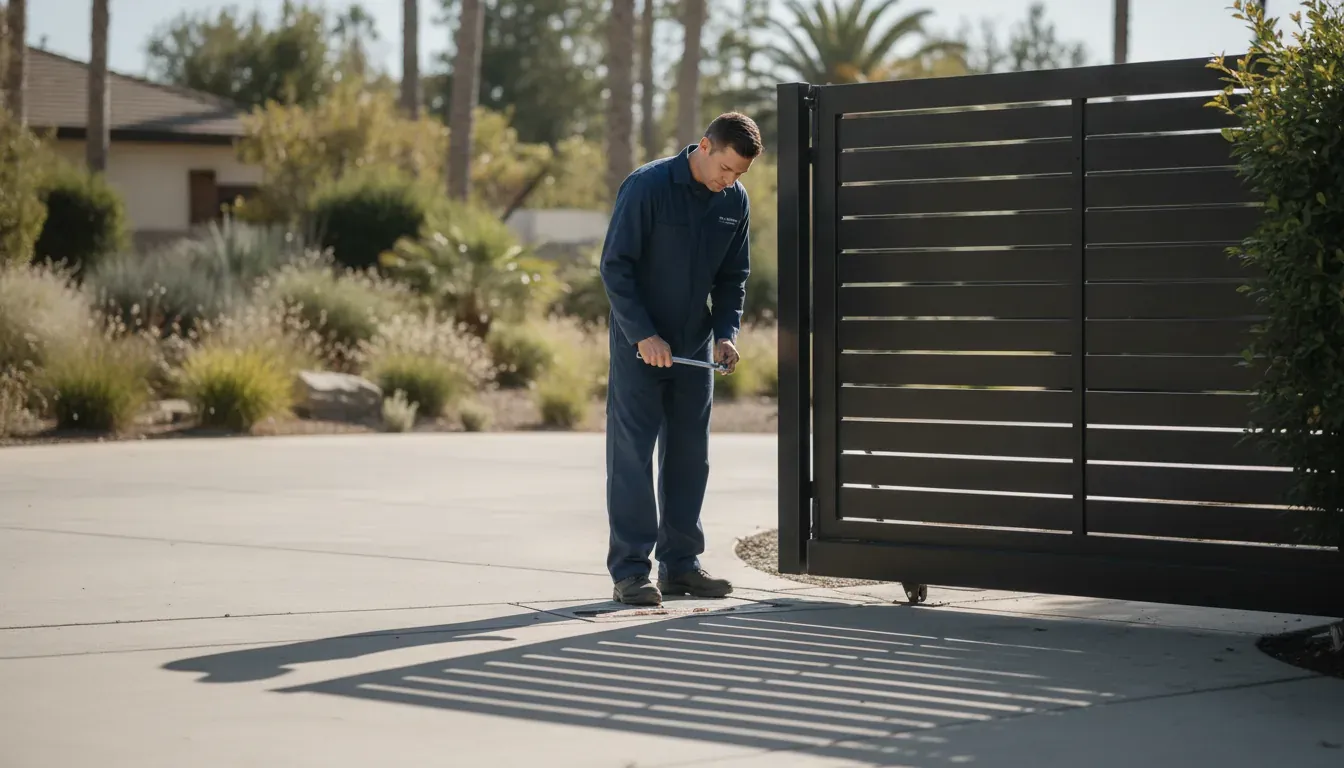
An electric gate can seem dependable right up until dust, moisture, friction, or a weak backup battery turns a small issue into a frustrating failure. A few focused checks throughout the year can help you catch wear early, protect moving parts, and reduce the chance of an expensive emergency repair. Regular maintenance helps prevent costly, unexpected repairs, according to InteleGates' maintenance guidance (source).
An electric gate maintenance checklist should cover track and chain alignment, lubrication, photo-eye and safety-reversal testing, battery backup operation, and visible control-board or wiring concerns. Use it as a practical quarterly routine, while leaving electrical faults, damaged components, and repairs that affect safety to a qualified gate professional.
The right schedule depends on exposure to coastal air, dry dust, wind-blown debris, and how often the gate operates. Start by understanding why these simple checks matter, then work through each part in a logical seasonal order.
Schedule your electric gate maintenance service
Why Your Electric Gate Maintenance Checklist Matters
An electric gate maintenance checklist gives homeowners and property managers in Los Angeles and Orange County a practical way to catch small issues before they become access, safety, or reliability problems. The checklist is not paperwork for its own sake. It is a routine for confirming that the gate moves correctly, responds to its controls, and protects people and vehicles throughout the year.
Regular maintenance helps prevent costly, unexpected repairs. A track that gradually collects debris, a chain that begins to drift out of alignment. Or a control-panel connection that loosens over time may first appear as slow movement, unusual noise, or intermittent operation. If ignored, the same issue can place extra strain on the motor or cause a larger failure at the least convenient time. In a busy driveway, apartment community, or commercial property, an inoperable gate can also disrupt deliveries, residents, employees, and visitors.
Maintenance protects both mechanical and electronic components
Motorized gate systems depend on consistent care of mechanical and electronic components. Hinges, rollers, chains, tracks, mounting hardware, sensors, wiring, control boards, and backup batteries all contribute to dependable operation. Cleaning and visual checks address some of the work, but they do not replace testing the safety systems or diagnosing electrical faults. A gate can look clean and still have a failing sensor, loose connection, or electronic problem that affects how it starts, stops, or reverses.
Southern California conditions make consistent attention especially useful. Coastal properties may experience salt air, while dry heat, dust, and Santa Ana winds can carry debris into tracks and enclosures. Seasonal checks help account for those conditions instead of assuming that a gate receives the same exposure every month. Properties surrounded by landscaping or heavy foot and vehicle traffic may also need more frequent observation.
Safety is part of the inspection, not an optional extra
UL 325 is the safety standard for gates and enclosures, supporting safe operation of motorized gate systems. The National Institute of Standards and Technology record identifies the standard as Safety Standard for Gates and Enclosures. Routine maintenance should therefore include the gate's safety devices, not just its appearance or speed. Photo-eye sensors must be clear and properly aligned so they can detect obstructions and stop or reverse movement as intended.
For a practical schedule, use simple visual checks and cleaning throughout the year, then arrange a professional inspection annually. Professional inspections are recommended annually to confirm that the system meets safety standards and operational requirements. A documented gate maintenance service can assess conditions that are easy to miss during a quick homeowner check, including developing mechanical wear, control-board issues, and safety-device performance.
The goal is not to service components unnecessarily. It is to identify wear early, keep safety functions dependable, and extend the useful life of the complete gate system. The remaining checklist breaks that work into manageable inspections, tests, and seasonal tasks.
The Quarterly Inspection: Track, Chain, and Alignment
A quarterly mechanical inspection catches changes that make an automatic gate work harder. Set aside time when the gate is clean and dry, and observe a complete opening and closing cycle before touching any adjustment. Listen for scraping, rattling, or grinding, and stop if the gate binds, moves unevenly, or appears unsafe. This visual check is not a substitute for servicing energized equipment.
- Clear and inspect the track
Turn off the gate operator according to the manufacturer's instructions, then remove leaves, gravel, mud, and other debris from the entire track. A clear track allows the gate to travel smoothly and helps prevent the wheels and motor from carrying unnecessary load. Debris buildup can push the gate out of alignment, which increases motor strain and may eventually leave the gate stuck. Do not simply sweep the entrance area and stop. Check corners, wheel paths, drainage points, and the section beneath the gate where windblown material collects.
Environmental conditions should determine the interval. In high-debris areas, including parts of Los Angeles and Orange County exposed to Santa Ana winds, track cleaning may be needed more often than quarterly. Note how quickly material returns, then shorten the interval before the track affects operation.
- Watch the gate travel for alignment problems
With the area clear, restore power and run the gate through several cycles from a safe position. Watch whether it starts, travels, and stops evenly. A gate that hesitates, drifts, rubs, or requires noticeably more effort in one part of the cycle may have an alignment or wheel issue. Proper alignment helps prevent mechanical binding during opening and closing, so do not treat a change in movement as normal aging. If the gate binds or the track or wheels appear damaged, stop operating it and arrange a professional inspection rather than forcing a correction.
- Check chain alignment and operating noise
Inspect the drive chain from a safe position for an obvious sideways run, uneven tension, or contact with surrounding components. During operation, listen for new clicking, rattling, or excessive noise. Chain alignment problems can create noisy operation and accelerate motor wear. Avoid making tension or alignment adjustments unless you have the equipment manual and the correct specifications. A chain that is visibly displaced, damaged, or repeatedly noisy needs a gate professional to diagnose the cause.
- Confirm the motor mounting is secure
Visually verify that the motor mounting bolts and brackets remain secure, with no obvious movement, shifted hardware, or new vibration during a cycle. Loose mounting can allow the operator to move under load, contributing to structural stress and inconsistent chain engagement. Do not reach into the operator or attempt electrical work while power is connected. Record any loose hardware, cracked bracket, or unusual vibration for the technician who services the system.
Keep a simple date-and-observation log for each inspection. It makes recurring noise, rapid debris buildup, and alignment changes easier to identify before they become a gate failure.
Lubricate the Right Parts at the Right Time
Lubrication is a small maintenance task with a direct effect on how hard an automatic gate system has to work. Hinges, rollers, chains, and other moving attachment points create friction as the gate cycles. Keeping those parts properly lubricated helps reduce friction, limit premature wear, and extend motor life. It also makes changes in operation easier to notice before they become a larger mechanical problem. Routine lubrication is one part of a complete electric gate maintenance checklist, not a substitute for inspecting alignment and hardware.
Match the lubricant to the component
Do not treat every moving part as if it needs the same product. The appropriate lubricant depends on the specific gate component, its load, and the manufacturer's recommendations. A product suitable for a hinge may not be the best choice for a chain or roller bearing. Using the wrong lubricant can attract dust, wash away quickly, or fail to protect the surface under load. Before applying anything, wipe away heavy dirt and inspect for cracked hardware, abnormal wear, or binding. Lubricant cannot correct a bent hinge, damaged roller, loose chain, or gate that is already out of alignment.
For hinges and moving attachment points, Apollo Gate Openers widely recommends applying white lithium grease approximately every six months. Their maintenance guidance specifically identifies white lithium grease as a way to keep these parts coated through the interval. See the Apollo lubrication guidance for that recommendation. Treat six months as a useful starting point, not an inflexible schedule. Local conditions, gate design, and operating frequency still matter.
Adjust the schedule for gate weight and conditions
Heavier gates place greater loads on hinges and rollers, so they may require lubrication more often than a lighter residential gate. Coastal salt air, dust, windblown debris, and frequent daily cycles can also shorten the useful interval. If the gate begins to squeak, move unevenly, hesitate, or sound different during opening and closing, inspect it rather than simply adding more grease.
Apply lubricant sparingly and work the gate through its normal movement only when it is safe to do so. Excess product can collect grit and create an abrasive paste around exposed components. Never spray lubricant onto photo-eye lenses, electrical controls, or surfaces where it could affect traction. If lubrication does not resolve noise or resistance, stop cycling the gate and have the mechanical system evaluated. A motor working against friction or binding can suffer avoidable strain, while early correction is usually simpler than repairing damage after failure.
Test Sensors, Safety Reversal, and Battery Backup
Safety devices deserve more than a quick visual glance. They are designed to detect a hazard, interrupt the gate cycle, and give people and vehicles a safe path through the entrance. Photo-eye sensors detect obstructions and stop gate movement, helping prevent injury. A sensor that is dirty, blocked, or pointed slightly out of alignment may leave the gate operating without the protection you expect.
Inspect and clean the photo-eyes
Start by checking both sensor housings and the area directly between them. Remove leaves, cobwebs, mud, dust, or anything stored in the path of the light beam. Clean the sensor faces with a soft, dry cloth rather than a harsh solvent that could damage the lens. Dirt can interfere with the beam and prevent the sensors from responding correctly.
Next, look for signs that a sensor has been bumped or shifted. The two units should face one another at the same height, with a clear line of sight. Do not assume that a steady indicator light proves the system is safe. An intermittent light, a gate that refuses to close, or inconsistent operation can point to contamination, misalignment, damaged wiring, or a failing sensor. Inspecting for obstructions and alignment helps the reversal mechanism function as intended.
Test every safety device and the reversal function
Photo-eyes are only one part of a complete safety system. Verify that other installed devices, including safety loops and additional photo-eyes, respond correctly. Follow the operator's testing instructions and keep people and vehicles clear of the gate's travel area. Never place yourself in the path of a moving gate or try to defeat a safety device for convenience.
The safety reversal function should be tested at least once a year, and sooner if the gate has been serviced, struck, or is behaving differently. If the gate continues closing when a safety device should interrupt its cycle, stop using automatic operation and have a qualified gate professional diagnose it. A failed reversal function is a safety issue, not a minor adjustment.
Confirm battery backup and manual release operation
Test the battery backup under controlled conditions so you know the gate can operate during a power outage. The system should respond according to the operator's specifications, without unusual hesitation, alarms, or weak movement. Battery backup units generally need replacement every few years, but age, usage, heat, and the condition of the charging system can affect their performance. If the battery will not hold a charge or the backup cycle is unreliable, arrange replacement rather than waiting for the next outage.
Also test the manual release mechanism. You should know how to disengage the operator and open the gate during an emergency or power failure. Keep the release key or tool accessible to authorized users, but secure it from unauthorized access. If the release is stiff, damaged, or unclear, ask a professional to inspect it before an emergency makes the procedure necessary.
These checks belong on any electric gate maintenance checklist because they confirm that the system protects people and remains usable when normal power or automatic controls are unavailable.
Control Board Checks and Electrical Safety
Mechanical maintenance keeps a gate moving, but the control board and wiring tell the system how to move. A loose connection, moisture intrusion, pest damage, or developing electronic fault can turn an otherwise smooth gate into an intermittent or complete system failure. Control board checks are therefore an important part of an electric gate maintenance checklist, especially before a small issue becomes an emergency repair.
Keep the control panel enclosure closed and properly sealed. That barrier helps protect internal electronics from moisture and pests, which can create corrosion, short circuits, or unreliable operation. Coastal air, seasonal rain, dust, and Santa Ana wind conditions can make enclosure condition particularly important in Los Angeles and Orange County.
Electrical work deserves a conservative approach. CDC and NIOSH electrical safety guidance emphasizes inspecting electrical connections and components, as well as checking wiring integrity, to reduce hazards such as electric shock. See the CDC electrical safety checklist for the underlying inspection principle. Homeowners can document visible conditions, but they should not open an energized panel, tighten live terminals, test voltage, or bypass a safety device.
| Check | Safe owner-level observation | Licensed technician task |
|---|---|---|
| Control panel enclosure | Look for a damaged cover, missing fasteners, visible gaps, water marks, insect activity, or signs that the enclosure is not sealed. | Inspect the enclosure, seals, cable entries, and mounting, then correct moisture or pest pathways without compromising the equipment rating. |
| Wiring and connections | With the panel closed, note exposed, hanging, frayed, heat-damaged, or visibly loose wiring. Do not touch it. | De-energize the system under proper procedure, inspect wiring integrity and terminals, and repair or replace damaged connections. |
| Control board behavior | Record unusual clicking, unexplained stops, delayed response, repeated resets, error indicators, or inconsistent operation. | Diagnose the control board and related inputs, identify the fault, and install compatible replacement components when necessary. |
| Safety devices | Never tape down, disconnect, or bypass photo-eyes, loops, edge sensors, or reversal functions. Stop using the gate if a safety feature behaves unexpectedly. | Test safety circuits and fail-safe operation, correct alignment or wiring faults, and verify the system after repairs. |
The table separates observation from intervention for a reason. A control board check is not simply a matter of looking for a blown fuse. The board depends on signals from safety devices, access controls, limit settings, and the motor circuit. A fault in one area can appear to be a problem somewhere else. If the gate trips a breaker, smells hot, shocks a user, operates unpredictably, or shows visible wiring damage, keep people clear and arrange professional service. Annual inspection by a qualified gate professional adds a deeper electrical and operational review to routine visual checks.
When Should You DIY vs. Call a Gate Professional?
Routine care does not always require a service visit. A homeowner or property manager can safely handle simple, non-invasive tasks that keep an electric gate clean and observable. The boundary is straightforward: clean and inspect what you can reach without opening electrical enclosures, defeating safety devices, or forcing a damaged mechanism.
Safe tasks for homeowners and property managers
Use your electric gate maintenance checklist during a visual inspection. Look for leaves, gravel, dirt, and other debris in the track, then remove it with a brush or by hand while the gate is secured and inactive. Debris can cause misalignment and place extra strain on the motor, and gates in high-debris areas may need more frequent track cleaning. See InteleGates' electric gate maintenance guidance for related upkeep.
You can also wipe dust from photo-eye sensor lenses with a clean, soft cloth and look for obvious obstructions or shifted brackets. Clean, correctly positioned sensors are important because they help detect obstructions and support the gate's reversal function. Apply the lubricant specified for your equipment to accessible hinges, rollers, or chains. Do not substitute a product simply because it is convenient. Heavier gates may need lubrication more often than lighter systems.
These tasks should never involve removing a control-panel cover, touching wiring, bypassing a photo-eye, or reaching into a moving gate. If the gate behaves unpredictably during a basic check, stop testing and keep people clear of its path.
When a professional should take over
Call a qualified gate technician for electrical problems, control-board faults, loose wiring, recurring sensor failures, or any issue inside the control enclosure. The enclosure needs to remain sealed against moisture and pests, and electrical connections require more than a visual guess. Electrical safety guidance also emphasizes inspecting connections and components to reduce hazards such as electric shock. Never work on an energized gate system.
Professional help is also appropriate when the motor, chain, mounting hardware, or other load-bearing parts show damage. When the gate binds or remains misaligned after a simple adjustment; or when operation becomes unusually noisy. A technician can identify whether the symptom comes from the track, alignment, drive system, or motor rather than masking it with more lubricant.
Battery backup replacement belongs with a professional, even though you can ask when the battery was last tested. Backup units generally need replacement every few years, and the system should be verified after service. A technician should also test the safety reversal and all connected safety devices, including loops and photo-eyes, at least annually.
Use a maintenance plan for prevention
DIY cleaning between visits is useful, but it is not a substitute for a full inspection. InteleGates recommends professional gate system inspections annually. Regular maintenance helps prevent costly emergency repairs by catching small issues before they damage a motor or leave an entrance inoperable. A professional gate maintenance service can provide that deeper review without pushing unnecessary replacements. The best plan combines simple quarterly observations with an annual technician inspection, honest findings, and repairs based on actual wear and safety risk.
Building a Seasonal Maintenance Routine That Lasts
A reliable maintenance schedule is easier to follow when it matches the conditions your gate actually faces. Extreme weather and temperature fluctuations can affect electric gate performance, so seasonal checks are more useful than waiting for a failure. In Los Angeles and Orange County, that means accounting for coastal salt air, dry heat, Santa Ana winds, rain, and changing amounts of airborne debris.
Use a quarterly inspection as your baseline, then add a focused check when the season changes. Include visual inspection, debris removal, component-specific lubrication, safety testing, and a review of unusual noise or movement. Gates near trees, exposed lots, construction, or unpaved areas may need more frequent track cleaning because debris can create misalignment and motor strain.
Spring: clear winter buildup
After seasonal rain, inspect the track, rollers, hinges, drainage area, and motor enclosure. Remove mud, leaves, grit, and other material before it interferes with the gate's travel. Check for rust, standing moisture, loose hardware, or changes in alignment. Clean photo-eye sensors so dirt does not interrupt their light beams, then confirm the gate reverses safely when its sensors detect an obstruction.
Summer: protect against heat, dust, and salt air
Dry heat and wind can carry dust into tracks and moving parts. Coastal properties also face salt air that can accelerate corrosion on exposed metal and hardware. Wipe away buildup, inspect fasteners and mounting points, and lubricate each component with the appropriate product. Heavy gates may need lubrication more frequently because their hinges and rollers carry greater loads.
Fall: stay ahead of leaf debris
Before leaf and seed debris accumulate, clean the full track and the area around the gate. Listen for scraping, rattling, or louder-than-usual motor operation. Check chain alignment and confirm the gate opens and closes without binding. If your property is in a high-debris area, schedule additional track cleanings between quarterly inspections rather than treating the quarterly visit as a fixed limit.
Winter: prepare for moisture and outages
Inspect seals and the control enclosure for moisture or pest entry. Test the battery backup and manual release so you know how the gate will operate during a power outage. Backup batteries generally need replacement every few years, but age, heat, and usage can affect their condition. Record the installation or replacement date and ask a gate professional to verify a battery that is weak, swollen, leaking, or unreliable.
Complete one professional inspection each year in addition to your quarterly checks. An annual visit can identify safety, mechanical, and electrical issues that are easy to miss during routine cleaning. For a deeper reference, review seasonal gate maintenance tips or arrange an electric gate maintenance service for a documented inspection and maintenance plan.
Contact InteleGates to book your gate inspection
Frequently Asked Questions
How often should I perform electric gate maintenance?
Perform basic visual checks, cleaning, and debris removal each quarter, with extra attention after heavy winds or unusual gate noise. Schedule a professional inspection annually to evaluate mechanical, electrical, and safety components. High-debris locations or coastal exposure may justify more frequent cleaning.
What is included in an electric gate maintenance checklist?
Inspect the track, wheels, hinges, chain, and mounting hardware for debris, wear, looseness, or alignment problems. Lubricate the correct moving components, clean and test photo-eye sensors, verify safety reversal. Test the battery backup and manual release, and look inside the control panel for moisture, pests, or loose wiring.
What lubricant is best for an electric gate?
Use a lubricant appropriate for the specific hinge, roller, or chain, following the component or manufacturer guidance. The goal is to reduce friction without attracting excess dirt or contaminating sensors. Heavier gates may need lubrication more often because their moving hardware carries greater load.
When should I call a professional for gate maintenance?
Call a gate professional when the gate binds, drifts out of alignment, makes unusual mechanical noise, fails a safety reversal test, or shows electrical or control-board problems. Professional help is also appropriate for motor or chain damage, backup battery replacement, exposed wiring, or any repair requiring energized equipment.
Schedule Your Gate Maintenance Service
A professional inspection can help keep your electric gate operating safely and reliably through changing seasons. Schedule a free gate inspection and maintenance service with InteleGates by visiting the contact page. Share what you have noticed, and the gate specialists can help identify the next practical step for your Los Angeles or Orange County property.