
InteleGates Guide
Electric Gate Motor Noise: What Different Sounds Can Signal
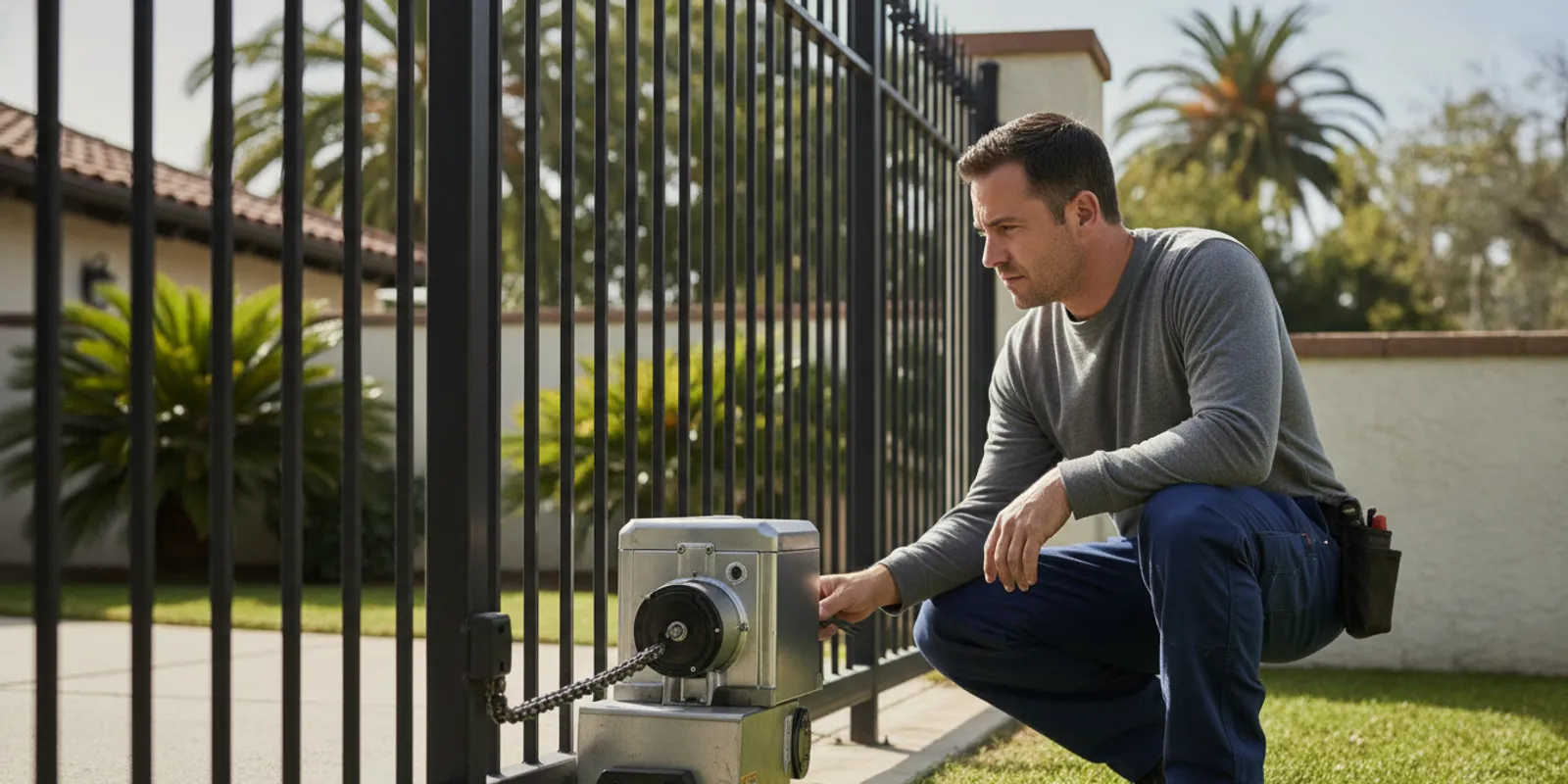
Electric gate motor noise can be an early clue that an existing gate system needs attention, but the sound alone rarely identifies one exact cause. A grind, hum, click, or bang may come from different parts of the system, and the right next step depends on when the noise occurs and how the gate behaves. Here is how to recognize useful clues without opening or adjusting equipment.
Request service for your gate system
Why does an electric gate motor make noise?
An automated gate is a system, not just a motor. The operator works with the gate’s movement, its supporting hardware, electrical controls, and access devices. A sound that seems to come from the motor may actually be produced by a moving component elsewhere, or by resistance that makes the operator work differently. For that reason, diagnosing a noisy gate opener means considering the full sequence of operation rather than guessing from one sound.
Common areas a technician may evaluate include the operator and its drive components, the gate’s travel and alignment, hinges or rollers, the control board and wiring, and devices that command or monitor movement. The symptom can also vary by direction: a noise during opening but not closing, for example, is useful information, but it does not prove which part is at fault.
InteleGates provides service for existing electric gate motors and related access-control equipment in Los Angeles and Orange County. A professional electric gate repair assessment can help distinguish an operator issue from a movement, control, or wear-related concern before a repair or replacement is recommended.
What can different gate motor sounds signal?
Think of sound as a symptom to report, not a diagnosis. Note the sound’s character, when it starts, how long it lasts, and whether the gate completes its movement. Do not approach moving components to investigate. A technician can interpret those observations alongside a professional assessment of the system.
| Sound or pattern | Possible area to assess | Useful observation to share |
|---|---|---|
| Grinding or rough scraping | Movement, alignment, or a drive component under strain | Whether it occurs during opening, closing, or both |
| High-pitched squeal or chirp | A moving component or contact point that may need evaluation | Whether it is brief, continuous, or new |
| Low hum without normal movement | Operator response, power, controls, or resistance to movement | Whether the gate moves at all after the sound |
| Repeated clicking | A control command, electrical response, or repeated attempt to operate | Whether it follows a keypad, remote, intercom, or other command |
| Sudden clunk or bang | A change in travel, a moving part, or the gate reaching a stop | Where in the travel the noise occurs and whether it is a new change |
These are possibilities, not a checklist for self-repair. Similar sounds can have different causes, and one issue can create secondary noise elsewhere in the system. Avoid trying to locate a sound by touching, moving, or removing a component. Describe what you heard and leave inspection and testing to a qualified service professional.
Context can make a symptom more useful. A sound that starts at the same point in every cycle differs from one that appears unpredictably. A noise that happens only after a particular access command may warrant looking at the command and control response along with the operator. If the gate’s normal speed, stopping point, or direction of travel changes, mention that too. These are observations to communicate, not tests to perform: do not run extra cycles, block the gate, or interfere with its sensors to see what happens.
What might a grinding or scraping sound mean?
Gate motor grinding may occur when movement is rough or something in the operating system is working under unusual resistance. Possible areas for professional evaluation include the gate’s alignment and travel, the operator’s drive components, or other moving parts. A change in how the gate moves can make an operator sound different, even if the motor itself is not the original source.
Pay attention to whether the sound is new, getting louder, or paired with uneven or incomplete movement. If the gate hesitates, stops, or changes speed, include that detail when you request service. Do not push or pull the gate to test resistance, and do not attempt to adjust the operator or moving hardware.
What might a hum or squeal indicate?
A low hum can mean the system is responding to a command without completing its usual movement, but it does not identify why. The issue might involve the operator, an electrical or control response, or resistance in the gate’s travel. A squeal or chirp may point to a moving or contact area that needs evaluation. The timing matters: a brief sound at startup is different information from a sustained sound throughout a cycle.
Record what happens in ordinary use from a safe distance. Does the gate move normally? Does the hum continue after the command? Does the sound happen every time or only intermittently? Share the answers rather than attempting to open an enclosure or test electrical connections. For operator-specific diagnostics, see InteleGates’ gate operator repair service.
What might clicking or a sudden bang mean?
A click may occur when a command is sent or a control responds, so repeated clicking without movement is worth reporting. Note which access method was used, such as a remote, keypad, or telephone-entry system. If the same command works inconsistently, that pattern may help a technician assess the controls and operator together. InteleGates also services gate access-control systems and telephone-entry equipment.
A bang or clunk may happen at a particular point in travel or when movement stops. A new or forceful impact sound, especially when accompanied by a change in operation, should not be ignored. Do not repeatedly cycle the gate to reproduce it. If people or vehicles are at risk of encountering an unpredictable gate, keep clear of its path and arrange professional service.
What should you do when the gate suddenly gets louder?
Start with observation, not a repair attempt. If the system operates normally and the sound is mild, note the pattern and arrange an assessment rather than assuming the noise is harmless. If the gate behaves unpredictably, does not complete movement, makes a sudden loud noise, or appears to create an immediate hazard, keep people and vehicles away from its path and contact a service professional. Do not reach into the mechanism or try to force the gate through a cycle.
- Describe the change. Say when the noise began, whether it is intermittent or constant, and whether it happens opening, closing, or both.
- Note what the gate does. Report hesitation, stopping, incomplete movement, or any change in normal operation.
- Identify the command. Mention whether the noise followed use of a remote, keypad, telephone-entry unit, or another access device.
- Keep the area clear if operation is unpredictable. Do not stand in the travel path or ask someone else to test it.
- Arrange a diagnosis. Share the property location and the observations with the service team. Do not open, adjust, or repair the equipment yourself.
For property owners and managers across the service area, the Los Angeles and Orange County service-area page can help confirm coverage. If the gate is not moving as expected, automatic gate service can include assessment of the operator and related system behavior.
How does a technician diagnose a noisy gate opener?
A useful service visit begins with the reported symptom and the system’s actual behavior. The technician can ask when the sound occurs, whether it changes by direction, whether a control command triggers it, and whether the gate’s movement has changed. These details help guide a systematic assessment instead of treating every noise as a motor failure.
For a smoother assessment, provide the property city, describe what the gate is doing now, and explain whether the noise is new or has changed over time. Mention if it affects one access method or all normal use, but do not try to determine the technical cause yourself. A professional service conversation should leave you with an explanation of the observed issue and the next step being recommended. If the recommendation involves replacing equipment, ask how the assessment connects to that recommendation; noise alone is not proof that a motor has failed.
Depending on the system and complaint, the technician may assess the operator, the gate’s travel and alignment, associated moving components, control response, and relevant access devices. The goal is to identify where the symptom originates and whether more than one factor is involved. The technician may compare the reported sound with how the system responds during ordinary operation, then explain what the findings do and do not establish. Electric-motor noise is also studied as a vibration and sound-characterization issue in technical research; that is one reason a sound description can be informative without being conclusive (experimental methods for electric-motor noise and vibration characterization).
After assessment, the service professional can explain the findings and discuss a repair or other next step. A noisy operator does not automatically mean it needs replacement. A diagnosis should consider whether the cause is a repairable component, a movement or alignment issue, a control-related concern, or broader wear. InteleGates emphasizes technical diagnosis before recommending replacement. For relevant equipment support, explore LiftMaster repair or electric gate system installation if an assessment indicates a new operator is appropriate for the existing system.
Can scheduled maintenance help prevent noisy operation?
Maintenance cannot guarantee that a system will never make noise or need repair. It can, however, give a professional an opportunity to assess the operator and the components that affect normal movement before a small change becomes a larger operating problem. The appropriate service plan depends on the equipment, how often it is used, its condition, and the manufacturer’s recommendations.
For a home gate, note any change from its usual sound or movement and arrange a check when a new pattern appears. For a shared or commercial entrance that cycles frequently, property managers may find it helpful to keep a simple service record: date of service, reported sounds, operating changes, and any follow-up recommended by the technician. That history can help distinguish a one-time symptom from a recurring pattern.
Scheduled service should focus on the full automated system rather than the motor in isolation. A technician can evaluate the operator and its interaction with movement and controls, then explain any maintenance needs. Learn more about electric gate system repair and maintenance and electric gate maintenance service.
Regular attention is especially useful when a property has multiple users or a high number of daily cycles, because different people may notice different changes. A property manager can ask occupants to report a new sound, unusual stopping, or inconsistent response and keep those notes together for the service visit. This does not replace a technician’s evaluation, and it is not a reason to test the system more often. It simply helps make the service conversation specific: what changed, when it occurs, and whether it affects access for residents, staff, or visitors. Clear reporting helps the technician focus the assessment and explain practical next steps.
Ask the team to assess a new or recurring noise
Frequently Asked Questions
Is a noisy gate motor always failing?
No. A sound can come from the operator, a moving component, gate travel, a control response, or wear elsewhere in the system. A professional assessment is needed to identify the cause and determine whether repair or replacement is appropriate.
Can I keep using a gate that is making a grinding noise?
Do not assume it is safe to continue normal use, particularly if the sound is sudden or comes with hesitation, stopping, or unpredictable movement. Keep clear if operation appears unsafe and contact a service professional for guidance. Do not try to force the gate or inspect the mechanism.
Why does the noise happen only when the gate opens?
A sound limited to one direction is useful diagnostic information, but it does not identify a single failed part. The technician can compare how the system behaves in each direction and assess movement, the operator, and controls as appropriate.
Should I replace the motor because it is loud?
Not based on sound alone. Noise may be caused by something other than the motor, and diagnosis can clarify whether a component needs service or replacement. Ask for an assessment before making that decision.
When should you arrange service for electric gate motor noise?
Arrange service when a new sound persists, becomes louder, repeats, or occurs with a change in movement or access-control response. Share what you observed and avoid opening or adjusting the equipment. InteleGates serves existing gate motor and access-control systems in Los Angeles and Orange County.
Contact the team about a noisy gate system
A clear description of the sound and the gate’s behavior gives a technician a practical starting point for diagnosis, while keeping the assessment and any equipment work in professional hands.