
InteleGates Guide
Electric Gate Motor Repair Services in Los Angeles
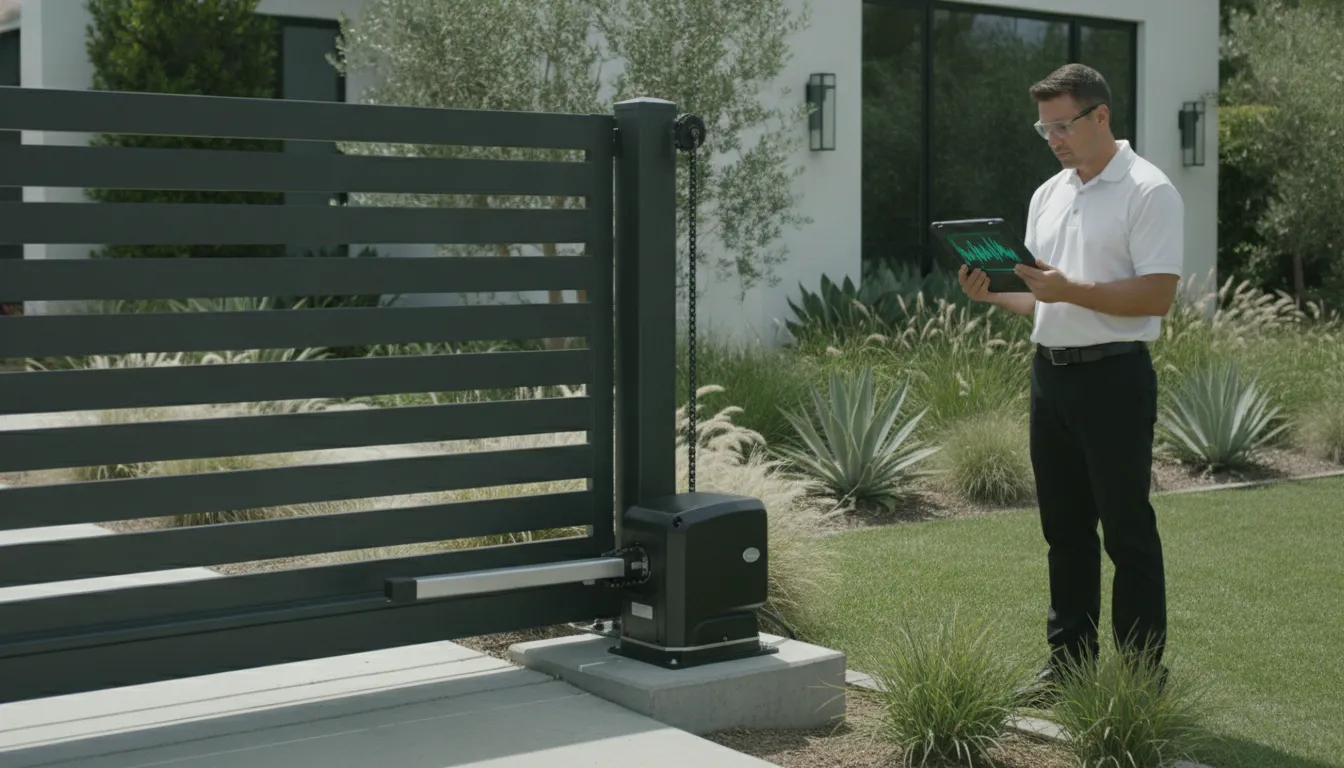
When an automatic entry stops responding, the motor is not always the only problem. A slow cycle, unusual noise, inconsistent stopping, or a gate that works intermittently can involve the operator, sensors, control board, wiring, power supply, chain, or related access controls. The right first step is a professional assessment that identifies the underlying fault before anyone recommends a repair.
Professional electric gate motor repair diagnoses the motor and operator alongside the controls and connected components, then verifies the system under normal operating conditions. That approach helps property owners address the actual failure instead of guessing from one symptom or replacing a working part.
InteleGates provides motor and access-control service for homeowners, estate owners, property managers, and commercial properties throughout Los Angeles and Orange County. The company works with sliding gates, swing gates, barrier arms, and vertical lift gates, with recommendations based on the equipment's condition and the way the entry is used. The assessment can include motor testing, sensor and access-control troubleshooting, electrical checks, mechanical adjustments, and operation testing across multiple conditions. This diagnosis-first process supports a clear scope of work and a durable solution, whether the issue is a minor malfunction or a larger system failure.
Contact InteleGates to schedule an assessment
Understanding what that assessment covers makes it easier to recognize the service your property needs and evaluate the next recommendation with confidence.
What Does Electric Gate Motor Repair Include?
Professional electric gate motor repair is more than getting an operator to run once. It includes identifying why the system is failing, correcting the affected components, and verifying that the motor, controls, electrical supply, and moving parts work together safely. The motor or operator remains the center of the assessment, but reliable operation depends on the complete automated gate system.
Who may need this service?
Homeowners and estate owners may call when a driveway gate stops opening, moves inconsistently, or no longer responds as expected. Property managers in Los Angeles and Orange County may need a broader evaluation when a shared entry affects residents, tenants, deliveries, or parking access. Commercial properties, offices, warehouses, and other high-cycle entries can also require service when repeated operation exposes a failing motor or a related system problem.
InteleGates repairs electric gate motors and openers, from minor malfunctions to major system failures. Service is available for sliding gates, swing gates, barrier arms, and vertical lift gates. The right repair scope depends on the equipment, the operating symptoms, and what the assessment reveals. That is why a technician should diagnose the system before recommending a specific repair or replacement.
What does a whole-system assessment look at?
A professional assessment examines the motor and operator along with the parts that command, power, and support its movement. Diagnostic areas can include worn components, sensors, control boards, tracks, chains, wiring, transformers, and backup batteries. A problem that appears to be a failed motor may involve an electrical component, a sensor fault, or a control issue. It may also involve a mechanical condition that places excess strain on the operator.
The assessment typically tests the motor, troubleshoots sensors and access controls, checks electrical components, adjusts mechanical components, and verifies operation under multiple conditions. This broader process helps separate the root cause from the visible symptom. It also gives the property owner or manager a clearer explanation of what needs attention and why.
For a service-focused overview, see InteleGates' electric gate system repair information. The goal is dependable access, an honest scope of work, and a repair approach that addresses the operator and the system around it.
What Are the Signs Your Gate Motor Needs Repair?
An electric gate motor can show trouble in several ways before it stops working completely. A gate that will not move, opens or closes slowly, or makes unfamiliar sounds deserves attention. So does a gate that stops in the wrong position or responds inconsistently to an access-control device. The symptom may involve the motor, but it can also point to sensors, wiring, control boards, transformers, backup batteries, chains, tracks, or other worn components.
The gate does not move or moves only intermittently
A gate that does nothing when an authorized command is sent may have a motor failure, electrical issue, or control-board problem. The trouble may also be elsewhere in the operating system. Intermittent operation is also significant. If the gate works sometimes and then refuses to respond, the underlying fault may be developing rather than resolved. A professional assessment can examine the complete system instead of treating one inactive symptom in isolation.
Movement becomes slow, uneven, or strained
Slower-than-normal movement can suggest worn mechanical components, a damaged chain, power-supply problems, or a failing motor. Uneven travel may also indicate that the operator is compensating for resistance in the gate's operating path. This is especially important for frequently used entrances at homes, communities, offices, warehouses, and parking facilities. Continued operation while the system is straining can allow a manageable component issue to affect additional parts.
There is unusual noise during operation
Grinding, rattling, clicking, or other unfamiliar sounds should not be dismissed as normal operating noise. They can point to a damaged chain, a worn motor, or debris obstructing the gate path. The sound's timing and location help a technician narrow the diagnostic area, but identifying the cause requires more than listening to one cycle. InteleGates evaluates the motor and related components as part of a whole-system assessment.
The gate stops in the wrong place or reverses unexpectedly
Positioning errors, incomplete opening or closing, and unexpected movement can involve sensors or electrical glitches. Interference, moisture or insects in a control box, ground-loop faults, or a stuck remote button can also contribute. These symptoms affect both convenience and safe operation. Obstruction sensing and secondary sensing mechanisms are important automatic-gate safety measures. If the gate reverses at the wrong time, fails to detect an obstruction, or behaves unpredictably, keep people clear of its travel area and arrange qualified service.
Remotes, keypads, and sensors respond inconsistently
A gate that operates only when someone is nearby commonly indicates a sensor alignment issue or sensor fault. Access-control problems can also involve the control board, wiring, power supply, or communication between the entry device and operator. Because the access-control symptom may be connected to the motor system, repairing only the keypad or remote may not address the actual cause.
These warning signs do not determine the final scope of work by themselves. InteleGates checks the motor, sensors, access controls, electrical components, and mechanical parts, then verifies operation under multiple conditions. For professional gate operator repair services in Los Angeles, Orange County, and the South Bay, schedule an assessment so the recommendation is based on the system's actual condition.
How Is an Electric Gate Motor Diagnosed?
A professional assessment looks at the complete operating system, not only the motor housing. The goal is to identify whether the problem comes from power, controls, sensors, mechanical resistance, access equipment, or a combination of issues. That distinction matters because the correct electric gate motor repair may involve the operator, the gate hardware, or the control system. A qualified technician typically follows a sequence like this:
- Review the operating history. The technician starts by asking what changed, when the symptom began, and whether the issue is constant or intermittent. They may note whether the gate stops during opening, fails to close, moves slowly, makes unusual sounds, responds inconsistently to a remote, or works only under certain conditions. This history helps narrow the diagnostic path instead of treating every failure as a motor problem.
- Check power and control signals. Next, the technician examines the electrical supply, control board, wiring, command devices, and relevant connections. The assessment separates a power or command issue from a fault inside the operator itself.
- Inspect the motor and mechanical system. The operator is evaluated alongside the gate's moving parts, chain or drive arrangement, hinges or rollers, track, and other hardware that affects resistance. Unusual operating noises can point to a damaged chain, a worn motor, or debris obstructing the gate path. The technician considers whether the motor is struggling because of mechanical load or whether the motor has an independent fault. This is also where they assess whether repair, adjustment, or replacement is the more appropriate recommendation.
- Test safety devices and access controls. Sensors, safety edges, loops, keypads, remotes, telephone entry equipment, and other access-control components are checked as part of the system. A gate that operates only when someone is nearby can indicate sensor alignment or a sensor fault. Testing these components helps confirm that the gate responds safely and consistently to authorized commands. For related system support, see our gate access control repairs.
- Verify operation under multiple conditions. The final stage is not simply watching the gate complete one cycle. The technician verifies opening, closing, stopping, reversing, and access responses repeatedly, while observing performance from the relevant control points. They look for consistent travel, abnormal noise, hesitation, unintended movement, and repeatable safety-device behavior. Periodic maintenance can identify developing issues before a major breakdown, especially for frequently used gates. The findings are then explained clearly, with the next service recommendation based on the observed cause rather than a guess.
Repair Considerations for Sliding, Swing, and Barrier Gates
The gate's movement pattern is one of the first clues a technician considers during electric gate motor repair. A sliding gate travels along a defined path, a swing gate pivots from hinges, and a barrier arm lifts through a short arc. Each application places different demands on the operator, controls, and safety equipment. The right repair scope follows the way the system operates, how often it cycles, and the property conditions around it.
| Application | Operator focus | Property context |
|---|---|---|
| Sliding gate | Motor, chain, track, rollers, limits, sensors | Driveways, apartments, parking lots, and commercial entries. |
| Swing gate | Arm, hinges, limits, obstruction sensing, motor load | Homes, estates, offices, and managed properties. |
| Barrier arm | Cycle, balance, limits, sensors, controls | Parking facilities, garages, offices, and communities. |
Sliding gate service depends on travel and load
Sliding systems can slow down when mechanical components wear, the chain is damaged, the power supply is unstable, or the motor is failing. Debris or alignment problems along the track can also make the operator work harder. A professional assessment considers the motor and control board alongside the track, chain, sensors, wiring, and stopping behavior. Keeping the diagnosis system-wide helps distinguish an operator problem from a movement issue that is affecting the operator.
Swing gate service centers on pivoting movement
Swing gates transfer force through their hinges and operator arm as the gate opens and closes. That means travel limits, stopping position, obstruction detection, and the motor's response all matter. A gate that stops inconsistently or moves unevenly deserves an assessment before the operator is selected for repair or replacement. The goal is dependable movement that works with the access controls and safety devices, not a temporary adjustment that leaves the underlying system issue unresolved.
Barrier arms and vertical lift applications have different cycles
Barrier arms often serve high-use vehicle entries, so repeated cycles make consistent limits, balanced movement, and responsive safety controls especially important. Vertical lift gates also require application-specific evaluation because the operator manages a lifting motion rather than sliding or pivoting travel. InteleGates services motors for sliding gates, swing gates, barrier arms, and vertical lift gates, along with their associated controls. For brand-specific support, property managers can request LiftMaster gate operator service.
Automatic vehicular gate operators are associated with the ANSI/CAN/UL 325 safety standard, which addresses operator safety systems such as entrapment protection. UL 325 is a product safety standard for gate operators, so a repair assessment should include obstruction sensing and reversing functions, not only motor operation. Some older automatic gates may predate current protective devices. A qualified technician can evaluate the complete system and recommend service based on its movement, usage, and property context. For background, review UL Solutions' guidance on access control and gate operators.
When Should a Gate Motor Be Repaired or Replaced?
The right decision starts with diagnosis, not a quick assumption that the entire operator needs to be changed. An assessment should examine the motor, controls, wiring, sensors, safety devices, and related mechanical components so the recommendation addresses the actual failure. That approach keeps the scope clear for homeowners, property managers, and commercial operators who need dependable access without unnecessary work.
When component-level repair makes sense
Component-level repair or replacement is often appropriate when the main operator remains suitable for the gate and the failure is isolated. Depending on the findings, the service may involve a worn component, control board, sensor, transformer, wiring issue, chain, or backup battery. The technician should also confirm that the gate moves correctly, responds to its access controls, and operates safely after the repair.
For electric gate motor repair, using authentic replacement components matters. Compatible parts should match the operator and the demands of the installation, including the gate type and frequency of use. A repair that restores movement but leaves an underlying control, safety, or mechanical problem unresolved is not a complete solution. InteleGates emphasizes permanent solutions, honest recommendations, and doing the job right the first time.
When complete motor replacement is more practical
Complete motor replacement may be the better path when the existing unit cannot be repaired reliably. It may also be appropriate when critical components are no longer practical to source or the operator no longer fits the gate's operating demands. Replacement can also make sense when repeated component failures point to a broader equipment problem. The recommendation should follow the assessment and account for the full system, rather than focusing on the motor in isolation.
A qualified service provider can explain why replacement is recommended, what equipment fits the application. And how the new operator will work with the existing access-control and safety components. InteleGates services major gate motor brands and supports sliding gates, swing gates, barrier arms, and vertical lift gates across Los Angeles and Orange County.
What to confirm before approving the work
Ask for a clear description of the diagnosed failure, the proposed scope, the replacement components being used, and the warranty provided on the repair work. InteleGates credits diagnostic fees toward approved repair work, and recommendations are based on the observed condition of the system. This gives the property owner a defined decision point without relying on a generic replacement recommendation.
After the work, operation should be verified under multiple conditions, including the motor cycle, controls, sensors, and stopping behavior. Ongoing electric gate maintenance can help identify wear before it becomes a larger interruption and keep the selected repair or replacement performing as intended.
How Can Property Owners Prevent Repeat Gate Failures?
Preventive maintenance gives property owners a clearer way to manage electric gate reliability before a small performance issue becomes an access problem. This matters across residences, apartment communities, parking facilities, garages, offices, and other commercial properties where sliding gates. Swing gates, barrier arms, or vertical lift gates may operate throughout the day. Property managers should treat the motor, operator, controls, and safety devices as one connected system.
A qualified technician can build a maintenance plan around the equipment's condition and the property's operating demands. The objective is not simply to make the gate move again. It is to identify wear, correct developing faults, and verify that the system performs consistently under normal operating conditions.
Schedule a complete system inspection
Professional service may include inspection of the motor and mechanical components, lubrication where appropriate, sensor calibration and cleaning, component testing, software updates, and system optimization. Technicians can also review the operator, control board, wiring, transformers, backup batteries, tracks, chains, and access-control equipment. This broader review helps connect symptoms to their underlying cause instead of treating one isolated part while another fault continues to strain the system.
Keep safety and operating conditions in view
Sensor performance deserves specific attention. Calibration and cleaning should be handled as part of professional maintenance, followed by operating verification so the gate responds correctly to its safety devices and controls. The travel path should also remain clear of conditions that can interfere with movement. A technician can assess the track, hinges, chains, and other mechanical areas while checking whether the motor is working against unusual resistance.
Maintenance planning is especially valuable for high-cycle entries, multi-unit communities, commercial facilities, and parking areas. Property managers can share operating history, recurring symptoms, and access-control concerns with the technician so service can be scheduled around the property's actual use. This supports more consistent operation across the associated controls and helps identify when component repair, replacement, or broader system work is appropriate.
Do not attempt opener repairs or programming without qualified assistance. DIY work can worsen damage and create safety risks. If a failure occurs between planned visits, emergency gate repair service can help property owners address urgent operating problems while preserving a clear path toward a lasting repair plan.
Contact InteleGates to schedule professional gate maintenance and service.
Frequently Asked Questions
What are the most common electric gate motor problems?
Common problems include failure to open or close correctly, slow movement, unusual sounds, incorrect stopping positions. Sensor faults, power-supply issues, damaged chains, and a motor that no longer performs reliably. The visible symptom does not always identify the failed component. A professional assessment looks at the motor, operator controls, mechanical movement, safety sensors, and access-control equipment together. That approach helps identify the underlying cause and match the repair to the gate's actual operating conditions.
What should I do if my gate opener is not working at all?
First, keep people and vehicles clear of the gate and note whether the system has power or shows any response. Check only for obvious external obstructions without opening equipment or attempting electrical repairs. If the opener remains inactive, arrange service so a qualified technician can evaluate the power supply, controls, motor, safety devices, and gate movement safely. A complete loss of operation can result from a control issue, a mechanical restriction, or motor failure, so replacing one part without diagnosis may not resolve the problem.
Why is my automatic gate moving slower than usual?
Slower movement can point to worn mechanical components, a damaged or broken chain, a power-supply problem, or a motor that is losing performance. It can also indicate that the gate is working under greater resistance than it should. Continued operation may place additional strain on the operator and affect dependable access. A service assessment should evaluate the motor and the gate's movement as one system, then determine whether component repair, adjustment, or a broader replacement recommendation is appropriate.
Why is my gate making unusual noises?
Grinding, rattling, clicking, or other new sounds may indicate a damaged chain, a worn motor, debris affecting the gate path, or another mechanical issue. Noise that appears during starting, stopping, or travel can provide useful diagnostic information, but it should not be treated as a reliable self-diagnosis. Stop using the gate if its movement becomes unsafe or unpredictable and schedule professional service. Prompt attention can help prevent a developing mechanical problem from affecting access reliability.
How long should an electric gate motor last?
There is no single service-life period that applies to every electric gate motor. Longevity depends on the operator design, installation quality, operating cycles, gate weight and alignment, environmental exposure, maintenance history, and the quality of related components. A motor that is regularly inspected and correctly matched to its workload may remain dependable longer than one serving a high-cycle entry under demanding conditions. When performance declines, a technician can assess the motor and system condition and explain whether repair or replacement is the more practical path.
Get Started With a Professional Gate Motor Assessment
When an electric gate motor becomes unreliable, a professional assessment can help identify whether the issue involves the operator, controls, safety components, or related mechanical parts. InteleGates works with property owners and managers throughout Los Angeles and Orange County to evaluate gate motor performance and recommend a practical service path based on the equipment and site conditions. A clear diagnosis helps keep access dependable across homes, commercial properties, offices, and other managed facilities. Contact the team through the verified service page to arrange an electric gate motor repair assessment for your property.
Contact InteleGates to schedule your professional assessment