
InteleGates Guide
Electric Gate Motor Repair or Replacement?
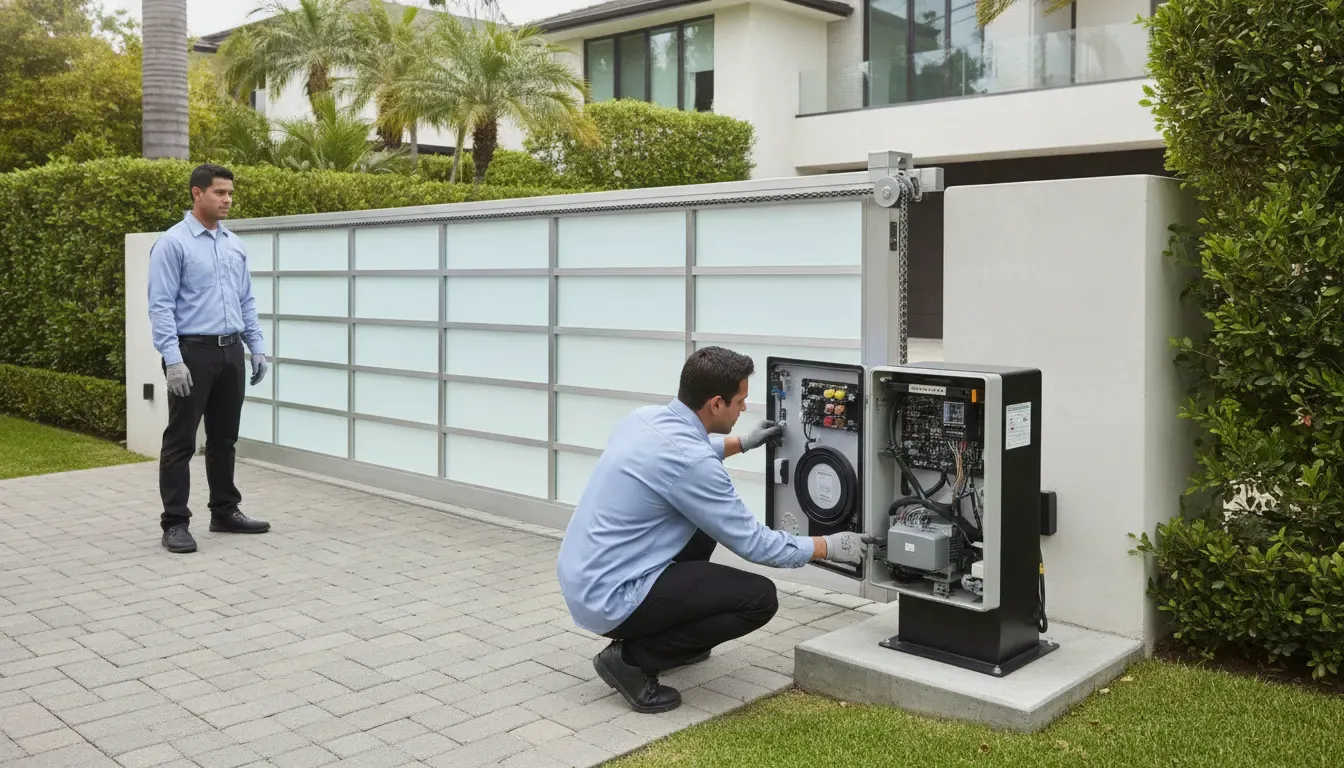
When comparing electric gate motor repair vs replacement, the right answer depends on the failure, the condition of the full operator system, the availability of compatible parts, and how reliably the gate has been working. A motor that stops because of a sensor, wiring, control, or adjustment problem may be repairable. An operator with repeated failures, severe wear, or obsolete components may be a better candidate for replacement. The first step is a proper diagnosis, not a guess. For broader service information, see Electric Gate Motor Repair Services in Los Angeles and Orange County.
Schedule an electric gate motor assessment with InteleGates
Factors that determine whether repair or replacement is the right choice
An electric gate operator is a system, not just a motor. The operator works with the gate, track or hinges, limit settings, safety devices, controls, wiring, and access equipment. A technician needs to identify which part is failing before recommending a repair or a new operator.
- The actual cause of the failure: A gate that will not move may have a power, control, sensor, remote, limit, or motor problem. Replacing the motor will not correct a fault elsewhere in the system.
- The condition of the gate: A heavy or binding gate puts extra strain on an operator. Rollers, hinges, tracks, stops, and alignment all affect motor performance.
- The operator's service history: One isolated failure is different from a pattern of repeated breakdowns, overheating, noise, or intermittent operation.
- Parts and compatibility: A repair depends on finding the correct part and confirming that it works with the operator, controls, safety equipment, and gate movement.
- The property's current needs: A home driveway, a multi-tenant property, and a commercial entrance may have different traffic, access-control, and safety requirements.
These factors are why a replacement recommendation should follow a documented diagnosis. It should explain what failed, what remains serviceable, and whether the proposed solution fits the existing gate and access system.
Signs an electric gate motor is approaching end of life
No single symptom proves that an operator must be replaced. However, several warning signs together can show that the motor or its supporting components are becoming unreliable.
Repeated failures after recent service
If the same operator stops working again soon after a repair, the original symptom may not have been the whole problem. The repair may also have exposed wear in another component. A careful assessment should review the repair history and test the operator as a complete system rather than replacing parts one at a time without finding the pattern.
New grinding, clicking, or straining sounds
Unusual noise can point to worn gears, bearings, chain-drive components, poor alignment, or a gate that is creating too much resistance. A sound by itself is not enough to identify the failed component. The technician should observe the gate movement and inspect the operator connection before deciding whether a targeted repair is appropriate.
Slow, uneven, or incomplete movement
A gate that moves more slowly than before, shakes, stops before the closed position, or needs more than one command deserves attention. The cause could involve the gate path, limit settings, safety sensors, power supply, control board, or motor. If several of these conditions appear together, replacement may provide a more dependable path than continuing to chase isolated symptoms.
Intermittent operation and unexplained resets
An operator that works in the morning and fails later may have an electrical, control, or thermal issue. Intermittent faults are especially important on properties that need consistent access for residents, staff, deliveries, or emergency response. A technician can test the power and control path and determine whether the fault is repairable or part of a wider decline.
Obsolete equipment or unavailable compatible parts
An older operator can remain mechanically sound, but a repair becomes harder when essential boards, sensors, remotes, or other compatible components are no longer available. In that situation, a replacement may be recommended because the complete system can be matched to the gate and current access-control requirements.
When repair is the practical option
Repair is often the sensible choice when the operator is in otherwise good condition and the failure has a defined, serviceable cause. A targeted repair can restore reliable operation without changing a system that still fits the gate and property.
- The operator has a clear, isolated fault such as a failed sensor, damaged wiring, limit issue, control component, or worn service part.
- The gate moves freely and is not placing unusual load on the operator.
- The operator has been reasonably reliable and does not show widespread wear.
- Compatible replacement parts and controls are available.
- The existing safety devices and access controls can continue to work correctly after service.
Repair should not mean replacing a part without testing the reason it failed. For example, a control component may be damaged by a power problem, moisture, poor wiring, or excessive mechanical load. Correcting the underlying condition helps prevent the same failure from returning.
Owners can learn more about the diagnostic process through InteleGates' electric gate system repair service. The service is for existing gate systems, with the operator and access controls assessed together.
When motor replacement makes more sense
Replacement may be the better recommendation when the operator has reached the point where reliability, compatibility, or safety cannot be restored through a focused repair. The recommendation should still be based on inspection, not on the age of the equipment alone.
- Failures are becoming frequent: A pattern of breakdowns can indicate that several internal or connected components are wearing out.
- The operator is severely worn: Excessive noise, overheating, damaged drive components, or poor movement may point to broad mechanical or electrical deterioration.
- Critical parts are no longer supported: If the correct board, control, safety component, or remote cannot be sourced, a compatible replacement system may be more dependable.
- The existing operator no longer fits the property: Changes in traffic, gate use, access control, or safety needs can make an older system unsuitable even if it still runs.
- The gate itself is creating persistent strain: A replacement operator should not be installed until alignment, hinges, rollers, tracks, stops, and gate movement have been assessed.
A new operator is not automatically the answer to a gate that is slow or stuck. If the gate is binding, the underlying mechanical problem should be corrected first. Otherwise, the new operator may face the same strain and the property owner may experience another failure.
Ask InteleGates whether your gate motor should be repaired or replaced
How InteleGates provides an honest repair vs. replacement assessment
InteleGates starts with the problem the property owner is experiencing, then checks the operator and the rest of the gate automation system. The goal is to diagnose the problem before recommending replacement.
- Document the symptom: The technician records what the gate is doing, when the failure occurs, and whether the issue is repeatable.
- Inspect the gate movement: The gate is checked for binding, alignment issues, worn moving parts, and conditions that can overload the operator.
- Test power and controls: The electrical supply, control board, safety devices, remotes, keypads, loops, and other connected equipment are considered as part of the diagnosis.
- Assess the operator: The motor, drive arrangement, mounting, wiring, limits, and signs of heat or mechanical wear are reviewed.
- Explain the options: The recommendation identifies whether a targeted repair, related system correction, or compatible operator replacement best fits the condition of the property.
This approach matters because the visible symptom is not always the failed component. A gate that will not close may be responding to a safety sensor. A remote that appears unreliable may be affected by the receiver, control board, or access system. A motor that sounds strained may be working against a gate alignment problem. Accurate diagnosis protects the property owner from an unnecessary equipment change and helps ensure that a replacement solves the actual issue.
What property owners should do when a motor fails
When a gate motor stops working, keep people and vehicles clear of moving components and avoid forcing the gate through its cycle. Do not open an operator cabinet, bypass a safety device, or work around live electrical connections. Those actions can create a safety hazard or hide the original fault.
Instead, note the symptoms for the technician. Helpful details include whether the gate is open or closed, whether the operator makes a sound, whether the remote or keypad responds, whether the problem affects every user, and whether the failure followed weather, an impact, a power interruption, or another event. This information can make the assessment more efficient without turning a property owner into the repair technician.
Once the system is restored, planned service can help identify wear before the next interruption. InteleGates' electric gate system maintenance guidance covers the operator, gate movement, safety devices, and related controls.
Request a professional electric gate motor repair or replacement assessment
Frequently Asked Questions
How do I know if my electric gate motor needs repair or replacement?
A clear isolated fault, a freely moving gate, available compatible parts, and a history of reliable operation often support repair. Repeated failures, severe wear, obsolete components, or a system that no longer meets the property's needs may support replacement. An on-site diagnosis should determine which condition applies.
Does a slow gate always need a new motor?
No. A slow gate can be affected by alignment, rollers, hinges, tracks, limits, safety devices, power, controls, or the motor itself. The gate and operator should be tested together before anyone recommends replacement.
Can a new operator fix a gate that keeps stopping?
Only if the operator is the actual cause. A gate may stop because of a sensor response, a mechanical obstruction, a control issue, or an electrical fault. Replacing the operator without checking those conditions can leave the original problem unresolved.
What does InteleGates check before recommending replacement?
InteleGates checks the reported symptom, gate movement, operator condition, wiring, controls, safety devices, access equipment, and the availability of compatible service parts. The company diagnoses the problem before recommending replacement and installs on existing gates.
Should I repair a gate motor myself?
Electric gate operators combine moving equipment with electrical connections and safety devices. Property owners should keep clear of the system and arrange professional service rather than opening the operator, bypassing sensors, or attempting motor repairs themselves.
Contact InteleGates for an honest electric gate motor assessment.