
InteleGates Guide
Gate Access Control for HOA: A Manager's Guide
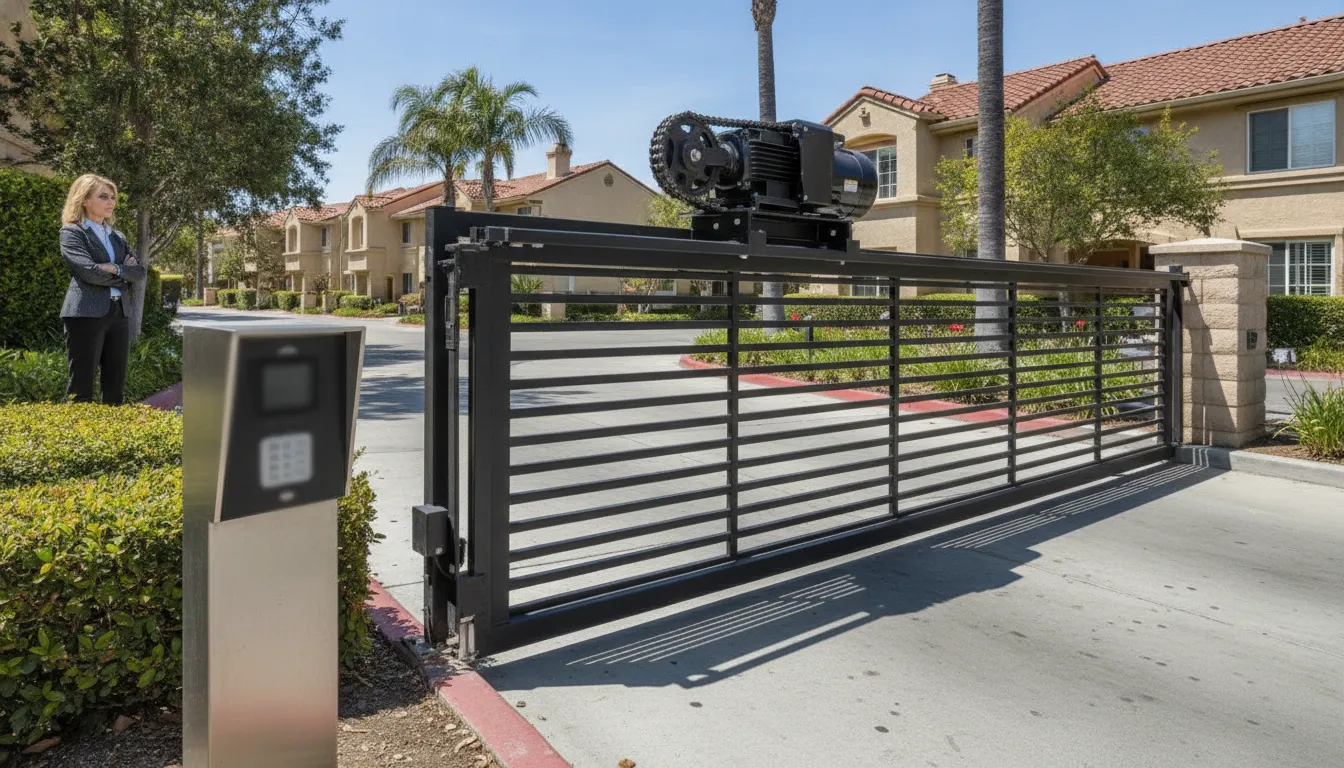
For an Orange County HOA board or rental-property manager, gate access control for HOA communities is an everyday operating decision. Residents expect a smooth arrival. Guests need a clear way to reach the right resident. Vendors and contractors need access that matches their schedule. Managers also need a practical process for updating credentials as occupancy, staffing, and service assignments change.
Gate access control for HOA communities combines an entry method, an electric gate operator, safety equipment, and an administrative process. Intercoms, telephone entry, keypads, key cards, RFID credentials, remotes, and mobile options can serve different user groups. The best plan matches each method to traffic patterns, visitor handling, credential administration, and the motor operating the gate.
That makes the operator central to the decision. An access device starts an authorization request, while the electric gate motor and control equipment carry out the opening cycle. A professional assessment connects those pieces to the property layout, entry traffic, user groups, and service plan.
Talk with InteleGates about your HOA or rental property's gate access plan.
The following guide gives property managers a framework for evaluating access systems, organizing residents and visitors, and planning professional service across Los Angeles and Orange County.
What Does Gate Access Control for HOA Communities Need to Handle?
An HOA or rental property has several access groups moving through the same entry point. Permanent residents and tenants need dependable daily entry. Guests need a convenient path that connects them with a resident or host. Landscaping teams, delivery drivers, vendors, and contractors may need access during defined service windows. Property staff may need administrative credentials for recurring duties. Each group benefits from a clear, documented workflow.
Management also needs a process for move-ins, move-outs, lost credentials, staff changes, and vendor rotation. The exact tools can vary, but the operating plan should identify who approves access, which credential is assigned, how the permission is recorded, and when the authorization is reviewed. A well-organized process keeps daily administration predictable as the community changes.
Residents Need a Simple Daily Experience
Resident access should fit the arrival habits of the property. A key card, RFID credential, remote, keypad, telephone-entry connection, or compatible mobile option may serve the community. The choice depends on the entrance, vehicle flow, resident expectations, and equipment already installed.
Management should pair convenience with clear records. A credential register can include the resident or tenant name, unit, credential type, issue date, and review status. When a household or lease changes, the manager has a defined process for updating the access record. That approach supports smoother communication and keeps the equipment aligned with current occupancy information.
Guests, Vendors, and Contractors Need Defined Paths
Visitor and service access works best when residents and vendors understand what happens at arrival. An intercom or telephone-entry system can connect a visitor with a resident. A keypad may serve approved users who receive an assigned code. A manager may coordinate recurring contractor access through a credential or scheduled procedure supported by the installed system.
Written arrival guidance helps reduce confusion at busy entrances. It can identify the visitor contact, service window, arrival lane, and escalation contact. The property team can then administer access while a qualified gate professional handles equipment assessment, installation, programming, repair, and maintenance.
Which Access Systems Fit an HOA or Rental Property?
Each access method supports a different resident and management workflow. Many communities combine two or more methods, such as RFID for regular vehicle entry and telephone entry for guests. The table below provides a planning starting point. Equipment selection should follow a site review that considers the electric gate motor, operator controls, entry lanes, power, communications, and traffic volume.
| System | Resident experience | Guest and contractor workflow | Management considerations |
|---|---|---|---|
| Intercom or telephone entry | Residents communicate with a visitor and authorize an arrival through a designated station or phone connection. | Guests, delivery drivers, and service providers can reach a resident before entry. | Review directory updates, call routing, station placement, and operator connection. See InteleGates access control services. |
| Keypad | Residents enter an assigned code at the gate for a familiar daily routine. | Approved contractors or staff may receive credentials that fit the community's operating policy. | Plan code assignment, recordkeeping, updates, and user support. Explore gate keypad systems. |
| Key card | Residents use an individual card at a reader for straightforward entry. | Cards can be associated with approved residents, staff, or contractors and replaced individually. | Review card-reader location, credential records, replacement steps, and entry-card service through key card gate access. |
| RFID | An enrolled credential or vehicle can be recognized at the reader, depending on the selected configuration. | Management can organize approved resident and vendor credentials as responsibilities change. | Assess reader placement, enrollment administration, vehicle flow, and operator compatibility. Read about RFID gate access. |
| Remote or mobile access | Residents may use a remote or compatible mobile experience supported by the chosen equipment. | Managers can evaluate user permissions, visitor handling, and service access in the system design. | Review connectivity, account administration, user support, and the equipment response when communications need service. |
InteleGates' customer context identifies 11 access control system types, including intercoms, keypads, key cards, magnetic locks, remotes, telephone entry, buzzer systems, RFID, gate automation, underground vehicle detection, and integrated access control service. A property manager can use that range as a planning menu, then select the combination that fits the community's actual traffic and equipment.
Access control works as a coordinated installation. The reader, intercom, telephone-entry unit, control panel, safety devices, and electric gate motor should be evaluated together. Review how gate access control systems work before comparing individual devices.
How Does Gate Access Control for HOA Work for Residents, Tenants, Guests, and Contractors?
A repeatable workflow gives managers a practical way to organize access as people and responsibilities change. The process below can be adapted to an HOA, apartment community, condominium property, or managed rental site.
- Map the access groups. List permanent residents, tenants, guests, recurring vendors, one-time contractors, onsite staff, and management users. Describe when each group arrives and which entrance or lane they use.
- Assign a credential type. Match the user group to a key card, RFID credential, remote, keypad code, telephone-entry authorization, intercom process, or supported mobile option. The credential should fit the equipment and the user's routine.
- Define approval and review rules. Record who can approve a credential, what information the manager keeps, and when the permission receives a review. Tie temporary service access to a host, appointment, work order, or defined service period.
- Give residents and vendors arrival guidance. Explain how guests contact residents, where contractors report, which hours apply, and who receives an access issue. Clear instructions help the entry lane run smoothly during busy periods.
- Keep records current. Update credential holders, unit or property records, expiration information, and service contacts. A recurring review helps the equipment reflect current residents, tenants, staff, and vendors.
- Escalate equipment issues to a qualified provider. When access behavior points to a motor, operator, control, safety, or compatibility issue, arrange professional assessment, programming, installation, repair, or maintenance. This keeps the administrative process separate from technical service.
Property teams can own the approval policy and records while a gate and access-control provider evaluates the equipment. This division creates a clear operating model for residents and managers. It also gives the motor and access devices a service plan that follows the community's daily use.
What Should Property Managers Look for in Gate Access Control for HOA?
Property managers can use four planning questions when reviewing an existing system or preparing an upgrade. The goal is a dependable operating plan that suits the property today and remains manageable as the user base changes.
Does the system fit the user volume and traffic pattern?
Count the residents, tenants, staff, recurring vendors, and regular service providers who use the entrance. Observe arrival periods, vehicle queues, visitor patterns, and the movement of pedestrians near the operating area. A community with a single residential entrance may need a different combination than a property with separate resident, visitor, and service lanes.
Traffic information also helps guide the electric gate motor and operator review. The equipment should be matched to the opening cycles and the physical layout. An access reader alone cannot answer those questions. The complete gate system deserves the assessment.
Can management update credentials with clear records?
Credential administration should give managers a repeatable way to issue, update, review, and retire access. The method may use cards, RFID credentials, keypad codes, remotes, phone-entry contacts, or another supported option. A current register helps the team answer routine questions and coordinate changes with residents, tenants, and vendors.
Ask how the selected system supports user roles, visitor approvals, recurring service access, and record review. The right answer comes from the property's process and the equipment's actual capabilities.
Will the access device work with the operator and safety equipment?
The entry device sends an authorization request. The control equipment and electric gate motor carry out the opening cycle. The complete installation should be reviewed for connection, timing, detection, safety response, and traffic flow. A professional assessment can identify compatibility questions before the property selects a device or changes an existing access workflow.
For a related look at automation equipment, review InteleGates' gate automation service. The focus should remain on the motor, operator, access device, and the way those components work together at the property.
How will the property handle service and future changes?
Ask who will inspect the operator, access devices, power connections, communications equipment, and safety components. Confirm how the property reports an entry problem and how the provider documents service. A defined contact path helps managers coordinate the association, residents, vendors, and the service team.
Future planning can include additional entry points, new credential types, changing resident turnover, updated management procedures, and equipment refreshes. A site assessment connects those possibilities to the current motor and access-control setup.
Why Does Gate Access Control for HOA Depend on the Electric Gate Operator?
An intercom, keypad, card reader, RFID credential, remote, or mobile authorization begins the entry request. The electric gate motor and operator then receive the command and complete the opening cycle. That relationship makes the operator an essential part of the access-control plan.
A professional review can consider the operator's capacity, the entry and exit points. Available power and communications, safety equipment, traffic flow, and the way each user group approaches the property. This information helps managers connect the device choice to the equipment already serving the entrance.
Authorization has to reach the operator correctly
Each access method creates a different user experience. A resident may present a credential, a visitor may speak with a resident through telephone entry, and a contractor may follow a defined service-access process. The control equipment must pass the approved command to the operator consistently. Testing can cover entry requests, exit operation, visitor communication, user records, and ordinary traffic conditions.
Professional service keeps the system coordinated
InteleGates provides electric gate motor and access-control installation, repair, and maintenance services for properties in Los Angeles and Orange County. The company context identifies sliding, swing, barrier-arm, and vertical-lift motor service, along with access-control options for communities and managed properties. A property manager can use a professional site assessment to connect the entrance device with the operator and the daily access process.
Managers can also review electric gate system maintenance as part of the community's ongoing service plan. The maintenance discussion should include the motor, controls, safety equipment, access devices, and communications components.
How Can an HOA Build a Reliable Maintenance and Response Plan?
A dependable community entry plan includes equipment service, credential administration, and resident communication. A recurring plan helps the property team respond consistently as residents, tenants, vendors, and staff change.
Schedule professional inspections and service
Set a recurring review with a qualified gate and access-control provider. The service visit can consider the operator, moving components, safety devices, access readers, control equipment, power connections, and communications equipment. The provider can document observed conditions, completed service, and recommended follow-up for the property manager.
Keep equipment and credential records together
Maintain a service record for each entrance, including equipment details, inspection dates, observed conditions, and service history. Keep an administrative record for active remotes, cards, RFID credentials, keypad users, and telephone-entry contacts. When a resident, tenant, or vendor changes, the manager can follow the established review process and coordinate any required system update.
Define communication and response steps
Give residents and onsite teams a simple way to report an access issue. Identify the person who receives the report, the information to record, and the provider contact for equipment service. A response plan can distinguish an individual credential issue from an operator, power, communications, or safety concern.
Seasonal reviews can also help the team keep records current. Review new residents, departing tenants, recurring contractors, staffing changes, equipment alerts, and service recommendations. If the property is planning a remodel, entrance change, or new access method, schedule a professional assessment before making equipment decisions.
Contact InteleGates to review gate access control for your HOA or rental property.
Frequently Asked Questions
What access control system works best for an HOA community?
The best system matches the community's user groups, traffic pattern, visitor process, recordkeeping needs, and electric gate operator. Intercoms and telephone entry support visitor conversations. Keypads, key cards, RFID credentials, remotes, and mobile options can support regular entry. A professional assessment connects the access device with the motor and safety equipment.
How can property managers control access for tenants and contractors?
Managers can organize access by assigning each user group an appropriate credential, documenting approvals, setting review dates, and updating records as occupancy or service assignments change. A contractor may follow a defined service window, while a tenant receives a credential tied to the current property record. The installed system determines the available administration features.
Can an HOA manage gate access remotely?
Some access-control configurations support remote administration, visitor management, or mobile permissions. The property team should confirm the actual connectivity, user roles, notification controls, and service process for the selected equipment. Remote features work best when the local operator, power, communications, and access devices receive the same coordinated review.
Why does the electric gate operator matter when choosing an access device?
The access device starts the authorization request, while the operator receives the command and moves the gate through its opening cycle. Compatibility, traffic capacity, safety equipment, power, and control connections all affect the complete installation. Reviewing the motor and access device together supports dependable operation for the property.
How often should an HOA review its gate access system?
An HOA can review credentials whenever residents, tenants, staff, or vendors change, then schedule recurring professional equipment service based on the property's use and provider recommendations. The review should cover active credentials, visitor procedures, operator condition, access devices, safety functions, and service records. Seasonal administrative reviews help keep the plan current.
Ready to Plan Better Gate Access Control?
HOA boards and rental-property managers can build a clearer entry experience by matching user groups, credentials, visitor procedures, operator capacity, and service responsibilities. InteleGates serves Los Angeles and Orange County with electric gate motor and access-control installation, repair, and maintenance support.
Request a professional gate access control review from InteleGates.