
Gate Jammed at the Garage Entrance Again?
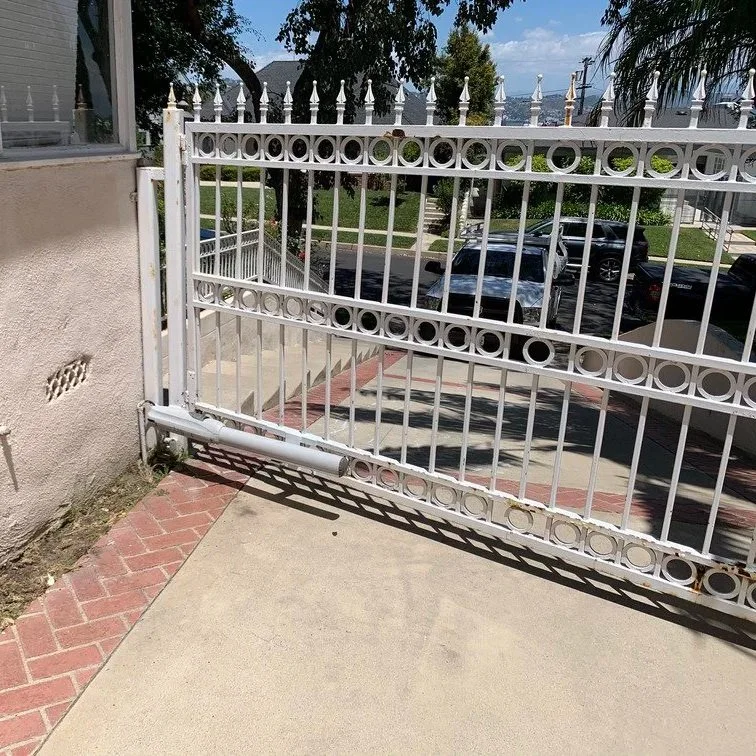
When the main entry gate in a gated community or apartment garage keeps failing during the morning rush, frustration builds fast, and so do complaints about security and rising repair bills.
Residents are lining up, fobs are not responding, and the garage gate groans halfway before stopping. When the main entry gate in a gated community or apartment garage keeps failing during the morning rush, frustration builds fast, and so do complaints about security and rising repair bills.
Choosing the right gate motors for gated communities and apartment garages in Los Angeles, CA, is not about brand names or horsepower alone. It is about matching real-world traffic, liability exposure, and daily wear to equipment that can actually handle it.
The Morning Rush Test Most Motors Fail
If you manage a property in Los Angeles, CA, you already know the real stress test happens between 6:30 and 9:00 in the morning. Residents head to work, delivery trucks roll in, and rideshare drivers queue up. A motorized gate that works fine in a single-family driveway may struggle under that kind of repeated cycling.
Many communities search phrases like, " Why does our apartment garage gate keep breaking? In most cases, the motor installed was rated for light residential use. Gated communities and multi-unit garages demand high-duty-cycle motors designed to operate dozens of times per hour without overheating.
Duty cycle refers to how often a motor can run within a given period without damage. Homeowners often misunderstand it as speed or power. A motor can be strong but not built for constant repetition. In high-density properties, a low-duty-cycle motor overheats, trips thermal protection, and shuts down right when residents need it most.
Over time, repeated overheating breaks down the internal insulation and shortens the motor's life. What looks like random failure is often predictable wear from being underspecified from day one.
Security is only as strong as the weakest link.
Property owners frequently focus on cameras, lighting, and access control systems. A neglected gate motor can undermine all of that. A gate that sticks open after repeated strain creates gaps in perimeter security.
In gated communities and apartment garages in Los Angeles, CA, a malfunctioning motor does more than inconvenience residents. It exposes vehicles and common areas to unauthorized access. Loss of privacy becomes a real concern when strangers can follow vehicles inside without challenge.
We often hear that our gate works most of the time, so it must be fine. That mindset overlooks intermittent failures. A motor that stalls once every few days may still open eventually, but each failure creates a window of vulnerability. Over months, those small lapses add up.
Choosing the right gate motors means considering not only daily traffic but also how the system behaves under peak load and edge cases. Reliability during high-stress moments defines whether a property feels secure.
Common Mistake: Treating A Community Like A House
One of the biggest mistakes we see involves using residential-grade motors in multi-unit environments. The assumption goes like this: if a motor can open a heavy driveway gate, it should work for a community entrance. That assumption ignores cycle frequency, heat buildup, and control complexity.
Residential motors typically operate a few times per day. A community entrance might cycle a hundred times before noon. Internal components such as capacitors, relays, and gear assemblies experience far more stress in a shared property.
Apartment garages add another layer of complexity. Enclosed spaces trap heat. Motors operating inside garages face higher ambient temperatures, which accelerates thermal fatigue. A motor rated for moderate outdoor use may fail quickly inside a confined parking structure.
Professional selection of gate motors for gated communities and apartment garages requires evaluating real traffic patterns, not theoretical averages. Counting units, estimating daily cycles, and planning for growth all matter. Installing a motor that barely meets current demand leaves no margin for increased occupancy or additional vehicles.
Mechanical Design Matters More Than People Think
Many property managers search for the best gate motor for a busy apartment complex. The answer depends not only on the motor itself but also on gate design and mechanical setup.
A poorly aligned sliding gate forces the motor to compensate for friction. Undersized rollers or tracks that collect debris increase the load. Over time, the motor works harder than intended, drawing more current and generating excess heat.
Swing gates in gated communities also present challenges. Long gate leaves act like sails in windy conditions. Motors must handle both weight and lateral force. In Los Angeles, CA, coastal breezes and open layouts amplify those forces.
When we evaluate properties at Intelegates, we inspect the entire system. We check track straightness, hinge alignment, and structural integrity. Installing a heavy-duty motor on a poorly supported gate does not solve the root problem. Mechanical resistance will still shorten motor life.
Proper gear reduction, torque management, and soft start features reduce stress. Gradual acceleration limits sudden strain on brackets and mounting plates. Over the years of operation, those design choices have significantly influenced reliability.
Access Control Integration And Motor Compatibility
Modern gated communities rely on keypads, card readers, remote fobs, and sometimes smartphone apps. Selecting a motor without considering control integration can lead to communication errors and inconsistent operation.
Apartment garages often integrate with resident databases or parking management systems. Motors must accurately respond to input signals while meeting safety standards. A delayed response or partial opening can cause traffic backups on narrow ramps.
Some older motors lack advanced control boards capable of handling modern access systems. Property owners may experience unexplained glitches when integrating new access technology with outdated motor hardware.
Selecting gate motors for gated communities and apartment garages involves verifying compatibility with current and future access control. Investing in a motor platform that supports programmable logic and expandable interfaces reduces long-term limitations.
Noise Complaints In Dense Urban Living
In Los Angeles, CA, many communities sit close to neighboring properties. Garage gates that grind, bang, or squeal during early morning cycles generate complaints quickly.
Noise often results from mechanical wear or underpowered motors straining under load. Residents in adjacent units may hear repeated jolts and vibration through structural walls. Over time, those sounds become daily irritations.
Choosing the right motor includes evaluating drive type, gear design, and mounting isolation. High-quality motors with smooth start and stop reduce vibration transfer. Properly aligned tracks and balanced gate leaves also lower operational noise.
Apartment managers who ignore minor noise issues may face escalating resident dissatisfaction. Small mechanical adjustments and motor upgrades can significantly improve acoustic comfort.
Planning for Long-Term Cost, Not Just Purchase Price
Budget constraints often influence equipment selection. Lower upfront cost can appear attractive during capital planning. However, in high-use environments, replacement frequency and downtime costs outweigh initial savings.
When a gate motor fails in a gated community, the ripple effects are immediate. Residents call management. Security staff may need to monitor entrances manually. Delivery schedules get disrupted. Labor costs increase.
Choosing robust gate motors reduces emergency service calls and parts replacement. High-duty-cycle motors with durable gear assemblies last longer under stress. While the initial investment may be higher, the overall cost of ownership drops when breakdowns decrease.
We frequently advise clients to view motor selection as infrastructure planning rather than appliance shopping. Community entrances function as shared assets. Reliability impacts daily life for dozens or hundreds of residents.
What We Evaluate Before Recommending A Motor
When consulting on gated communities and apartment garages, our team at Intelegates begins with a detailed assessment. We count units, analyze peak entry times, and inspect existing mechanical components.
We calculate estimated daily cycles based on occupancy and typical traffic patterns. We examine gate weight, length, and environmental exposure. We also evaluate electrical supply capacity to confirm it can support higher-performance motors.
Our goal is not to oversell the largest motor available. Instead, we match torque, duty cycle, and control compatibility to real usage. We also plan for future growth. New residents, added parking, or delivery trends can increase demand over time.
By aligning motor capability with actual operating conditions, communities avoid chronic failures and repeated repair expenses.
FAQs
Why does our apartment garage gate keep overheating?
Overheating usually results from a motor rated for lower duty cycles than the property requires. Frequent opening and closing generate heat, and without sufficient cooling capacity, thermal protection shuts the motor down. This is especially common in multi-unit properties where usage exceeds standard residential expectations.
How do I know if a gate motor is strong enough for a gated community?
Strength alone is not enough. Duty cycle rating, environmental conditions, and integration with access control systems all matter. A professional evaluation of traffic volume and gate design provides a reliable answer and helps ensure long-term performance without excessive wear.
Are residential gate motors suitable for small apartment buildings?
In most cases, residential motors struggle in multi-unit environments because of higher cycle frequency. Even small apartment buildings often exceed typical residential usage patterns, which can lead to faster wear and more frequent failures.
Can upgrading the motor reduce repair calls?
Yes, selecting a high-use motor and properly aligning the mechanical components reduces strain and component wear. Fewer breakdowns translate to fewer service interruptions and lower long-term costs, making upgrades a practical investment.
How often should gate motors in communities be inspected?
Busy properties benefit from scheduled inspections at least once per year, with additional checks for high-traffic sites. Routine maintenance identifies wear before it turns into unexpected failure and helps extend the lifespan of the system.
InteleGates Inc. is a leading comprehensive gate access system service provider in Los Angeles and Orange County. We provide residential, commercial, and industrial solutions for installation, maintenance, and repair of electric gate motors and systems. We also offer emergency gate repair. Our skilled technicians can handle all types of issues, from simple to complex. Call us!
