
InteleGates Guide
Gate Keypad vs Intercom: Choosing Access for Your Property
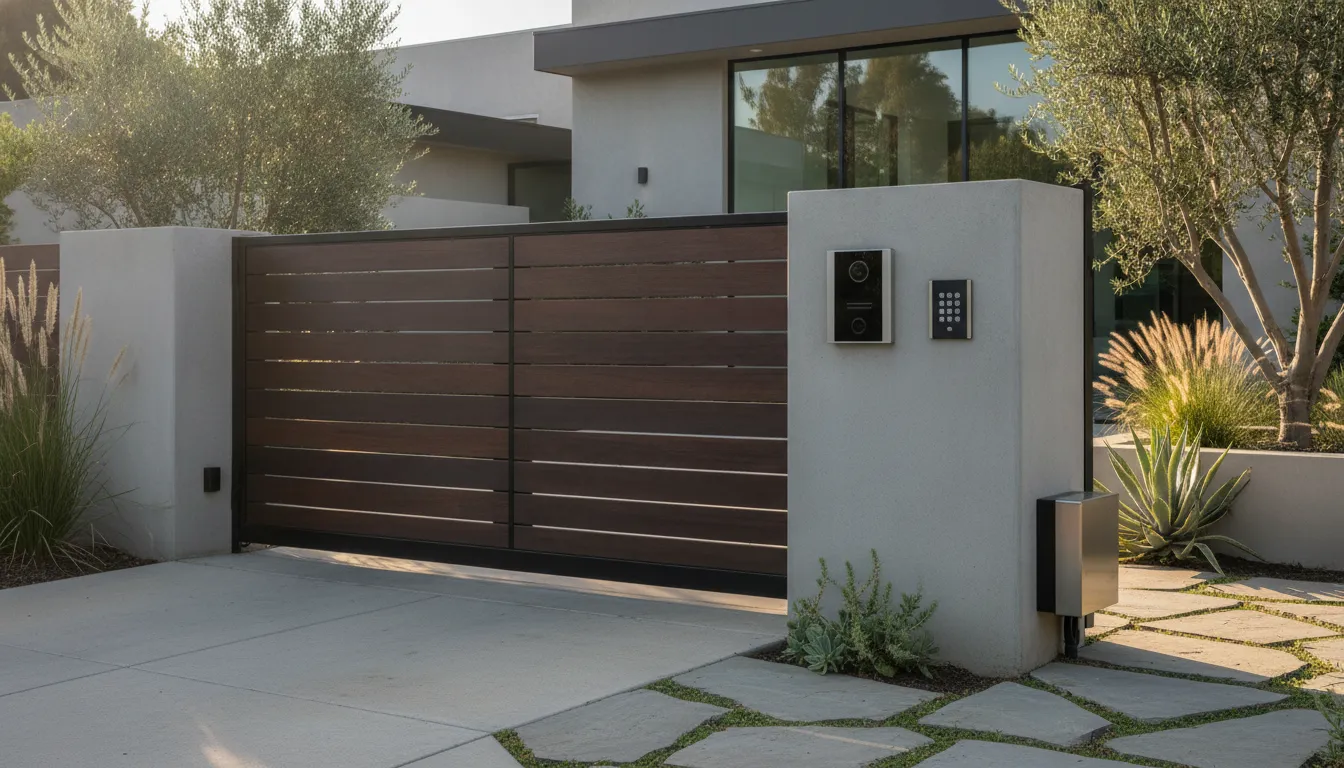
Choosing gate keypad vs intercom is really a decision about how people should request access. A keypad authenticates an authorized user with a code. An intercom gives a resident, manager, or attendant a chance to speak with a visitor before releasing the gate operator. For homes, rental communities, and commercial properties in Los Angeles and Orange County, the right fit depends on daily traffic, visitor patterns, and how credentials are managed.
Talk with InteleGates about the right gate access system for your property.
Quick answer: Choose a keypad when known users need fast, repeatable entry with an assigned code. Choose an intercom when visitors need to identify themselves and receive permission at the entrance. Many properties use both, pairing routine credentialed entry with direct visitor communication. In every arrangement, the access device works with an electric motor or operator that moves the gate.
This guide compares the two entry methods as distinct tools. It explains the user experience, credential management, visitor workflow, operator relationship, and practical planning questions that matter before an installation. The goal is a coordinated access-control system that serves the people using the property and supports dependable gate operation.
How Gate Keypad vs Intercom Choices Shape Daily Access
Quick answer: A keypad authenticates known users with a credential, while an intercom lets a resident, manager, or attendant speak with a visitor before entry. Choose between them by reviewing daily users, visitor frequency, response availability, and how each device will connect with the electric gate operator.
A gate keypad and an intercom can both begin an entry cycle, but they answer different questions. A keypad checks an authorized code. An intercom supports a conversation before entry. That distinction affects convenience, visitor handling, and the amount of active management required each day.
How a keypad handles known users
A keypad is well suited to residents, household members, employees, tenants, and recurring vendors. Each approved person can receive a code or credential according to the property's access plan. The user enters the code at the entrance, and the access-control system sends an authorized request to the gate operator.
This workflow is direct because routine arrivals can proceed through the credential check without requiring someone inside to answer a call. It can work especially well for a household with predictable access or a commercial property whose regular users arrive during established operating periods. The property owner or manager still needs a clear process for adding, changing, and removing credentials as users and responsibilities change.
How an intercom handles visitors
An intercom is designed for a different moment: a person arrives without an established credential and needs to communicate with someone who can authorize entry. Audio equipment supports a conversation. Video-capable equipment can add visual context when the property and system design support it.
The person inside can ask why the visitor has arrived, identify a delivery or service appointment, and decide whether to release the gate operator. This makes the intercom useful for residences that receive frequent guests, property managers coordinating vendors, and businesses that need staff involvement at the entrance. It also creates a human step, so the system should fit the response habits of the people responsible for answering.
The access-control device works with the motor. The keypad or intercom communicates an entry request, and the electric operator carries out the opening and closing cycle with its associated safety equipment. InteleGates explains the broader relationship between access hardware and gate automation on its access control service page and gate automation page.
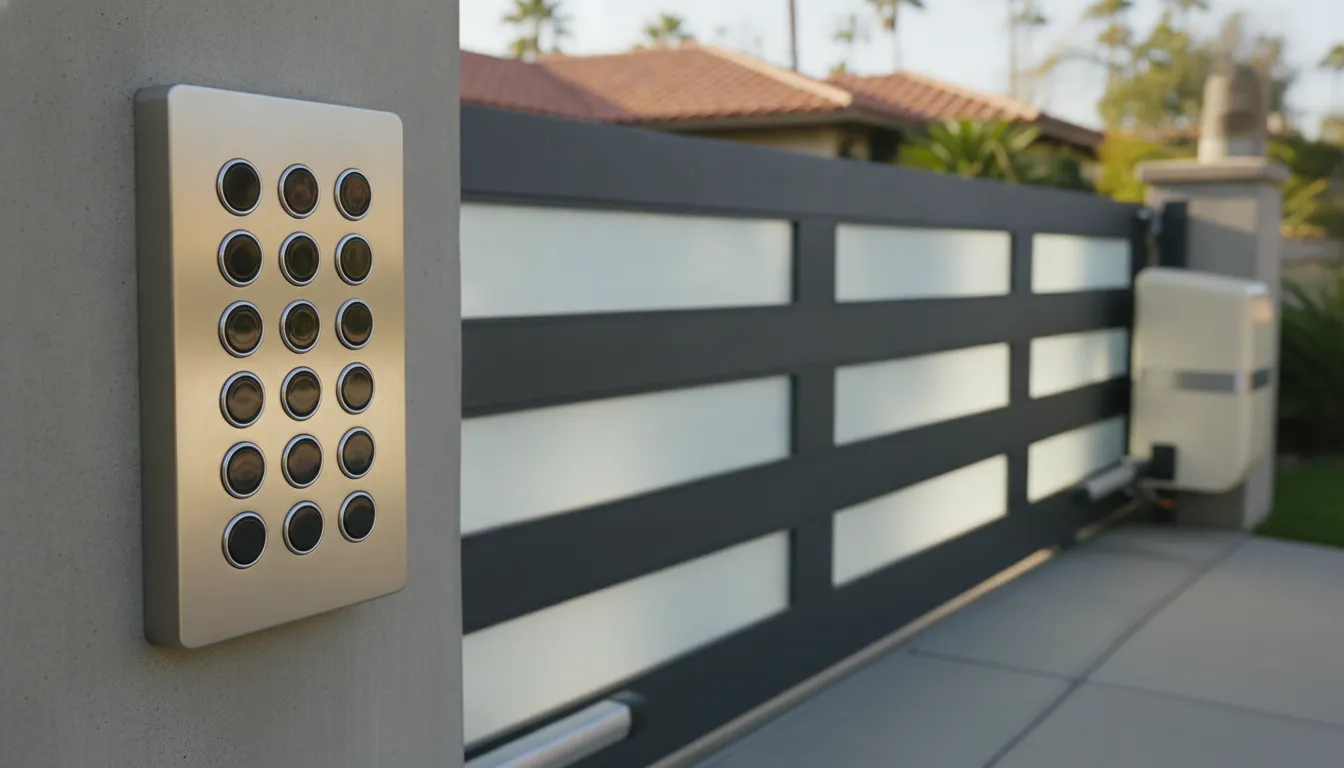
Which Entry Method Fits Your Residents, Guests, and Vendors?
Quick answer: Keypads generally fit known residents, employees, tenants, and recurring vendors. Intercoms generally fit guests, deliveries, and unfamiliar visitors who need to explain their purpose before entry. A combined system can separate routine credentialed access from visitor communication when the property needs both workflows.
Gate keypad vs intercom decisions become clearer when each user group has a defined entry path. A keypad serves approved users with credentials. An intercom supports a conversation when a visitor needs to identify themselves. The best choice starts with the people who arrive, not with the device name. List the regular users, occasional visitors, service providers, and property staff who interact with the entrance. Then consider whether each group needs automatic credentialed access or a conversation before entry.
| Property need. | Keypad strength. | Intercom strength. |
|---|---|---|
| Regular resident or employee entry. | Fast access for approved users with assigned credentials. | Useful when a user needs to contact someone at the property. |
| Guests and deliveries. | Works when guests receive temporary instructions or credentials. | Allows a resident or staff member to identify the visitor first. |
| Tenant or vendor turnover. | Codes can be organized around current authorized users. | Staff can speak with unfamiliar vendors before release. |
| Busy arrival periods. | Supports a predictable self-service entry flow. | May require enough response capacity to avoid delays. |
| Remote property management. | Useful when recurring users have a defined access plan. | Helpful when the system supports communication with an off-site manager. |
Residential driveway gates
A keypad can be a practical fit when a household wants convenient entry for known people and has a simple credential process. An intercom becomes more valuable when the home receives frequent guests, deliveries, caregivers, or service professionals and residents want a direct conversation before the gate opens.
Homeowners should also consider who will answer the intercom during work, school, travel, or evening hours. A device that depends on an immediate response should be paired with a realistic household workflow. A combined arrangement can let household members use a keypad while visitors use an intercom.
Rental communities and managed properties
Property managers often balance resident convenience with visitor coordination. Keypad access can support recurring users when credentials are issued and managed consistently. Intercom access can help staff handle guests, deliveries, prospective residents, and vendors who do not have routine credentials.
For a multi-unit property, the system plan should identify who manages credentials. How changes are recorded, and how a tenant or vendor's access is updated when the relationship changes. The physical gate operator, entry device, wiring, and user workflow should be evaluated as one system. InteleGates also provides an electric gate systems overview for property owners considering the motor and access components together.
Commercial driveways and facilities
Commercial properties may have employees, vendors, visitors, deliveries, and scheduled contractors arriving through the same entrance. A keypad can support a defined group of authorized users. An intercom can give staff a way to handle exceptions without distributing a permanent credential to every occasional visitor.
Traffic flow matters in this setting. The system should account for the approach lane, the position of the keypad or intercom, visibility, lighting, and the time needed for a person to respond. If a commercial site depends on rapid entry during a busy period, a credential-based lane and a visitor communication process may work better together than either method alone.
Ask InteleGates to review your resident, visitor, vendor, and gate-operator workflow.
Planning Credentials for a Gate Keypad and Intercom System
Access control is only as orderly as the process behind it. Before selecting a device, decide who can create credentials, who can change them, and who confirms that access matches the current user list. This planning is important for a private residence, and it becomes even more important when tenants, employees, or vendors change over time.
Keypad credential planning
Keypad users need a clear way to receive an authorized code and understand when it applies. A property may organize access by household, unit, employee group, vendor, or schedule. The exact approach depends on the selected equipment and system design. But the management principle remains consistent: current users should have the access they need, and former users should be handled promptly.
Shared codes can be convenient for a small group, but they provide less visibility into which person used the credential. Individual credentials can make administration clearer when the system supports them. A professional installer can help match the credential approach to the equipment, gate operator, and property workflow.
Intercom response planning
An intercom needs an answer path. At a residence, that may be a handset, mobile connection, or another compatible receiving device. At a managed or commercial property, it may involve a leasing office, security desk, property manager, or designated staff member. The system should be considered alongside the hours and responsibilities of those people.
Managers should define how visitors identify themselves, how staff confirm an appointment or delivery, and how the gate is released. A short, consistent process reduces uncertainty at the entrance. InteleGates can assess access-control needs alongside an electric motor, operator, and existing entry equipment through its access-control service.
Gate Keypad vs Intercom for Managed Properties
For managed properties, gate keypad vs intercom planning should connect resident credentials, visitor communication, and the electric gate operator. A keypad can streamline recurring entry. An intercom can give staff a way to handle guests and vendors who need a conversation. The right arrangement depends on the property's traffic and management process.
Neither a keypad nor an intercom automatically creates the right result by itself. The outcome depends on the device, installation, operator compatibility, credential process, user behavior, and ongoing service. A keypad provides a credential check. An intercom provides an opportunity for personal verification. The property's access policy determines how those capabilities are used.
- Convenience: A keypad can make routine entry quick for people who already have authorization. An intercom can make visitor handling clearer when a person inside is available to respond.
- Visitor control: An intercom supports a direct conversation before the gate opens. A keypad can support visitors when the property uses temporary or scheduled credentials.
- Administration: Both systems benefit from a documented process for user changes, vendor access, and credential updates.
- Privacy: A property can decide whether direct conversation, video context, or code-based entry best fits its residents and visitors.
- Traffic flow: The entry device should be placed where drivers can use it safely without obstructing the approach or conflicting with the gate cycle.
These factors belong in a whole-system review. The operator must be able to respond reliably, and the access device must communicate with the selected equipment. For repairs or a system that is not operating as expected, see InteleGates' electric gate system repair service.
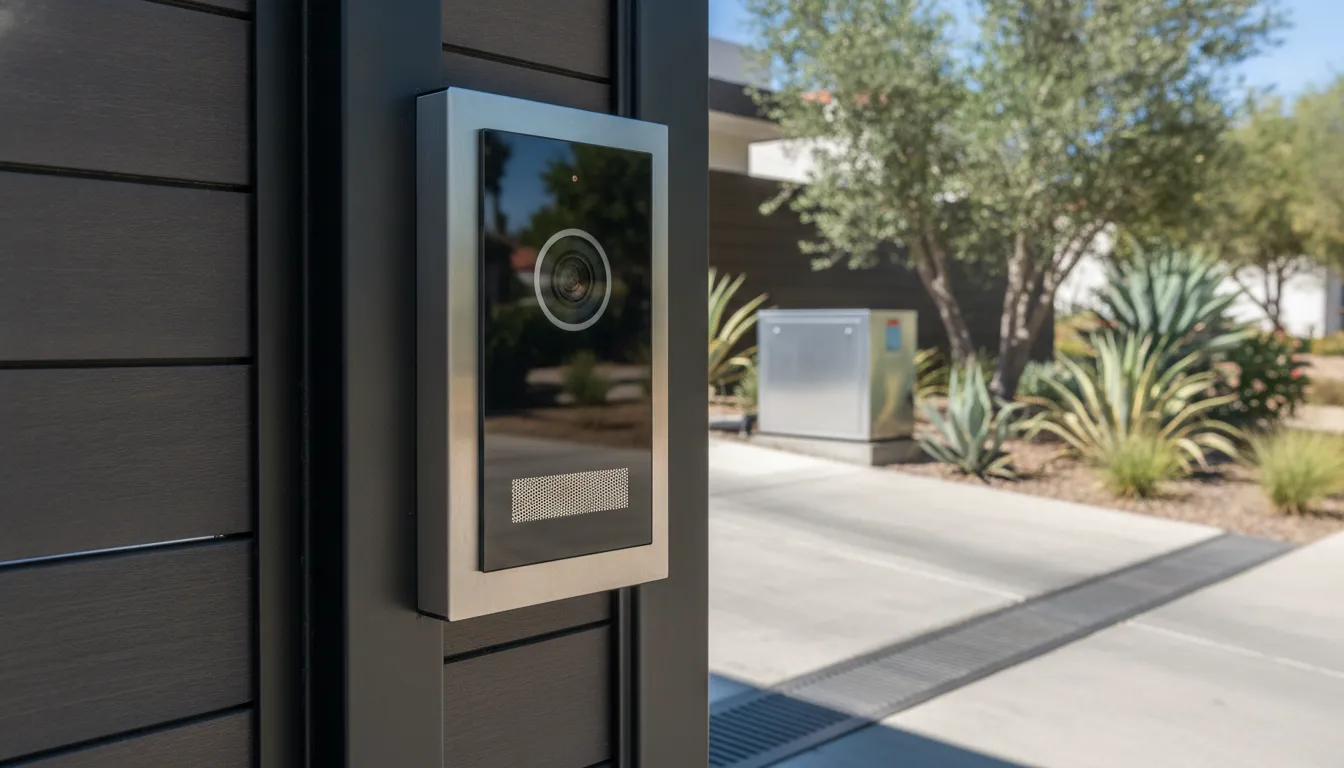
When Does a Combined Keypad and Intercom System Make Sense?
Quick answer: A combined keypad and intercom system makes sense when a property has both repeat users and visitors who need personal verification. The keypad handles authorized routine entry, while the intercom gives residents or staff a way to communicate with guests and vendors before releasing the electric gate operator.
A combined system can separate routine access from visitor decisions. Residents, employees, tenants, or recurring vendors can use the keypad when they have authorization. Guests and unfamiliar service providers can use the intercom when someone needs to speak with them before releasing the gate.
This arrangement can suit a property with multiple user groups. It can also support a transition from a simple entry method to a more managed visitor workflow. The design must still account for the number and placement of devices, communication paths, power, weather exposure, wiring, and compatibility with the electric operator.
Combining devices works best when the equipment follows a clear plan. The entrance should remain easy to understand for drivers and visitors. The owner or manager should know which device serves each user group, who maintains credentials, and who responds to intercom calls. A professional evaluation can identify whether the existing gate and operator can support the intended arrangement or whether service is needed first.
For properties that need urgent attention after an entry failure or gate problem, InteleGates offers emergency gate repair service. For routine system reliability, review the company's electric gate system maintenance service.
What Should You Ask Before Selecting a Gate Access System?
Quick answer: Start by identifying routine users, visitors, access administrators, intercom responders, traffic patterns, operator compatibility, and service needs. These answers show whether a keypad, intercom, or coordinated system best supports safe, dependable entry at the property.
Use these questions to turn a general preference into a workable plan:
- Who needs routine entry? List residents, employees, tenants, recurring vendors, and other authorized users.
- Who arrives without a credential? Identify guests, delivery drivers, contractors, and visitors who may need personal verification.
- Who manages access? Assign responsibility for credentials, user changes, and equipment coordination.
- Who answers an intercom? Define the response path and the hours when visitor communication is available.
- How does traffic approach the gate? Review vehicle position, visibility, lighting, weather exposure, and safe device placement.
- How does the device work with the operator? Confirm that the access equipment, electric motor, safety equipment, and gate configuration are compatible.
- What service plan supports the system? Plan for professional installation, maintenance, and repair so the entry method remains dependable.
These answers help distinguish a property that needs straightforward credentialed entry from one that needs active visitor communication. They also reveal when a coordinated keypad and intercom arrangement may provide a better daily experience.
Contact InteleGates before choosing a keypad, intercom, or combined gate access system.
Frequently Asked Questions
What is the main difference between a gate keypad and an intercom?
A keypad checks an authorized code, while an intercom enables a conversation between the visitor and someone who can authorize entry. A keypad is often convenient for known users. An intercom is useful when visitors need to explain who they are and why they are arriving.
Is a keypad or intercom better for a residential driveway gate?
The right choice depends on the household's daily access pattern. A keypad can serve residents and recurring service providers with established credentials. An intercom can help residents screen guests, deliveries, and unfamiliar visitors. Some households use both to keep routine entry direct while preserving a visitor communication option.
Can a keypad and intercom work with the same electric gate operator?
They can be coordinated when the selected access-control equipment, wiring, power, safety equipment, and electric operator are compatible. The exact arrangement depends on the gate configuration and system design. A professional assessment can confirm how the devices should communicate with the operator.
How do property managers handle tenants and vendors?
Managers should establish a repeatable process for issuing credentials, updating access when users change, and responding to visitors. A keypad can support authorized residents, tenants, and recurring vendors. An intercom can help staff handle guests or service providers who arrive without an established credential.
What should I do if the gate access device is not working?
Arrange professional service so the access device, wiring, power, safety equipment, and electric motor can be evaluated together. Avoid treating a keypad or intercom issue as an isolated component problem when the operator or connected system may also affect the entry cycle. InteleGates provides electric gate repair and access-control services for Los Angeles and Orange County properties.
Plan the Right Gate Access Experience
The best gate access system reflects the people, vehicles, visitors, and responsibilities at the property. A keypad can make routine entry efficient. An intercom can create a direct visitor conversation. A combined setup can serve both workflows when the equipment and operator are planned together.
InteleGates can evaluate your existing gate automation and access-control needs across Los Angeles and Orange County. See the company's customer reviews, then use the contact page to discuss the next step.
Contact InteleGates to plan the right keypad, intercom, and electric gate operator setup.