
InteleGates Guide
How to Choose a Gate Operator for a Long Driveway
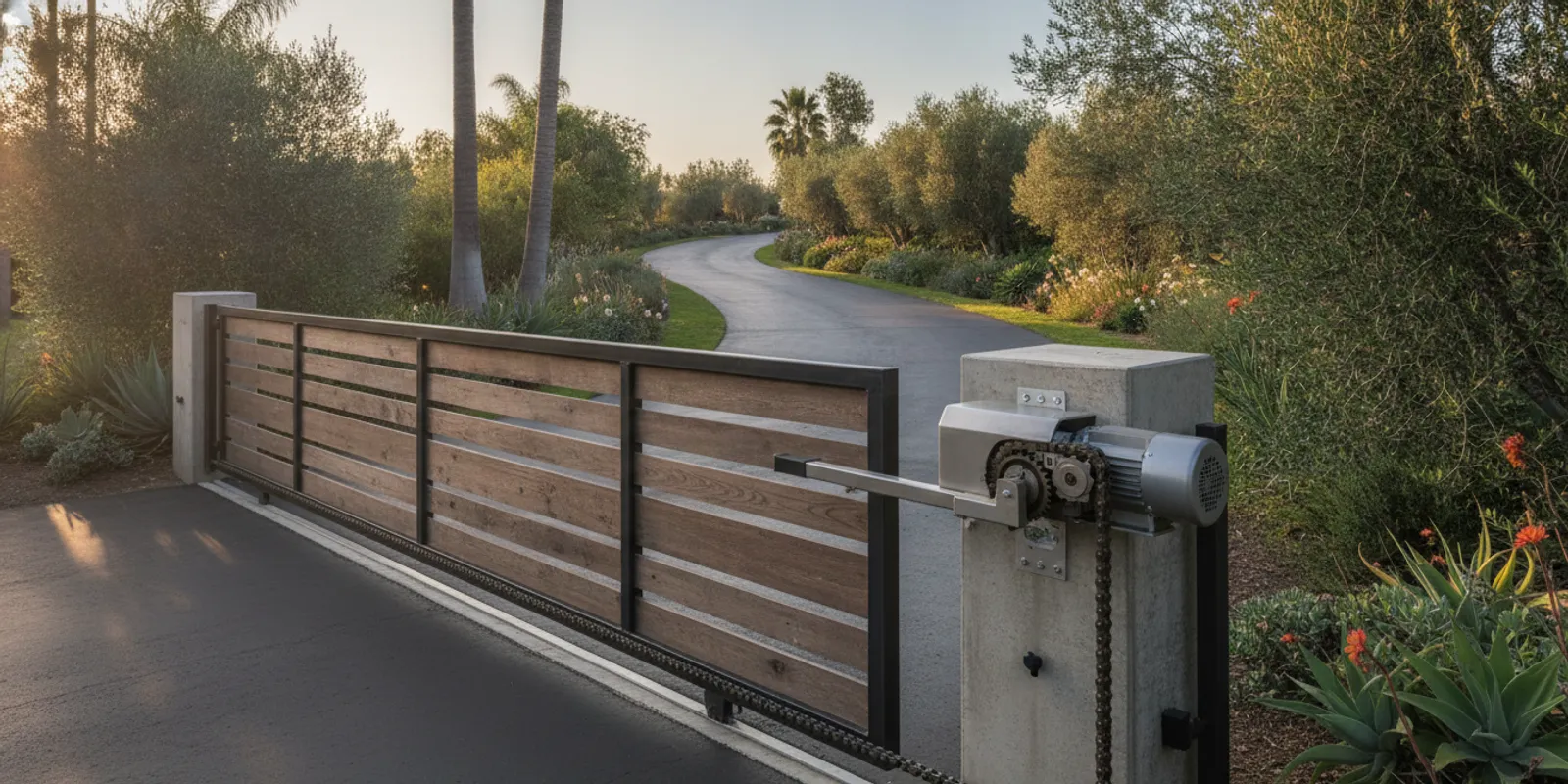
Choosing a gate operator for a long driveway starts with the gate and how people use it, not with driveway length alone. The phrase gate operator for long driveway can describe several situations: a gate that travels a long distance, an approach far from the street, frequent vehicle traffic, or a property where visitors need a convenient way to enter. Those details lead to different equipment and control decisions.
For an owner or manager, the useful first question is what the existing system needs to do reliably. Is the gate sliding or swinging? How far does it travel? How many openings happen in a typical day? What access methods should residents, staff, or visitors use? A technician can evaluate the complete setup before recommending repair, a replacement operator, or automation work. InteleGates focuses on electric gate motors and access-control equipment for existing gates in Los Angeles and Orange County.
What does “long driveway” mean for operator selection?
A long driveway does not automatically call for a larger motor. The motor moves the gate leaf; it does not pull a vehicle all the way from the street to the house. What matters mechanically is the gate itself: its type, weight, condition, travel distance, and how often it moves. The distance between the entrance and the building matters more for access planning. A visitor may need to use telephone entry at the entrance, while a resident may use a remote control from a vehicle.
Think of the site as two related systems. The operator moves the gate through its opening and closing cycle. Access controls tell the system when and for whom to open. A good assessment considers both, along with electrical supply, safety devices, and the physical condition of the gate path. The best solution is tied to the actual configuration rather than the label of a motor or a rough description of the property.
Start by identifying whether the existing gate slides or swings, and note how it moves through a full cycle. A sliding gate travels along a track or other guided path. A swing gate rotates on hinges and needs room to move through its arc. Each arrangement has different mechanical demands, so an operator intended for one configuration is not automatically suitable for another. Learn more about gate automation for an existing gate and electric gate repair.
Which site details matter most?
Before selecting equipment, collect information that describes actual use and operating conditions. These observations can help a technician focus the assessment:
- Gate type and movement: Record whether the gate slides or swings, which direction it moves, and whether it completes its travel without binding.
- Gate dimensions and construction: Approximate the length and height of the moving leaf. Note whether it is solid, open, unusually heavy, or exposed to wind. Do not guess at weight if you do not know it.
- Travel distance: For a sliding gate, note how far it must move to clear the entrance. For a swing gate, describe its opening arc and the space available on each side.
- Frequency of use: Estimate openings and closings on an ordinary weekday and during busy periods. A shared residential entrance may have a different workload from a lightly used private driveway.
- Site conditions: Mention slope, uneven travel, debris, standing water, exposed wiring, and any changes to the gate or its path.
- Access requirements: List who needs entry and which methods are in use, such as remotes, keypads, cards, telephone entry, intercoms, or vehicle detection.
These are observations, not a substitute for an equipment assessment. Gate weight, mechanical resistance, electrical details, and operator duty ratings should be checked by a qualified technician. A government bid document about gate-operator selection likewise identifies adequate horsepower, duty cycle, and structural rating as considerations; see the operator selection reference. It is not a sizing chart for a particular residential property, so use it as a reminder of factors to evaluate, not as a formula.
How do gate style and travel affect the decision?
The operator has to match the movement of the existing gate and its mechanical condition. A sliding gate may need a chain-drive operator suited to its construction and operating demand. A swing gate needs an operator arrangement compatible with hinge geometry, gate dimensions, and opening arc. A technician can check whether friction, misalignment, or another mechanical condition is affecting performance before choosing an operator.
Travel distance matters because a gate that moves farther takes longer to complete a cycle and places demands on the full operating setup. Long travel does not determine the required operator capacity on its own. A heavy gate with short travel can place substantial demand on an operator, while another gate with longer travel may have a different combination of mass, resistance, and use frequency. Do not choose solely by driveway length or a product label.
For a long entrance, people sometimes focus only on how soon they want the gate to open. It is more useful to consider the complete cycle, expected daily activity, and whether vehicles have enough room to wait without obstructing the street or gate movement. Changes to traffic flow may also affect where controls are most useful. For operator-specific diagnosis, see gate operator repair and LiftMaster operator service.
How do use frequency and duty cycle fit together?
Duty cycle describes the operating workload an operator is designed to handle. A private entrance used by a small household may have a different pattern from a multi-unit property or a commercial driveway with regular arrivals throughout the day. The relevant measure is not simply the number of people who have access. It is the actual combination of openings, closings, peak periods, and other operating demands.
To make the estimate useful, consider a typical day and a busier day. Count a complete opening and closing as repeated movement, and include deliveries, service vehicles, residents, guests, and staff. If traffic comes in groups during a defined period, note that pattern. The estimate does not have to be exact; a practical range and explanation of peak use are more helpful than saying only that the entrance is busy.
Operator selection should account for that pattern along with gate size, weight, condition, and manufacturer ratings. If a system has become unreliable during busy periods, record what happens and when: for example, whether it slows, stops, reverses, or fails to respond. That information helps distinguish an operator-capacity question from a problem with the gate path, controls, wiring, or a sensing device. See electric gate maintenance for more on routine system attention.
How should access controls work over a long approach?
When a driveway extends well beyond the entrance, access convenience is part of the system design. Residents may need a remote control, while visitors may need to request entry through telephone entry or an intercom. A keypad, card reader, or fob system may fit a property with regular authorized users. The right mix depends on who needs access, how often credentials change, and how the property handles visitors.
Controls should be selected as part of the operator project, not treated as unrelated add-ons. Check whether an existing control can work with proposed equipment and whether the entry point is practical for drivers. Consider where a vehicle can safely wait, whether a resident can operate the gate without leaving the car, and how a visitor can contact the right person.
A home with occasional guests may need a different entry routine from a shared driveway used by residents and service vehicles all day. For a home, a visitor call method may be central; at a shared entrance, managers may also consider how authorized users receive and use credentials. Write down who should be able to open the entrance, how visitors request access, and what should happen when the usual contact person is unavailable. The technician can check which devices support that routine and whether the operator can connect with them.
Also describe the approach from the street. Is there room for a vehicle to stop clear of traffic while someone uses an entry device? Can a driver see the gate and tell whether it is open? Are there separate vehicle and pedestrian paths? These answers clarify practical installation and control needs. Do not make changes to wiring or reposition controls yourself; have the complete system reviewed so operation and safety devices remain coordinated.
For shared sites, write down user groups and the access methods each group needs. A property manager may have staff and resident needs that differ from visitors or delivery drivers. A homeowner might want remote opening for household vehicles and a call-in method for guests. InteleGates works with gate access-control systems, including telephone entry, keypads, and underground vehicle loop sensors.
What should be checked before replacing an operator?
A replacement recommendation should follow diagnosis. The operator may be the source of a problem, but symptoms can also come from a binding gate, worn or damaged hardware, a control issue, a power interruption, or a safety device. Replacing equipment without checking how the whole system works can leave the original fault unresolved.
A professional review typically starts with the reported symptom and a visual inspection of the gate, operator, and controls. The technician can observe a full operating cycle, assess gate movement, check relevant electrical and control components, and consider whether the existing operator is appropriate for the gate and its workload. Any recommended repair or replacement should be connected to the finding it addresses.
Before a visit, gather the operator make and model if visible, a short description of the issue, and any known repair history. A photo of the operator and gate path can help explain the arrangement, but do not remove covers or attempt electrical tests. If the gate behaves unpredictably, keep people clear of its moving path and avoid using it until it can be assessed. For a local service path, see electric gate system installation or the Los Angeles and Orange County service areas.
How do the main selection factors compare?
| Factor | What to document | Why it matters |
|---|---|---|
| Gate movement | Sliding or swinging; direction and full travel | Determines which operator arrangement can work with the gate |
| Gate condition | Movement, resistance, alignment, and visible damage | Mechanical problems can affect operation regardless of motor selection |
| Workload | Typical daily cycles and busiest periods | Helps assess duty-cycle requirements |
| Gate dimensions and exposure | Approximate size, construction, and wind exposure | Contributes to the operator and structural assessment |
| Access methods | Remotes, keypad, telephone entry, cards, or vehicle detection | Ensures the controls fit resident, staff, and visitor needs |
| Power and safety devices | Known supply details and existing sensing equipment | These components must be considered as part of the complete system |
The table is a preparation guide, not a do-it-yourself sizing tool. A technician should verify relevant measurements, ratings, compatibility, and operating condition at the property. When comparing recommendations, ask what was inspected, what issue each proposed change addresses, and whether existing controls can remain in use.
What information should you have ready for a service review?
A clear first conversation can help the team understand the system without asking you to choose equipment. Be ready to share:
- Your city and whether an existing gate is already installed.
- Whether it slides or swings, and what the operator currently does.
- How far the gate moves and how frequently it operates.
- Any recent changes, recurring symptoms, or known maintenance.
- Which controls are used and who needs to enter.
- Whether you are seeking diagnosis, repair, maintenance, or an installation review.
It can also help to describe the layout in plain language: for example, the gate is far from the house and visitors need a way to call in, or the sliding gate reaches the open position but stops before closing. Clear observations are more useful than guessing which motor or control should be installed.
InteleGates provides electric gate operator installation, repair, and maintenance, along with access-control service for existing gates. Review the automation service information and Los Angeles repair details to understand the service path, or contact the team with the site details you have.
Contact the team about your existing system
Frequently Asked Questions
Does a long driveway require a more powerful operator?
Not by itself. Driveway approach length and the gate’s mechanical workload are different things. Operator selection should account for the gate’s type, dimensions, weight, condition, travel, expected use, and equipment ratings.
Will a new operator fix a gate that moves unevenly?
Not necessarily. Uneven movement can point to a mechanical or alignment issue as well as an operator problem. The gate and its full operating path should be checked before deciding what equipment or repair is appropriate.
How can I estimate the system’s daily workload?
Think through a normal day and a busy day. Include arrivals and departures for residents, staff, visitors, and deliveries, and note concentrated peak periods. A reasonable range and a description of the traffic pattern give the technician useful context.
Can existing remotes or entry controls be reused?
Possibly, but compatibility depends on the equipment and how it is configured. Include the current controls in the assessment so the technician can check whether they can remain in service or need a change.
What is the next step if the current operator is unreliable?
Record the symptoms and when they occur, then arrange a professional diagnosis. Avoid guessing at replacement equipment; checking the gate, operator, controls, and safety devices helps identify the right next step.
A long driveway can shape how people approach and use an entrance, but the right operator decision comes from the complete existing system. Share the gate’s movement, condition, workload, and access needs so a technician can assess the system before recommending a path forward.