
InteleGates Guide
How Long Do Electric Gate Motors Last? Guide
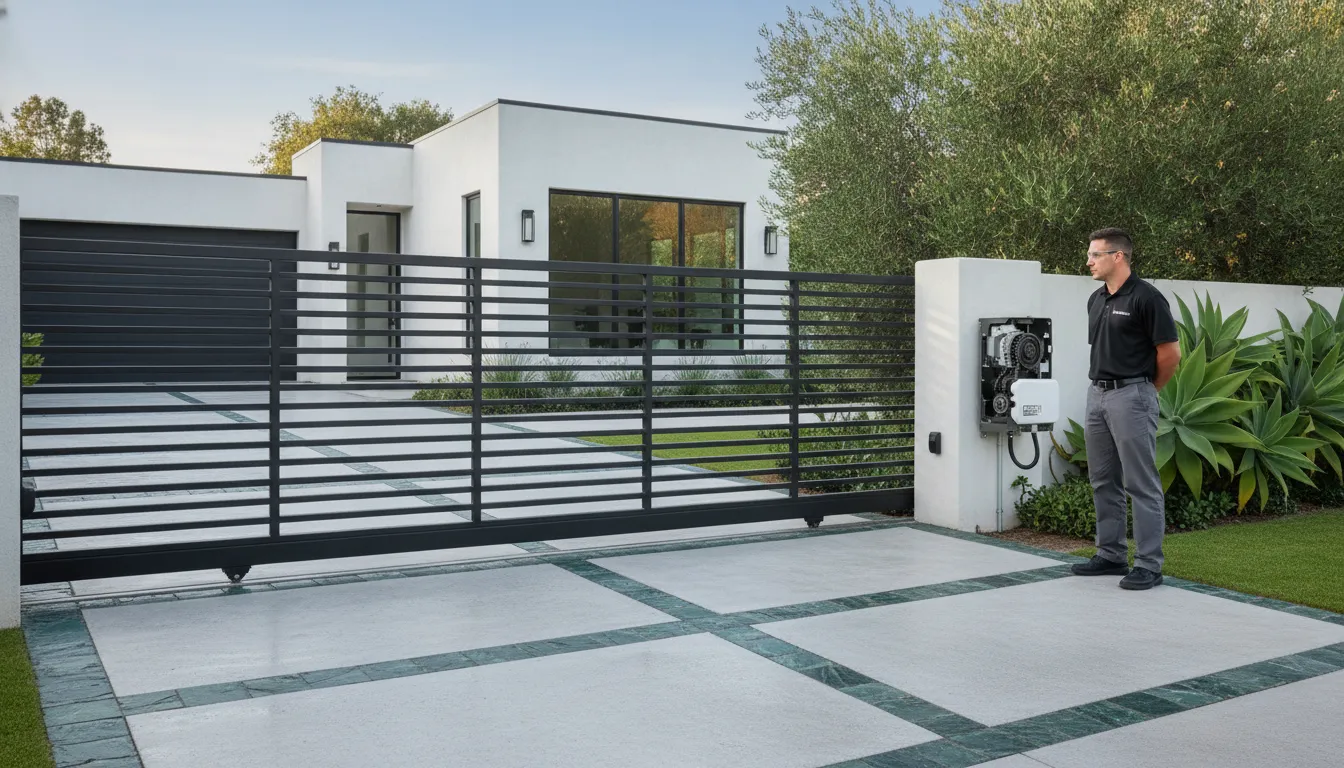
When a gate slows or stops, the motor may seem worn out. But it is only one part of the system. Sensors, controls, power, or mechanical conditions can also affect operation.
There is no substantiated year count that answers how long do electric gate motors last across all properties. Useful service life varies with the specific operator, how the system is used, its condition, and what a professional inspection finds.
For homeowners and property managers, the practical question is whether the operator and connected components are still performing reliably. A technician can assess the system and identify the cause of a change before recommending repair or replacement. That distinction matters because a symptom does not, by itself, confirm motor failure.
Contact InteleGates for a professional gate motor assessment.
How Long Do Electric Gate Motors Last in Real Conditions?
There is no reliable year count that applies to every electric gate motor. Service life depends on how often the system operates, the load placed on the operator, the surrounding environment, maintenance, and the condition of the motor and related components. A motor serving a lightly used home entrance may experience very different demands from one operating throughout the day at a busy property. So age alone cannot tell you how much useful service remains.
The motor is also only one part of an automated gate system. The gearbox and drive mechanism, electrical supply, control board, sensors, and the gate's mechanical condition all affect how the system performs. A problem elsewhere can make operation seem like a motor failure, while a motor may continue working even as other components need attention. That is why an observed symptom or a model's age is not enough to determine whether the operator is nearing the end of its service life.
Electric motors can be affected by operating load and conditions such as heat, moisture, contamination, and power irregularities. The U.S. Department of Energy describes these as stresses that can contribute to component degradation in motors generally. That technical guidance provides useful context, but it does not establish a lifespan estimate for a particular gate motor or installation.
A technician can assess the observed condition of the operator and the wider system. Check how components are functioning, and diagnose the source of any performance changes before recommending a next step. InteleGates' approach is to diagnose the problem before recommending replacement. An on-site assessment gives homeowners and property managers a more useful basis for planning than a universal age threshold.
If the operator's performance has changed or you need a system assessment, review electric gate motor system repair from InteleGates.
What Factors Affect an Electric Gate Motor's Service Life?
An operator works as part of a system. Service life depends on the motor, how often it runs, and the force needed to move the gate. Electrical, mechanical, and environmental conditions also matter. No single calendar estimate fits every installation.
A professional assessment looks at the system as it operates, rather than assuming that a particular symptom proves the motor has failed. These are the main areas to review:
- Operating cycles and operator match: The assessment considers how frequently the operator starts and whether its specifications suit the property's use. Frequent starts and overload are recognized contributors to overheating in general electric motors.
- Mechanical resistance: A technician evaluates whether the moving system places unusual demand on the operator. Relevant components may include the track, rollers, hinges, chain, and gearbox.
- Environment: Heat, humidity, contamination, and corrosive conditions can affect motor materials and components. The assessment considers the operator's exposure and condition.
- Power and control conditions: Electrical supply irregularities, control-board concerns, sensors, wiring, and backup power can affect system behavior. Testing helps distinguish a motor fault from a control or supply issue.
The U.S. Department of Energy discusses frequent starts, overload, elevated ambient temperature, voltage issues, and inadequate ventilation as general electric-motor stresses. It also notes that humidity and contamination can contribute to component degradation. These are general electric-motor principles, not measurements of gate-motor service life. They do not establish a lifespan for a specific gate operator. See the DOE motor system technical brief.
| Factor | Possible effect | What a professional assessment considers |
|---|---|---|
| Operating cycles and operator match | Frequent starts or overload can contribute to heat and stress in general electric motors. | Observed use and whether the operator suits the property's demand. |
| Mechanical resistance | Resistance in the moving system can add demand to the motor and gearbox. | Condition of relevant tracks, rollers, hinges, chain, and drive parts. |
| Environment | Heat, humidity, dirt, and contamination can affect motor components. | Exposure and signs of moisture, contamination, or ventilation concerns. |
| Power and controls | Electrical or control faults can disrupt operation and add stress. | Power supply, wiring, control board, sensors, and backup system condition. |
These factors can overlap. One observation cannot establish how much service life remains. InteleGates assesses the operator and complete system, then diagnoses the problem before recommending replacement.
Can Professional Maintenance Help an Operator Last Longer?
Professional maintenance cannot promise a particular service life, but it can give a technician a clearer view of the operator and the connected parts that affect its operation. A motor does not work in isolation. Its gearbox and drive mechanism, electrical connections, controls, safety sensors, and the gate's moving components all influence how the system performs.
InteleGates recommends professional maintenance at least every six months. During an inspection, a technician can review the system's condition, test operator performance, check sensors and access control, examine electrical components, and assess relevant moving mechanisms. The system is tested again after service. This system-level review can help identify faults or wear that merit attention before they become a larger interruption. Though it cannot guarantee that a motor will last longer or prevent every failure.
Contact InteleGates to arrange a professional gate system assessment.
The inspection should reflect how the equipment is actually used. A busy access point may complete more operating cycles than a lightly used residential system. Outdoor exposure and the condition of connected components can shape what a technician checks. These details guide an appropriate review, but they do not produce an expiration date for the motor. Service history and inspection findings matter more than age alone. A technician can also distinguish an operator concern from an issue with controls, sensors, power, or moving components. That diagnosis keeps the service recommendation focused on the condition observed, not an assumption that the motor needs replacement.
For a closer look at what this work can include, see professional electric gate system maintenance. If you are planning routine service, the article on the electric gate motor service schedule covers frequency in more detail. Maintenance is most useful as a way to understand the condition of the complete operator system, not as a guarantee or a substitute for diagnosis when performance changes.
What Changes Mean a Motor Needs Assessment?
A change in gate movement or response is a reason to assess the system. It does not prove the motor has failed. The operator works with power, controls, sensors, safety devices, and mechanical parts. A problem elsewhere can look like a motor issue.
Pay attention to recurring changes such as:
- Travel that has become slower or uneven compared with the gate's usual movement.
- New or increasing noise while the operator is running.
- The gate stopping before it completes its travel, or completing a cycle inconsistently.
- Intermittent response to a remote, keypad, telephone entry system, or other access control.
- Repeated stoppages, including when the system had previously been responding reliably.
A single symptom can have more than one cause. Slow or uneven travel may involve mechanical resistance, alignment, or the operator. Intermittent response may involve controls, sensors, safety devices, wiring, or power. A safety device may stop movement if it detects an obstruction or develops a fault. A technician must assess these possibilities; the symptom alone is not a diagnosis.
Noting when the change occurs and whether it repeats can help describe the concern during the service visit, without attempting to adjust or repair the equipment.
During a professional assessment, a technician considers the full system. This includes power, electrical connections, controls, sensors, safety devices, alignment, mechanical resistance, and the operator. The review helps distinguish a motor fault from a problem elsewhere. Do not treat a sound, stoppage, or response issue as proof that the motor needs replacement.
If the behavior is changing or recurring, arrange an assessment rather than relying on guesswork. For a fuller overview of warning patterns, read signs your gate motor needs attention. InteleGates diagnoses the problem before recommending replacement, so the evaluation can focus on the actual cause and condition of the operator system.
Should an Older Gate Motor Be Repaired or Replaced?
An older operator does not automatically need replacement. Age is useful background, but it cannot show whether the motor has failed or another part is disrupting operation. Nor does age establish whether the system can serve the property reliably. The motor's condition and demands placed on it matter more than a calendar estimate.
InteleGates' approach is straightforward: We diagnose the problem before recommending replacement. A technician assesses the confirmed fault and the condition of the operator and related equipment. A gate that stops, moves inconsistently, or fails to respond does not by itself prove that the motor is the source. Controls, sensors, electrical components, the drive mechanism, or the gate's movement can also affect performance.
The decision should reflect the whole system, not just the age of one component. During a professional assessment, relevant factors include:
- The confirmed fault: Testing helps distinguish a failed motor from a problem elsewhere in the system.
- Operator condition: The technician considers the motor and connected components together, including whether wear or repeated faults affect dependable operation.
- Parts and compatibility: Available components must be suitable for the specific operator and system. Compatibility matters when deciding whether a repair is practical.
- Service history: Previous repairs and recurring problems can help show whether the current issue is isolated or part of a continuing pattern.
- Gate movement and property demand: The operator must work with the gate as it moves and meet the access needs of the home or property. Daily use and recurring strain are part of the assessment.
A focused repair may be appropriate when the fault is identifiable, compatible parts are available, and the operator remains suitable for its use. Replacement may make more sense when testing shows the operator is no longer a good fit for the system or recurring faults affect reliable access. Neither outcome should be assumed before the cause and system condition are understood.
For a professional evaluation of an electric gate operator or related components, see electric gate motor system repair. The assessment can establish what is malfunctioning and which remedy fits the equipment and property requirements.
How Can Owners Plan for Gate Operator Service Life?
A useful service record helps homeowners and property managers describe what the operator has been doing over time. It does not predict a specific lifespan or set a replacement date. The goal is to give a technician clear context for assessing the system and deciding what needs attention.
Keep the operator's make and model, installation details if available, and dates of prior service in one place. After a service visit, record the technician's findings and any recommended follow-up. This history can help distinguish a new change from a condition that has appeared before, especially when several people oversee the property.
It is also helpful to note how the system is used. For example, describe whether it serves a private home, shared residential entrance, or commercial property, and whether activity is steady or concentrated at particular times. These notes give the technician a picture of operating demand without turning usage into a formula for estimating motor life.
When performance changes, note what you observe and when it occurs. Is movement slower, inconsistent, noisy, or incomplete? Does the issue happen every time or only sometimes? Include any relevant service findings. A change does not establish motor failure; controls, sensors, power, or other conditions may also be involved. Leave diagnosis and testing to a qualified gate-system professional.
Plan for professional inspection at least every six months. A technician can review the operator and related system components, consider the property's use and service history, and explain any findings. For details about professional electric gate system maintenance, see InteleGates' maintenance service information.
Contact InteleGates to discuss a professional assessment of your gate operator.
Frequently Asked Questions
Is there a typical number of years an electric gate motor should last?
There is no substantiated lifespan figure that applies to every electric gate motor. Service life depends on the operator model, how often it cycles, the load it handles, site conditions, and the condition of the connected system. Installation and service history can provide useful context, but age alone does not establish that a motor needs replacement.
Which operating changes should prompt an assessment?
Slower movement, unusual noise, inconsistent travel, incomplete opening or closing, or intermittent response from controls are reasons to have the system assessed. These symptoms do not prove the motor has failed. Power, sensors, access controls, electrical components, or mechanical conditions may also be involved, so diagnosis should identify the cause before a repair is recommended.
How often should a gate operator receive professional maintenance?
InteleGates recommends professional gate-system maintenance at least every six months. A technician can inspect and test the operator and related components, including safety devices, access controls, and electrical systems. The appropriate service plan can also account for how heavily the system is used and its environment.
Does an older motor always need to be replaced?
No. A technician should evaluate the actual fault, the condition of the full system, compatible part availability, and the property's use. InteleGates diagnoses the problem before recommending replacement, so the next step is based on the system's findings rather than age alone.
Professional Gate Motor Assessment
Motor age alone cannot show whether an operator needs repair or replacement. An assessment can help identify whether the motor, controls, power supply. Or another part of the system is affecting operation, so the next step is based on the actual condition.
Contact InteleGates to ask the team to assess your existing gate operator and explain the appropriate next step.