
InteleGates Guide
How Long Does Gate Motor Installation Take?
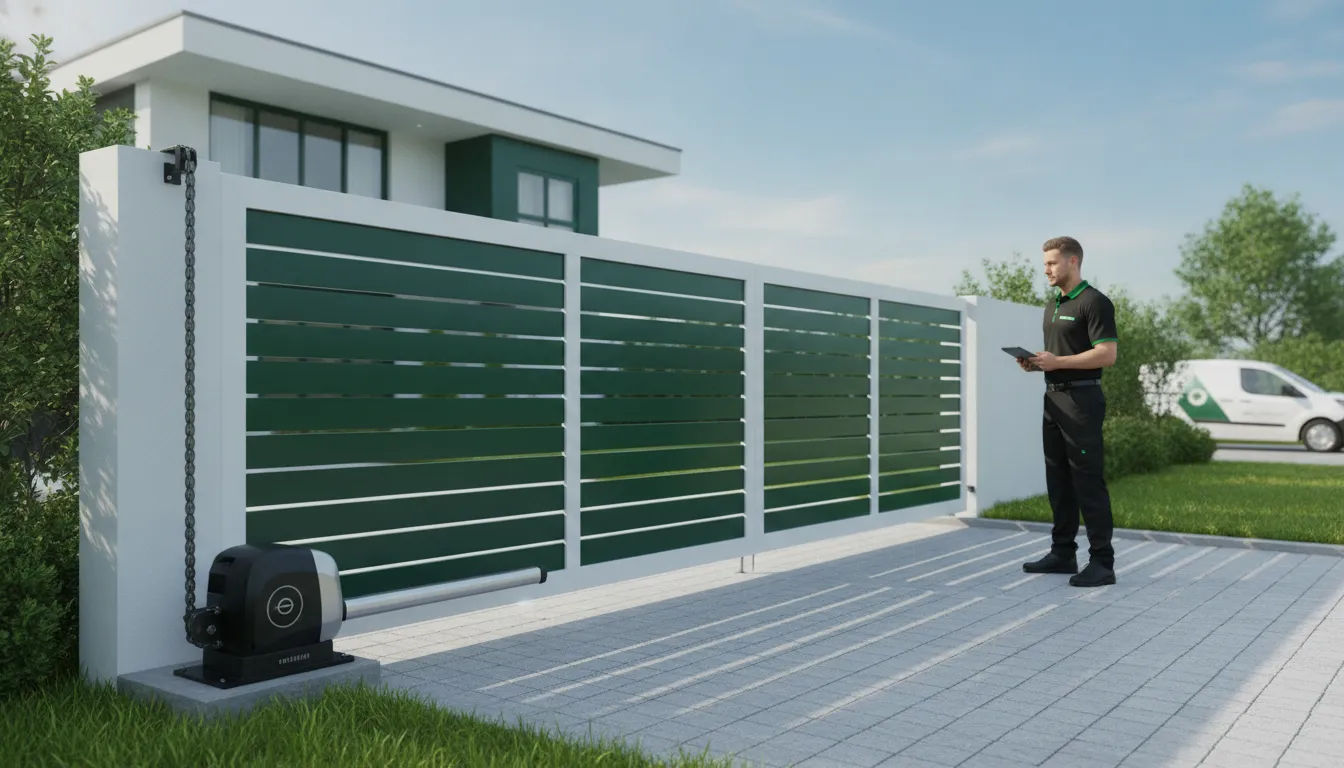
A gate motor installation is not scheduled by a stopwatch alone. The condition and type of the existing gate, the available power, the operator and controls selected, and the preparation required at the property all shape the work.
Request an installation assessment from InteleGates
So, how long does gate motor installation take? A straightforward project may fit within a single visit, but the reliable answer comes after a professional assessment. InteleGates evaluates the gate, terrain, traffic flow, and access requirements before recommending a site-specific schedule.
InteleGates installs motors and automation on existing gates, including sliding, swing, barrier-arm, and vertical-lift systems. The company does not build or install gates or fences. If you are comparing equipment or planning automation, the guide to gate automation for existing driveways provides useful background. The first practical step is understanding what the assessment covers and how it informs the estimate.
Assessment and estimate before gate motor installation
The schedule starts with the gate and the property, not a generic time estimate. Before recommending equipment, InteleGates evaluates the existing gate, the surrounding terrain, traffic flow, and the access requirements for the site. That assessment helps determine what preparation is needed and which motor and control setup fits the way the gate is used.
InteleGates serves Los Angeles and Orange County, focusing on electric gate motors, automation, and access control. The company installs motor systems on existing gates. It does not build or install gates or fences. If you are planning automation for a driveway gate, the guide to gate automation for existing driveways provides broader planning context, while the site visit establishes what applies to your property.
During the assessment, the technician considers factors such as the gate type, available operating space, site conditions, expected traffic, and the controls you want to use. A sliding gate, swing gate, barrier arm, or vertical-lift gate may require a different motor arrangement and preparation plan. Existing conditions can also affect whether the work is ready to schedule or whether additional preparation should happen first.
That is why the answer to "how long does gate motor installation take" should be site-specific. The estimate should reflect the actual gate and the selected motor, power, and control features rather than a blanket promise. InteleGates' gate motor installation process begins with this practical evaluation, so the proposed schedule accounts for the work identified at the property.
What happens during a professional gate motor installation
A professional installation follows the conditions of the existing gate, not a fixed script. The work may include the following stages, with the schedule shaped by the gate type, site conditions, motor selection, and access-control requirements.
- Site assessment: The installer reviews the existing gate, its movement, surrounding terrain, traffic flow, and the property's operating requirements. This is also the point to identify conditions that could affect the installation plan. The assessment looks for mechanical conditions that could affect motor performance, such as gate or track problems.
- Ground preparation: The site is prepared for the selected equipment and its mounting requirements. InteleGates identifies ground preparation as a defined stage of the installation process. The amount of preparation depends on what the existing gate and site can support, so it should be assessed rather than assumed.
- Motor and operator installation: The appropriate motor or operator components are installed on the existing gate system. InteleGates works on gate motors and automation, not on manufacturing or installing gates or fences. The equipment choice must match the gate's operation and intended use.
- Access-control integration: Controls are connected and configured as part of the planned system. Depending on the property, this can involve the access method selected for the gate, along with the operator components needed for reliable operation.
- Testing and handoff: The completed system is tested as an integrated installation. InteleGates lists assessment, component installation, access-control integration, and testing within its gate motor installation process. The handoff should cover how the system operates and what the property owner or manager needs to know.
That sequence explains why the answer to "how long does gate motor installation take" depends on the site. A professional assessment provides a more useful schedule than a universal time promise.
How long does gate motor installation take for different gate types?
There is no single schedule for every gate motor installation. InteleGates installs automation for sliding, swing, barrier-arm, and vertical-lift gate systems, but the work depends on the existing gate, motor requirements, controls, and site conditions. A general knowledge-base reference places some gate automation installations in the 4 to 8 hour range, but that is context rather than a guarantee for every project. A site assessment is the reliable way to establish the work plan.
| Gate type | Planning variables | Timing considerations |
|---|---|---|
| Sliding | Gate movement, track condition, alignment, available motor location, and chain-drive arrangement. | Existing track or gate issues may need attention before the operator can be installed and tested. |
| Swing | Single or double leaves, hinge condition, opening clearance, operator placement, and control requirements. | Leaf movement and operator coordination affect installation and final testing. |
| Barrier-arm | Arm length, traffic pattern, equipment location, foundation, and access-control integration. | Field measurements and structural support can shape the preparation schedule. New York DOT specifications note that barrier-gate work includes foundations for secure support and coordinates arm length through field measurements. |
| Vertical-lift | Gate travel, available clearance, structural condition, motor power, and safety or control features. | Clearance, equipment selection, and testing requirements should be confirmed before a firm schedule is set. |
In each case, InteleGates evaluates the existing gate rather than installing a new gate or fence. Terrain, traffic flow, power, and the intended access controls can change the sequence from preparation through testing. That is why a professional recommendation is more useful than applying a standard number of hours to every property.
Discuss your gate's installation timeline with InteleGates
What can extend a gate motor installation timeline?
There is no single answer to how long gate motor installation takes. The schedule depends on the existing gate, the selected operator, and the conditions at the property. InteleGates works on motor and automation systems installed on existing gates, not on gate or fence construction. A site assessment helps identify the factors that could add work before installation begins.
Gate condition and alignment
A gate that drags, binds, or has a bent track may place unnecessary strain on a new motor. Correcting alignment or addressing mechanical problems may need to happen before the operator is installed. This is why the gate's condition is evaluated before a motor recommendation is finalized. If you are already seeing unreliable movement, a professional gate system assessment can help clarify the problem.
Power, motor selection, and controls
Available power, gate type, motor power, and the level of control integration all affect installation complexity. A property may need planning around power access, a chain-driven sliding operator, a swing-gate operator, or controls such as keypads, remotes, telephone entry, or other access features. Each added requirement needs to be selected, installed, integrated, and tested rather than assumed in a generic time estimate.
Ground preparation and site coordination
Ground preparation can extend the schedule when a suitable mounting area is not ready. As a conditional industry example, a newly poured concrete pad may require more than 48 hours to cure before equipment can be securely mounted. That is not an InteleGates promise or a requirement for every project, but it illustrates why site readiness matters. Access coordination can also affect timing when a property manager, decision-maker, tenants, or multiple vehicle users must be accommodated during the work.
For a clearer view of the equipment and planning variables, review gate automation services. The assessment provides a site-specific plan instead of a universal installation-time guarantee.
What should property owners prepare before installation?
Good preparation helps the installation assessment produce a useful, site-specific plan. InteleGates works on motor and automation systems for existing gates, not on gate or fence construction. Whether you are a homeowner, property manager, or commercial property owner, gather the information below before the appointment.
- Coordinate access. Confirm how the technician will reach the gate, controller, electrical service, and any restricted areas. For managed or commercial properties, identify traffic patterns and arrange access during the visit without disrupting residents, employees, deliveries, or customers.
- Share the gate's history. Note when the gate began operating, whether it has been repaired or modified, and which problems you have observed. Mention unusual noise, slow movement, intermittent operation, or previous operator issues. This context helps the technician evaluate the existing system before recommending a solution.
- Collect power information. If you know where the gate receives power, have that information available. Tell the technician about outages, remote power limitations, or previous discussions about solar operation. Reviewing gate opener power options can help you understand the subjects to discuss during the assessment.
- List desired entry controls. Decide who needs access and how they currently enter. Be ready to discuss remotes, keypads, telephone entry, card access, vehicle access, or integration with an existing system. The preferred controls can affect equipment selection and planning.
- Make the decision-maker available. The person responsible for the property should be available to answer questions about traffic flow, access requirements, and the intended use of the gate. InteleGates considers terrain, traffic flow, and customer requirements before making a recommendation, so these details are more useful than a generic schedule request.
Bring photos or prior service records if they are readily available, but do not attempt to adjust, program, or repair the operator before the visit. The assessment is the right time to clarify the work and the factors that shape the installation plan.
How do safety and access control affect completion?
Safety work is part of completing a gate motor installation, not an optional final detail. The operator must work with the existing gate, its movement, and the people or vehicles using the entry. That is why testing can affect the schedule even after the motor and other components are installed.
Gate operators are addressed by the ANSI/UL 325 standards panel, in which staff from the U.S. Consumer Product Safety Commission participates. The CPSC explains the scope of that standard for gate operators and related systems in its gate operator safety guidance. Federal regulations also describe primary entrapment protection requirements for residential operator systems, including horizontally sliding systems, through eCFR Part 1211.
These requirements do not translate into one universal installation duration. They do mean that a professional installation needs time for appropriate safety-related checks and functional testing. If the gate movement, operator response, or protective equipment does not perform as expected, the work should not be treated as complete simply because the motor runs.
Access controls must work with the operator
Completion also depends on how people are expected to enter. InteleGates' installation service includes access-control integration and testing. That may involve coordinating the operator with the property's selected entry method, then confirming that authorized users can operate the gate as intended. Review the available access control options early so the assessment accounts for the full system rather than only the motor.
Because each existing gate and access setup differs, InteleGates uses the assessment and testing results to determine whether more work is needed before handoff. This supports a reliable completion decision without claiming a specific inspection checklist or promising the same timeline for every property.
When should you schedule a gate motor installation assessment?
Schedule an assessment before choosing equipment or setting expectations for the work. InteleGates serves Los Angeles and Orange County, helping homeowners, property managers, and commercial owners plan automation for an existing gate. The company installs motor and access-control systems on existing gates; it does not build or install gates or fences.
The assessment gives the technician the information needed to recommend an appropriate plan. That review considers the gate type, terrain, traffic flow, available power and site requirements, and the intended controls. It also helps identify conditions that could affect preparation or installation time. Rather than promising that every project will fit a same-day appointment or a fixed number of hours, InteleGates can explain the likely schedule after reviewing the site.
If the existing system is malfunctioning, schedule a professional gate system assessment before assuming that a replacement motor is necessary. InteleGates' approach is to diagnose the problem before recommending replacement. For a planned automation project, the gate motor installation process begins with understanding the existing gate and the property's access needs.
Booking earlier is especially useful when access coordination, multiple users, commercial traffic, or control integration may influence the work sequence. The existing installation guide covers the broader workflow, but this article focuses on the timing question: a site-specific assessment is the practical starting point for a realistic schedule.
Request a site-specific gate motor installation assessment
Frequently Asked Questions
How long does it take to install a gate opener?
A straightforward installation may fit within a typical 4-8 hour reference, but that range is not a promise for every property. The actual schedule depends on the existing gate, operator selection, ground preparation, power, controls, and testing. A site assessment gives InteleGates the information needed to provide a more useful, property-specific schedule. Learn about the gate motor installation process.
How long does it take to install an automatic gate?
Installing automation on an existing gate can take part of a day or longer when the site needs additional preparation or coordination. The work may include assessing the gate, preparing the ground, installing the motor, integrating access controls, and testing the completed system. InteleGates installs motor and automation systems on existing gates, not gates or fences.
Can a gate motor be installed in one service visit?
Some installations can be completed in one scheduled visit when the gate is suitable, the required equipment is ready, and no substantial preparation is needed. A single visit should not be assumed before the site is assessed. Gate type, motor power, control features, alignment, and installation complexity can change the plan.
What can delay a professional gate motor installation?
Common schedule factors include a gate that needs alignment or mechanical attention, difficult terrain, unavailable power, a more involved control setup, access coordination, and ground preparation. If a new foundation or concrete work is required, the project may also need time for that work to be ready before final installation. The technician should diagnose the site conditions before recommending the equipment and schedule.
Ready to plan your gate motor installation?
A site-specific assessment can clarify how the existing gate, operator, preparation needs, and access controls may affect the installation schedule. InteleGates can review those conditions and explain the next steps without relying on a one-size-fits-all timeline. To get started, contact InteleGates through the verified contact page and request an installation assessment.