
InteleGates Guide
Rolling Gate Opener Selection, Compatibility, and Professional Service Guide
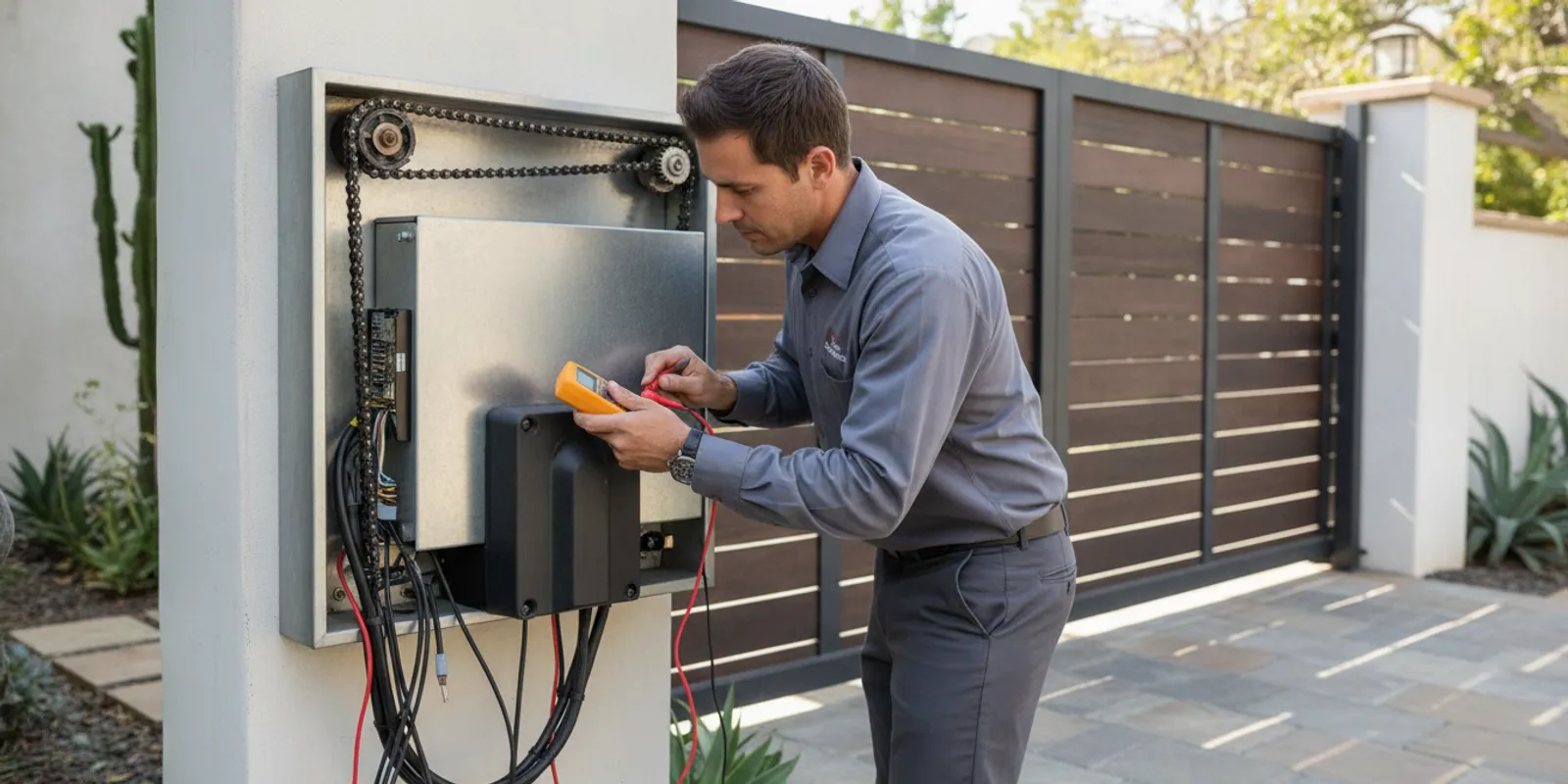
A rolling gate opener must work with the gate that is already on the property, not just match a product description. Before choosing equipment, confirm how the gate moves, how often it operates, what access controls are needed, and whether the gate and its operating path are in suitable condition. This guide explains the decisions property owners and managers can make with a qualified technician.
Request service for an existing gate
What does “rolling gate” mean in an opener project?
People use “rolling gate” in different ways. This guide uses the term for an existing gate that travels horizontally along a track or other guided path. Its operator moves the gate open and closed. That is different from a roll-up door, which moves vertically into a coil or overhead area. The movement and equipment are not interchangeable, so describe what the gate actually does when asking about service.
A rolling or sliding gate is a complete moving assembly. The operator is only one part of the system. The gate, track or guide arrangement, rollers, supports, operator, controls, and safety components all affect how the system performs together. InteleGates provides service for existing electric gate motors and access-control equipment. For an overview of its gate automation services, see the service page.
What should be checked before selecting a rolling gate opener?
A useful selection starts with the existing installation. A technician needs to understand the gate’s movement and condition before recommending an operator. A gate that moves unevenly or binds may put extra demand on the operator. Installing a different motor without first identifying the underlying issue may not address the cause of poor operation.
During an assessment, expect discussion of these points:
- Gate movement: Does it travel horizontally, and does the full path remain clear? Does it move consistently through its travel?
- Gate and hardware condition: Are the gate and its supporting hardware stable and suitable for continued operation? Are there signs of wear, impact, corrosion, or misalignment that warrant attention?
- Existing operator: What equipment is installed, what symptoms occur, and does the operator respond consistently to a command?
- Use pattern: Is this a single-home entrance, shared residential access, or a commercial location with repeated daily cycles? The expected use helps frame the equipment discussion.
- Site conditions: Is power available where needed? Is the operator exposed to weather, debris, water, or other site conditions that should be considered?
- Access method: Who needs to enter, and how should authorized users request access? The answer may involve remotes, a keypad, telephone entry, an intercom, cards, or another compatible control.
- Safety components: Which sensing and control components are present, and how should they be assessed as part of the complete system?
Photographs and a short description of the symptoms can help start the conversation, but they do not replace an on-site assessment. The technician should consider the equipment as a system, rather than selecting a motor by appearance alone.
How do different opener decisions compare?
There is no single selection that fits every existing gate. The table below is a discussion guide, not a model recommendation. Actual compatibility depends on the gate, the existing installation, site conditions, and the equipment chosen for the job.
| Decision area | What to compare | Why it matters |
|---|---|---|
| Existing operator service | Symptoms, condition, and diagnostic findings | Repair may be considered when findings support it; replacement should follow an assessment rather than guesswork. |
| Operator replacement | Gate movement, installation layout, and intended use | The replacement must suit the existing gate and the conditions at the property. |
| Access control | Users, entry process, and compatible devices | Controls should support the way residents, staff, visitors, or vendors are expected to enter. |
| Safety components | Present devices, placement, condition, and system testing | These items need to be considered with the operator and gate, not treated as unrelated add-ons. |
| Ongoing service | Inspection needs, operating symptoms, and maintenance history | Records and prompt attention to changes can help a technician understand developing issues. |
How can you tell whether the existing operator is compatible?
Compatibility is more than whether a motor can be attached near the gate. The technician must confirm that the operator can work with the gate’s movement and the physical arrangement already in place. The gate should travel as intended, and the operator’s installation position and connection to the gate must suit the site.
Useful information to share includes the operator make and model if visible, how long the current equipment has been installed if known, any recent changes, and exactly what happens when someone uses a control. For example, note whether the gate does not respond, begins moving and stops, or behaves differently with different controls. These are observations, not a reason to open equipment or adjust internal components yourself.
When diagnosis points toward operator service, a technician can evaluate the equipment and explain the available next steps. InteleGates describes its work in gate operator repair and electric gate repair. For certain operator brands, the site also has information about LiftMaster repairs and DoorKing operator service.
How should access controls fit with the opener?
The opener moves the gate; access controls provide the method for requesting that movement. Planning them together helps avoid a system where the motor works but entry is inconvenient, or where a control device does not fit the users’ routine.
Start by listing user groups and how each one should enter. A homeowner might use a remote, while a shared property may need a keypad or telephone entry for guests. A manager may need a way to update authorized users. The appropriate arrangement depends on the site and equipment, so discuss practical requirements rather than trying to select a device before compatibility is checked.
- Remote controls: Consider who needs a handheld or vehicle-based way to request entry.
- Keypads or cards: Discuss how residents, staff, or approved users will receive and manage credentials.
- Telephone entry or intercom: Consider how visitors contact someone who can respond and how that person initiates entry.
- Vehicle detection: Ask whether an underground vehicle loop sensor is relevant to the specific entry and exit arrangement.
InteleGates works with several access methods, including gate access control systems, telephone entry, and gate keypad systems. An assessment can help connect the desired user experience with the operator and the equipment already at the property.
What safety questions belong in the selection?
Ask how the full operating system will be evaluated, including the gate’s travel, operator controls, sensing devices, and any other components installed for the site. Devices and settings must be appropriate to the actual installation. The installer should explain what will be checked and how system operation will be verified after service.
Do not assume that one visible sensor covers every situation or that a new operator alone resolves all concerns. Existing equipment may need assessment, adjustment, repair, or replacement based on professional findings. Do not bypass a device or try to alter the operator’s internal settings. If the gate begins to behave unpredictably, keep people clear of its path and arrange an assessment.
For general background on standards and product safety work, UL’s website provides information about its standards and safety activities. A general information page is not a substitute for evaluating a specific gate installation. Ask the technician which requirements and components apply to the equipment and site in question.
What details help a technician assess the system?
A clear service request helps the technician understand the existing installation before arriving. Share the property city, whether the gate is already installed, how it moves, the operator or control brand if you can identify it safely, and the main symptom. Mention whether the issue affects all users or only one control, and whether it began after a power interruption, impact, or other change if that information is known.
Property managers can also note how many user groups rely on the entrance and whether access is shared by residents, employees, visitors, or deliveries. If there are multiple entry points, identify which one is affected. You do not need to choose a replacement operator or diagnose wiring in advance. A technician can use the site conditions and findings to discuss a suitable path forward.
InteleGates serves Los Angeles and Orange County communities. Check the service area information to see the locations covered, and use the contact page to request service for an existing gate system.
What can routine attention reveal?
Changes in operation are useful information. A gate that begins moving more slowly, stops at a different point, responds inconsistently, or makes a new sound may need assessment. These symptoms do not identify a particular failed part on their own. They help a technician decide what to examine.
Keep a simple record of when an issue occurs and what control was used. Note visible changes around the gate’s path and any recent work on the system. Do not reach into moving equipment, remove covers, or attempt electrical repairs. A professional can inspect the operator, controls, and related components together. InteleGates also provides electric gate system maintenance for existing installations.
If the operator is being considered for replacement, discuss what the diagnosis established and how the proposed equipment relates to the current gate, usage, controls, and site. A clear explanation of the findings makes it easier to understand why a service recommendation fits the actual installation.
How should you compare service and replacement recommendations?
When an existing system has a problem, it is reasonable to ask what the inspection found and how that finding leads to the recommended work. A useful explanation should connect the symptom with the condition of the operator or related components. It should also make clear whether the existing gate and its movement were assessed, rather than treating the motor as the only part that matters.
For a service recommendation, ask what will be examined or addressed and whether additional issues could become apparent during the work. For a replacement recommendation, ask what the assessment showed about the current equipment, how the proposed operator suits the gate’s movement and use, and whether the access controls will continue to work with the updated arrangement. These questions support an informed discussion without requiring you to diagnose technical components yourself.
For example, a property manager might report that a gate responds to a remote on some occasions but not others. That observation alone does not establish whether the cause is the remote, receiver, wiring, operator, or another condition. Recording when it happens and whether other users see the same issue gives the technician a starting point. Diagnosis can then distinguish a control problem from an operator concern before a course of work is recommended.
For a shared entrance, include the people who manage access in the planning conversation. Identify who needs credentials, who handles changes when a user no longer needs access, and how visitors contact the property. The answers help frame the control side of the project. They also help the technician consider whether existing telephone entry, keypad, card, or remote equipment belongs in the assessment.
What should you prepare before a service visit?
Make the affected entrance accessible to the technician and, if possible, arrange for someone familiar with its day-to-day use to describe the symptoms. Gather any available operator or control documentation, but do not remove covers to look for a model label. A clear phone photo of visible equipment can help identify what is installed, provided it can be taken without approaching moving parts or opening an enclosure.
For a managed property, tell residents or staff how to report an ongoing access issue while service is being arranged. Avoid asking anyone to test the gate repeatedly if its movement seems unreliable. If the gate is not operating as expected, keep people away from its travel path and let the technician know what happened. These straightforward details make it easier to focus the visit on the existing system and the needs of the people who use it.
Talk with the team about your existing gate
Frequently Asked Questions
Is a rolling gate opener the same as a roll-up door operator?
No. In this guide, a rolling gate moves horizontally along a guided path. A roll-up door moves vertically and coils overhead. Explain the direction and movement of the equipment when requesting service so the right type of work can be discussed.
Can I choose an opener based only on the gate’s size?
No. Size alone does not establish compatibility. The gate’s movement, supporting hardware, existing installation, site conditions, use pattern, access controls, and safety components all belong in the assessment.
Should I replace an operator that has stopped working?
Not automatically. The symptom may have more than one possible cause. A technician can diagnose the existing operator and related system first, then explain whether service or replacement is supported by the findings.
Can I install a new access control device without checking the opener?
It is better to consider the control and operator together. The access device needs to fit the entry routine and work with the equipment at the property. A technician can review those connections as part of an assessment.
What should I do if the gate operates unpredictably?
Keep people clear of the gate’s path and avoid attempting repairs or internal adjustments. Record what happened and arrange a professional assessment of the gate, operator, controls, and related components.
A suitable rolling gate opener decision begins with understanding the existing system and its actual operating needs. A careful assessment can help property owners and managers compare service options, controls, and safety considerations before work proceeds.