
InteleGates Guide
Sliding vs Swing Gate Opener: Which Fits Your Driveway?
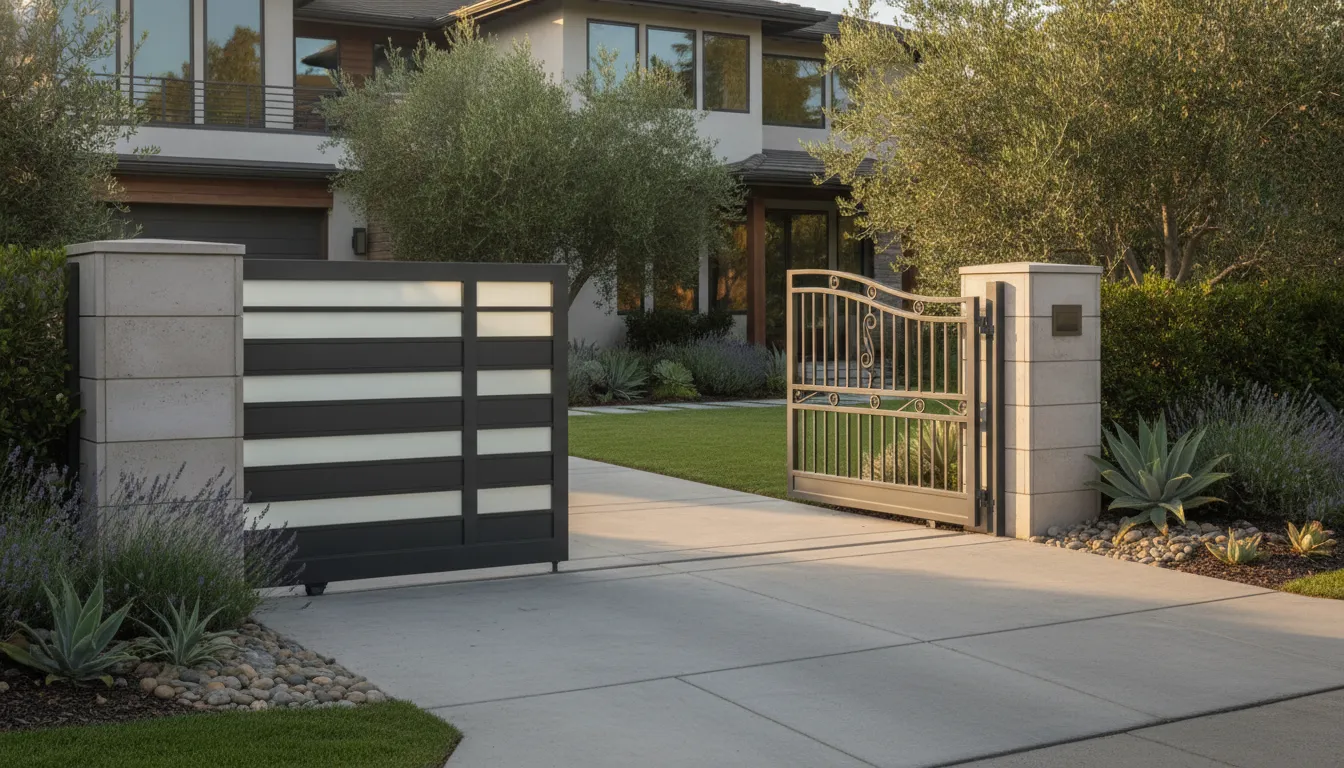
Choosing an automatic gate opener starts with the movement your driveway can support, not with the motor label on a product page. A sliding system moves the gate along a fence line, while a swing system moves one or two leaves through an arc. The right choice depends on available side clearance, driveway slope, gate weight, wind exposure, and how often the system will operate.
The best sliding vs swing gate opener is the one matched to your property's space, grade, gate configuration, and daily use. Sliding openers can suit heavier gates or driveways with limited front clearance, while swing openers may work well when the gate has room to open inward or outward. A professional evaluation helps confirm which mechanism will operate smoothly and reliably.
Before comparing features, look past appearance and focus on the physical demands each mechanism must handle. That practical distinction is the foundation for choosing an opener that makes everyday access more convenient.
Talk to a gate automation specialist about your driveway
The Real Decision: Choosing the Right Gate Opener Mechanism
When homeowners compare a sliding vs swing gate opener, it is easy to focus on the visible gate and overlook the equipment that actually creates the daily experience. The more useful question is how the opener will move the gate, how often it will operate. And how well that mechanism fits the driveway, gate weight, and available space.
The goal is straightforward convenience. You press the remote, the gate opens, and you drive through without leaving your vehicle. Reaching that point reliably requires more than selecting a motor that appears powerful enough. The opener must be matched to the movement of the gate and to the conditions at the property.
Gate style and opener mechanism are connected
A sliding gate moves horizontally along a fence line. Its opener typically drives a gear or chain that pulls the gate to one side. A swing gate rotates inward or outward on hinges, so its operator must control the movement of one or two leaves through an arc. These systems solve the same access problem, but they place different demands on the driveway and supporting hardware.
That distinction matters during professional planning. A sliding system may be a strong fit where the driveway has limited front-to-back clearance, but it needs room beside the opening for the gate to travel. A swing system can work well when that side space is unavailable, provided the property has enough clearance for the gate's arc. The opener choice should follow a site evaluation, not a generic assumption that one configuration is always better.
Start with the motor type and operating demands
Electromechanical openers are the most common choice for residential applications. They use an electric motor to create movement through a gear, chain, or screw. The exact configuration varies by gate design, but the core benefit is the same: consistent powered operation for routine entry and exit. For many homes, this is the mechanism that turns a manual gate into a practical gate automation system.
Residential use still varies widely. A gate serving one household may operate a few times each day, while another property may have frequent arrivals, multiple vehicles, or a longer, heavier gate. The opener's duty cycle, physical load, and control features should reflect that pattern. Choosing an undersized system can lead to sluggish operation and avoidable strain. Choosing equipment without considering the gate's actual movement can create problems even when the motor itself is high quality.
Professional matching protects convenience
A reliable installation accounts for the gate's weight and length, the driveway layout, the condition of hinges or track, and the frequency of use. It also includes the safety equipment and controls required for automated movement. These details are why a professional installer evaluates the complete system rather than recommending an opener from a product label alone.
For homeowners weighing a sliding vs swing gate opener, the best starting point is a practical assessment: where must the gate move. How much space does it have, and what should pressing the remote feel like every day? Once those answers are clear, the right mechanism becomes much easier to identify.
How Does a Sliding Gate Opener Work, and Where Does It Excel?
A sliding gate opener moves the gate horizontally along a fence line instead of rotating it inward or outward on hinges. The motor drives the gate through a track-and-roller system, allowing the gate to clear the driveway without using the open space in front of or behind the entrance. That movement can make a sliding system a practical choice when driveway layout matters as much as the gate itself.
Capacity is another reason sliding systems are frequently selected for larger installations. Some sliding gate openers are designed to handle gates weighing up to 2,000 pounds. Although the correct operator still depends on the gate's actual weight, length, construction, and daily use. A professional assessment helps match the opener to the load instead of relying on a general capacity label. The Consumer Product Safety Commission provides background on gate operator standards and equipment considerations in its gate operator guidance.
Space, wind, and a lower-profile design
The main layout requirement is lateral space. To open fully, a sliding gate generally needs side clearance equal to the gate's length. That space may be available along a fence, even when the driveway itself is too short for a swinging gate's arc. A site with landscaping, a wall, or another obstruction beside the opening may not have enough room, so this dimension should be checked before selecting the opener.
Because the gate travels parallel to the fence, it is less exposed to wind load than a gate that swings like a broad sail. This can support more consistent operation in windy conditions, but it does not eliminate the need for correct sizing, alignment, and service. The opener mechanism itself is also typically low-profile and tucked along the fence, which keeps the automation less visually prominent.
Many sliding systems can open and close faster than some residential swing configurations. That can make everyday arrivals and departures feel more convenient, especially when the system is correctly matched to the gate and usage pattern. Speed should never be the only selection factor. Smooth, predictable movement and properly configured safety equipment matter just as much.
Track conditions determine performance
The track must be level and clear for the gate to move without dragging or binding. Driveway slope is therefore a key design consideration. A sloped approach may require a different automation plan or additional site evaluation before a sliding opener is recommended.
Ongoing maintenance centers on the track and rollers. Dirt, gravel, leaves, or other debris can interfere with travel, while an uneven track can place extra strain on the motor and hardware. Keeping these components clear and having alignment checked during professional service helps preserve smooth operation. If you are comparing a sliding vs swing gate opener for your property, an experienced gate automation system evaluation can account for side clearance, slope, gate weight, and the way you use the entrance.
How Swing Gate Openers Work: Single and Double Configurations
Swing gate openers automate a hinged gate by moving the leaf through an arc, much like a door opening across the driveway. The operator may be mounted above ground beside the hinge area or installed underground for a more discreet appearance. The right arrangement depends on the driveway layout, the gate design, and how much room the gate has to move without interfering with vehicles or nearby structures.
A swing system can use one large gate leaf or two smaller leaves that meet in the center. A single-leaf configuration can suit a narrower opening or a design where one side has the most practical hinge location. Double leaves can distribute the movement across a wider entrance and may complement a more traditional driveway design. The opener must be selected and configured for the actual gate size, weight, hinge geometry, and expected use. This is a professional design decision, not simply a matter of choosing a motor from a catalog.
Clearance is the first practical question
Every swing gate needs enough room for its swing arc. A short driveway, a slope, or an obstacle close to the entrance can leave too little clearance for the gate to open comfortably. In those situations, a sliding arrangement may be more suitable because it moves parallel to the fence instead of sweeping across the driveway. Swing gates can accommodate some incline, but the site still needs to be evaluated so the opening movement works with the vehicles, pedestrians, and surrounding hardscape.
When sufficient room is available, swing openers can be simpler to install than sliding systems. They do not require a long lateral track, and their mechanism can be surface-mounted or concealed underground. The underground option creates a cleaner visual result, while a surface-mounted operator can make service access more straightforward. In either case, the supporting posts and hinge points matter. Swing movement creates leverage through the hinges, so the posts must be sturdy enough to handle the gate's weight and repeated force.
Appearance and maintenance still affect performance
Swing gates offer a wide range of decorative and traditional design possibilities. That flexibility can make them a natural fit for homes where the driveway entrance is part of the property's overall architectural character. However, appearance should not replace a mechanical assessment. Hinges and mounting points need periodic inspection so the gate stays aligned. If a gate begins to sag, the opener may have to work harder, increasing mechanical stress and creating rough or inconsistent movement.
For homeowners comparing sliding vs swing gate opener options, the useful question is whether the property supports the swing motion. If it does, a single or double configuration can deliver smooth, convenient access with a design that blends into the home. A professional evaluation can account for clearance, post strength, hinge condition, and mounting options before the automation system is selected.
A Side-by-Side Look at Sliding vs Swing Gate Openers
The right opener depends less on appearance alone than on how your driveway, gate weight, and daily routine work together. Sliding systems move along the fence line, while swing systems push or pull one or two leaves through an arc. Both can provide dependable convenience when the operator is matched to the site and installed correctly. The comparison below highlights the practical differences to discuss when planning a gate automation system.
| Consideration | Sliding opener | Swing opener |
|---|---|---|
| Gate weight handling | Designed for larger, heavier gates. Some sliding models can handle gate weights up to 2,000 pounds, depending on the equipment and site conditions. Source | Often suited to lighter, simpler gate arrangements. The opener must still be matched to the gate's weight and length. |
| Space needed | Needs lateral side space, generally enough for the gate to move fully clear of the driveway. | Needs clearance for the gate's swing arc. Short or constrained driveways may not provide enough room. |
| Wind performance | Usually handles wind more effectively because the gate slides parallel to the fence instead of acting like a sail. | More exposed to wind load while moving through its arc, especially with broad, solid surfaces. |
| Aesthetics and style | The mechanism can have a lower profile and stay tucked along the fence, keeping the installation visually restrained. | Offers more traditional and decorative design possibilities. Surface-mounted or hidden opener configurations may be available. |
| Open and close speed | Often provides faster movement than some residential swing configurations, though actual speed depends on the operator and gate. | Typically slower in many residential setups, particularly when moving larger or heavier leaves. |
| Installation complexity | Requires suitable track preparation, level travel, and clear running surfaces. Slopes, dirt, or gravel can affect movement. | Usually has a simpler layout when space is available, but requires sturdy posts and properly supported hinges to manage the gate's leverage. |
In practical terms, a sliding opener is often the stronger fit when side space is available and the driveway can support a level track. A swing opener may be the better match when there is ample arc clearance and the property calls for a more traditional presentation. A professional site evaluation can account for slope, gate dimensions, post condition, traffic frequency, and the opener's safety features before recommending a system.
How to Choose Based on Your Driveway: Space, Slope, and Weight
When comparing a sliding vs swing gate opener, start with the driveway rather than the motor features. The layout around the opening usually narrows the practical choices quickly. Look at the available side space, the direction and steepness of the approach, and the gate's overall size and weight. A professional installer can evaluate these conditions together and recommend an opener that operates smoothly instead of forcing a system into a poor fit.
Measure the movement area first
A sliding system moves parallel to the fence, but it needs a clear run beside the driveway. Plan for lateral space approximately equal to the gate's length so the gate can move fully out of the opening. A short side wall, landscaping, a neighboring structure, or another obstruction can make that arrangement impractical. If the side space is available. Sliding movement can preserve the open area in front of the driveway and may suit a compact approach better than a swinging leaf.
A swing system needs a different kind of clearance. Its leaf, or leaves, travel through an arc as they open. That arc must remain clear of parked vehicles, walls, landscaping, and other objects. On a very short driveway, there may not be enough room for a vehicle to sit safely without blocking the gate's path. In that situation, a swing opener may not be the right match, even when the gate posts appear suitable. The Consumer Product Safety Commission identifies driveway clearance as an important consideration when selecting an automatic gate arrangement: CPSC gate-operator guidance.
Account for slope and track conditions
Driveway slope is another major dividing line. Sliding gates generally require a level, properly aligned track. An incline can create extra resistance and make consistent movement more difficult, especially if the track is not prepared for the gate's load. The track also needs to remain clear of dirt, gravel, and other debris so the gate does not drag or bind. A swing gate can accommodate some incline because it does not depend on a horizontal track. Although the posts, hinges, and opener still need to be evaluated for alignment and load.
Match the opener to gate weight and length
Do not select a motor based only on whether the gate slides or swings. The opener's rated capacity must match the gate's weight and length. An undersized motor can experience fatigue and unreliable operation, while an appropriately selected system is better positioned for consistent daily use. Gate construction, balance, hardware condition, and expected usage all matter during that assessment. A professional can verify these variables and account for conditions that are difficult to judge from a quick visual inspection.
For a tailored gate automation system, have an installer review the full driveway before choosing equipment. InteleGates can assess space, slope, gate dimensions, and operating requirements as part of professional gate system installation. That driveway-specific evaluation helps you choose a system built around how the entrance actually needs to function.
Book a professional gate system installation assessment
Hydraulic vs Electromechanical Openers: Which Should Homeowners Choose?
Once you have narrowed down the right gate movement, the next choice is the opener mechanism. The two main options are electromechanical and hydraulic. Both can automate a sliding or swing gate, but they are designed for different operating demands, gate sizes, and usage patterns.
Electromechanical openers for typical residential use
Electromechanical openers are the most common choice for residential properties. An electric motor moves the gate through a gear, chain, or screw-driven mechanism. This design works well for many homeowners who want dependable, convenient access from a remote, keypad, vehicle sensor, or connected control system.
The important point is proper sizing. Motor power should match the gate's weight and length, rather than being selected by appearance or a generic residential label. An opener that is undersized may work initially but experience excessive strain over time. A qualified installer evaluates the gate movement, hardware, and operating conditions before recommending the equipment. The CPSC's gate-operator guidance also emphasizes matching opener horsepower to gate size and weight: CPSC gate operator guidance.
When hydraulic power makes sense
Hydraulic openers use fluid power to create smooth, controlled movement. They are known for durability and are often selected for heavier gates or properties with high opening and closing demand. If a gate cycles frequently throughout the day, hydraulic equipment may provide the consistent performance that the application requires.
That does not mean hydraulic is automatically the better choice for every driveway. The mechanism must still suit the gate configuration, available space, structural condition, and expected use. A professional assessment helps determine whether the added capability is relevant to your property or whether a correctly sized electromechanical system is the more practical fit.
Duty cycle and movement quality matter
Every opener has a duty cycle, which limits how frequently it should open and close within a given period. Exceeding that limit can cause overheating, premature wear, or motor failure. Homeowners should consider the number of daily cycles, not just the gate's dimensions, when choosing equipment.
- Daily cycle count and peak usage windows, such as morning and evening commutes.
- Gate weight, length, and whether it is balanced and aligned.
- Driveway slope, side clearance, and swing arc availability.
- Duty-cycle rating of the opener matched to the property's real usage.
- Safety devices, including photoelectric eyes and entrapment protection.
Features such as soft start and soft stop also affect long-term performance. By accelerating and decelerating gradually, the opener reduces mechanical stress on the motor, gate, and related hardware. This creates smoother everyday operation and can help extend the life of the system.
If you are comparing a gate automation system, ask an experienced installer to evaluate the gate's weight, length, mechanism, and expected cycle frequency together. The right opener should make entering and leaving the property simple, smooth, and reliable without forcing the equipment beyond its intended use.
Smart Features, Battery Backup, and Safety Requirements
The best automatic gate opener is not only the one that moves the gate. It should also make everyday access more convenient, continue working when conditions change, and protect people, vehicles, and property around the moving gate. These features matter whether you choose a sliding or swing mechanism, although the right equipment still depends on the gate's weight, layout, and expected use.
Smart control makes daily access easier
Many current gate opener models include Wi-Fi or Bluetooth connectivity. That can allow smartphone control and integration with a home automation system, giving homeowners another practical way to manage access without relying only on a traditional remote. Available features vary by operator and access-control setup, so a professional should match the controls to how the driveway is actually used.
If you are comparing equipment, ask about remote gate opener options alongside the motor itself. The opener, receiver, remotes, keypad, smartphone functions, and other controls need to work as one dependable system. Selecting these components together helps avoid an installation that operates the gate but does not fit the household's day-to-day routine.
Battery backup supports dependable operation
A battery backup system can keep an automatic gate operating when utility power fails. That continuity is useful during an outage because homeowners may still need a reliable way to enter or leave the property. Battery backup is a system feature that should be planned around the opener model and the expected operating demands, not treated as an afterthought.
Soft start and soft stop functions can also improve the experience. These features gently accelerate and decelerate the gate, reducing mechanical stress on the motor and gate hardware. Together, appropriate controls, backup power, and smooth movement make automation feel consistent instead of abrupt.
Safety sensors and standards are essential
Automatic gates must include entrapment protection devices designed to help prevent injuries. Safety sensors, including photoelectric eyes, detect an obstacle in the gate's path and signal the operator to reverse movement. Their placement, condition, and compatibility with the opener are important parts of a properly designed system.
ANSI/UL 325 classifies gate operators by intended use, including residential and higher-use classes. The opener should be rated for the property's actual usage class, rather than selected solely by appearance or convenience features. A qualified installer can evaluate the gate, controls, traffic pattern, and operating frequency to specify an appropriate system.
Homeowners should test the safety reversal function monthly and arrange professional service if the gate does not respond correctly, moves unevenly, or behaves differently than usual. Regular testing does not replace installation and maintenance by a trained technician, but it can reveal a problem before it affects daily operation.
Get a quote for your gate opener project
Frequently Asked Questions
Which is better: a sliding or swing gate opener?
Neither is automatically better. A sliding opener is often the stronger fit when the driveway has limited front clearance, wind exposure, or room along the fence for the gate to travel. A swing opener can work well when the driveway has a clear opening arc and sturdy support posts. The right choice depends on the site, gate weight, slope, available space, and daily use.
Are sliding gate openers cheaper than swing gate openers?
Installation requirements determine the overall investment, so there is no universal answer. A swing system may have a simpler setup when the posts and swing area are ready. A sliding system may require level track, rollers, and side clearance, while a wide or heavy swing gate may need additional hardware. A professional site evaluation gives you an accurate recommendation without guessing from the opener style alone.
What are the disadvantages of a sliding gate opener?
Sliding systems need enough lateral space for the gate to clear the opening, and the track must remain level and free of dirt or gravel. These requirements can make a sliding opener unsuitable for a sloped driveway or a property without room beside the entrance. Track and roller condition also matter because debris or binding can affect smooth operation. See the CPSC gate-operator guidance for related equipment considerations.
How do I choose between a sliding and swing gate opener for my driveway?
Start with a site assessment. Measure the available side space and swing arc, check the driveway slope, and account for the gate's length, weight, and usage frequency. Also confirm that the selected operator includes appropriate entrapment protection and safety sensors. A qualified installer can evaluate these conditions and match the mechanism, motor capacity, and controls to your driveway.
Get Started With the Right Gate Opener
The right sliding or swing opener can make daily driveway access smoother while matching your gate's space, weight, and operating needs. Contact the InteleGates team for professional guidance with opener selection, installation, or repair in Los Angeles and Orange County.