
InteleGates Guide
Swing Gate Motor Repair: What Property Owners Need to Know
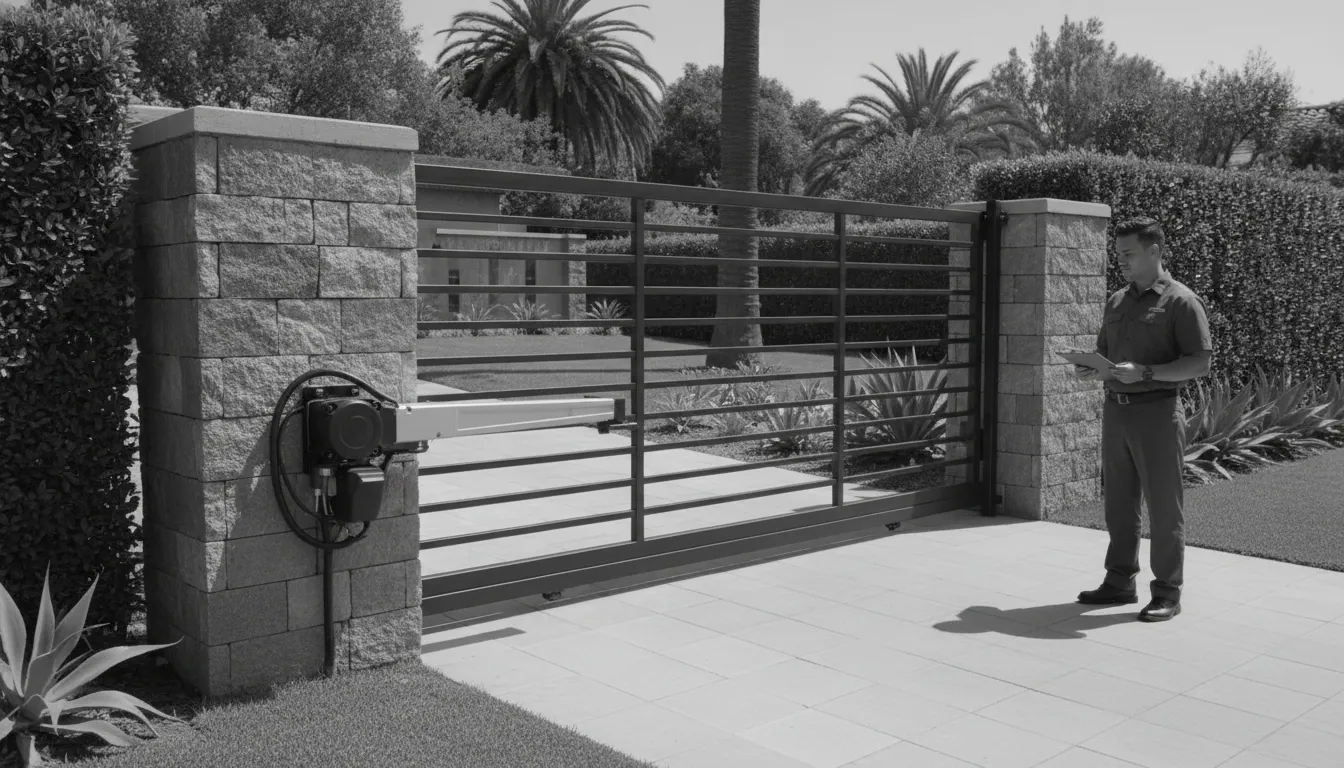
A swing gate that stops halfway, moves unevenly, or leaves one side lagging is not always suffering from a failed motor. The operator, actuator, controls, sensors, electrical components, hinges, and gate load all affect how the system performs.
Swing gate motor repair should begin with a full-system diagnosis, not an automatic replacement recommendation. A qualified technician can test motor performance, inspect the associated components, check sensors and access control, and evaluate whether a single or dual operator is working as intended.
That distinction matters for Los Angeles property owners managing a residential entry, commercial driveway, or larger access system. Swing gates may use hydraulic or electromechanical actuators, and single-leaf and double-leaf configurations place different demands on their operators. Understanding how those parts work together makes the symptoms easier to interpret and the repair-versus-replacement decision more practical.
Contact InteleGates to schedule swing gate motor service.
How Swing Gate Operators Work and Why They Fail
A swing gate operator turns the movement of an existing gate leaf into a controlled opening and closing cycle. The system may serve one leaf or two leaves, depending on the gate configuration. InteleGates works with both single and double-gate systems, using hydraulic or electromechanical actuators. The actuator is only one part of the system, however. Controls, sensors, electrical components, hinges, and the gate's operating load all affect how the operator performs.
Some swing operators include soft start and soft stop functions, which manage how movement begins and ends. Pinch-point protection is another important part of a properly considered system. These features must work with the rest of the equipment rather than being viewed as isolated add-ons. A control signal, for example, may reach the operator correctly while a sensor, actuator, or mechanical component prevents the gate from completing its cycle.
| System area | What it does | Why it matters during service |
|---|---|---|
| Actuator | Moves the gate leaf using hydraulic or electromechanical action. | Motor performance and actuator condition help identify whether movement problems originate at the operator. |
| Controls and access equipment | Directs when the system should open, close, or remain stopped. | A fault may involve the command path rather than the motor itself. |
| Sensors and protection | Supports safe, controlled operation and can interrupt a cycle when conditions require it. | Sensor status and protection functions must be checked as part of the complete system. |
| Hinges and gate hardware | Allow the gate leaf to move through its intended path. | Hinge adjustment or hardware condition can change the load placed on the operator. |
This is why swing gate motor repair should begin with diagnosis rather than an immediate replacement recommendation. The documented assessment inspects the full gate system and uses diagnostic tools to identify the fault. It also tests motor performance, checks sensors and access control, and inspects electrical components. Where applicable, the assessment considers hinge adjustment. The system is then tested under operating conditions to verify how the components work together.
A gate that moves slowly, stops partway, or behaves differently from one cycle to the next may have more than one contributing condition. Mechanical load can affect actuator performance, while a control or sensor issue can make a healthy motor appear unresponsive. In a double-gate arrangement, the relationship between both leaves also matters. A complete evaluation keeps the focus on the actual fault and the performance of the whole operator system. See electric gate system repair for more about the inspection-led service approach.
What Problems Lead to Swing Gate Motor Repair?
A swing gate can stop working for several different reasons, and the motor is not always the first part at fault. A gate that hums without moving, stops before reaching its position, moves slowly, or behaves differently from one cycle to the next needs a complete system assessment. InteleGates diagnoses the problem before recommending replacement, so the repair addresses the actual cause rather than only the most visible symptom.
Motor failure and worn components
Motor failure is a common electric gate repair issue. The operator may lose the ability to start, maintain, or complete movement. Worn or failed components can create similar symptoms, especially when the gate becomes noisy, hesitant, or inconsistent under normal operating conditions. In a swing system, the actuator and the gate hardware work together. A technician considers the operator's performance alongside the condition and alignment of the moving parts.
Uneven or unusually slow movement is also important evidence. It may indicate that the operator is working against excessive mechanical resistance, that a component is wearing out, or that the gate is no longer moving as intended. Hinge condition and adjustment can be part of the assessment when applicable. This is why replacing a motor without evaluating the complete system can leave the underlying problem unresolved.
Sensors, controls, and control-board faults
A swing gate may have a functioning motor but still fail to operate correctly because of a sensor malfunction. A control-board fault, or an issue with the access-control equipment. A sensor-related problem can interrupt a cycle or prevent the operator from responding as expected. Control-board faults can affect commands, sequencing, or how the operator handles a signal. These symptoms can look like motor failure from the user's perspective, but they require a different diagnosis.
Professional electric gate system repair includes checking sensors and access control along with testing motor performance. The goal is to understand how the operator responds to the system's commands, not simply whether it makes a sound when activated.
Power and wiring problems
Power-supply or wiring problems are another documented cause of electric gate repair needs. A loss of power, an intermittent connection, or an electrical component that is not performing correctly can produce stopping, hesitation, or complete inaction. Because these conditions involve the electrical system, evaluation should be handled by a qualified technician rather than through trial-and-error adjustments.
InteleGates' assessment inspects the full gate system, uses diagnostic tools to identify the fault, checks electrical components, and tests the system under operating conditions. That process helps distinguish a motor issue from a sensor, control, power, wiring, hinge, or component problem, supporting a durable repair decision for an existing swing gate.
How Does Single- versus Dual-Operator Repair Differ?
The first distinction is the gate configuration. A single-leaf swing gate uses one operator to move one leaf. A dual-leaf system uses two operators, with each operator responsible for its own leaf while the controls coordinate the opening and closing sequence. InteleGates services both configurations, including systems built around hydraulic or electromechanical actuators.
That difference changes what a technician looks for during swing gate motor repair. With a single operator, the assessment can focus closely on the motor or actuator. Its mounting hardware, the gate's mechanical load, the controls, and the condition of the hinges. A gate that moves slowly, stops early, or fails to complete its cycle may have an operator fault. But the operator may also be responding to alignment, hinge resistance, a control issue, or another condition affecting the complete system.
Single-leaf operator repair
Single-leaf equipment has fewer moving operator components to coordinate, but that does not make replacement automatic when the gate stops working. The technician still evaluates operator performance, control signals, sensors, electrical components, and the hardware supporting the existing gate. Soft-start and soft-stop behavior can also matter because changes in acceleration or stopping may point to a control or operator-performance concern rather than a simple motor failure.
The objective is to identify the failed component and the conditions that contributed to the failure. InteleGates uses component-level diagnosis and replaces components when appropriate, rather than recommending a larger change without an inspection.
Dual-leaf operator repair and synchronization
Dual-leaf systems add sequencing and coordination. The leaves need to move together as intended, reach their operating positions in the correct relationship, and respond consistently to the controls. If one leaf moves while the other remains still, starts late, stops early, or changes speed. The fault may involve one operator, the shared controls, wiring, mounting hardware, or the mechanical condition of either leaf. Replacing one operator without assessing the paired system can leave the underlying coordination problem unresolved.
For that reason, a dual-operator assessment considers the gate configuration, both operators' performance, system controls, hardware condition, and whether both leaves operate together as intended. The final test should cover a complete operating cycle under normal conditions, including the sensors and access-control response. InteleGates' repair process includes inspecting the full gate system, testing motor performance, checking sensors and access control. Reviewing electrical components, adjusting hinges where applicable, and verifying operation under working conditions. See the company's electric gate system repair service for the full diagnostic scope.
Whether the system has one operator or two, the sound decision follows inspection and performance assessment. The number of operators is only one part of the diagnosis. The condition of the existing gate, mounting hardware, controls, and complete cycle performance determines whether targeted repair is appropriate.
Should You Repair or Replace a Swing Gate Motor?
A repair-versus-replacement decision should follow a complete system evaluation. An operator may need a component-level repair when the fault is isolated and the surrounding equipment is in serviceable condition. Replacement may be the more durable path when the operator has extensive wear, major damage, or repeated performance problems that affect reliable operation.
Start with component-level diagnosis
Diagnosis helps separate a failed motor from related conditions. A sensor, control board, wiring connection, hinge, mounting point, or access-control component can create symptoms that appear to be motor failure. InteleGates evaluates the existing system and diagnoses the problem before recommending replacement.
When replacement is the more durable solution
Replacement can be appropriate when the operator or associated equipment cannot provide dependable operation after inspection. The decision should consider the condition of the complete swing gate system, including the operator, controls, sensors, electrical components, hardware, and how the gate performs under normal conditions.
Use authentic replacement components
When a component replacement is appropriate, the equipment must match the operator system and its operating demands. A qualified technician can identify compatible components, install them as part of the existing system, and test the result through a complete operating cycle.
Ask InteleGates to diagnose your swing gate operator before replacement
What Should Property Owners Do When a Swing Gate Fails?
A swing gate that stops moving, reverses unexpectedly, or fails to respond should be treated as a system problem requiring professional assessment. Avoid repeatedly cycling a gate that is making unusual noises, moving unevenly, or stopping partway. A technician can evaluate the operator, controls, sensors, electrical components, hinges, and gate movement together.
Information that helps the technician start with the right diagnosis
Before scheduling service, note what the gate does when the problem occurs. Useful details include whether it fails while opening or closing, whether one leaf moves differently from the other, whether the operator makes a new sound, whether the issue is intermittent, and whether a remote, keypad, telephone entry system, or other access-control command is involved. These observations help direct the initial evaluation.
Do not assume a nonresponsive gate needs a new motor. The operator may be responding to a sensor, control, power, wiring, hardware, or access-control issue. InteleGates diagnoses the problem before recommending replacement and evaluates the existing swing gate system as a complete operating assembly.
Most gate problems can be diagnosed during the initial service visit. Repair time depends on the cause of the problem, parts availability. And the condition of the gate and operator, so a technician should evaluate the system before promising a completion time.
InteleGates approaches the visit as a complete system assessment. The technician can use diagnostic tools, test motor performance, check sensors and access control, inspect electrical components, evaluate hinges where applicable, and test the system under operating conditions. That process helps distinguish a motor or component fault from a control, sensor, alignment, or hardware issue. Contact InteleGates to schedule service for an inspection of the existing swing gate system and a repair recommendation based on the actual condition of the equipment.
Where to Schedule Swing Gate Motor Repair in Los Angeles
InteleGates provides electric gate operator repair and access-control service for existing gate systems in Los Angeles and Orange County. Swing gate motor repair may involve the operator, actuator, controls, sensors, electrical equipment, hinges, or the relationship between both leaves of a dual-gate system.
The service approach is diagnostic. A technician evaluates the complete system, identifies the cause of the operating problem, and recommends the next step based on the condition of the equipment. This supports a repair decision that addresses the actual system rather than replacing a motor without understanding why the gate stopped working.
InteleGates uses a phone-first service model. Call 833-468-4283 TOLL FREE to describe what the swing gate is doing, whether it has one leaf or two, and whether the issue affects opening, closing, sensing, or access control. You can also contact InteleGates online to schedule service. Sharing those details early helps the technician understand the service request and prepare to evaluate the complete operator system.
Ask InteleGates to diagnose your swing gate operator before replacement
Frequently Asked Questions
What does swing gate motor repair include?
Swing gate motor repair includes evaluation of the operator, actuator, controls, sensors, electrical components, gate hardware, and operating conditions. The technician can test motor performance, check access-control response, inspect the system for contributing faults, and assess whether a component-level repair or replacement is appropriate.
How do I know whether a single or dual operator needs attention?
Single-leaf systems are evaluated as one operating assembly. With dual-leaf gates, the technician also checks whether both leaves move together as intended. Whether the operators remain coordinated, and whether the controls and gate hardware are contributing to uneven movement.
Can a swing gate motor be repaired instead of replaced?
That decision should follow an inspection and performance assessment. Component-level diagnosis may identify a repairable fault, while a replacement may be appropriate when the operator or related components cannot provide reliable operation. The goal is a permanent solution, not a temporary fix.
How long does swing gate motor repair take?
Most gate problems can be diagnosed during the initial service visit. Repair time depends on the cause of the problem, parts availability. And the condition of the gate and operator, so a technician should evaluate the system before promising a completion time.
Does InteleGates service swing gate operators in Los Angeles?
Yes. InteleGates provides on-site service for existing electric gate systems across Los Angeles and Orange County. Including areas such as Bel Air, Beverly Hills, Brentwood, Calabasas, Malibu, Santa Monica, Venice, West Hollywood, and Westwood.
Schedule Swing Gate Motor Service
When a swing gate operator is unreliable, a complete diagnosis can clarify whether a component-level repair or replacement is the right next step. InteleGates services existing gate operators for property owners in Los Angeles and Orange County, with the motor, controls, sensors, and gate operation considered together. To schedule swing gate motor service and have the problem assessed before replacement is recommended, contact InteleGates through the verified contact page.