
InteleGates Guide
Telephone Entry System for Gate Access: Complete Guide
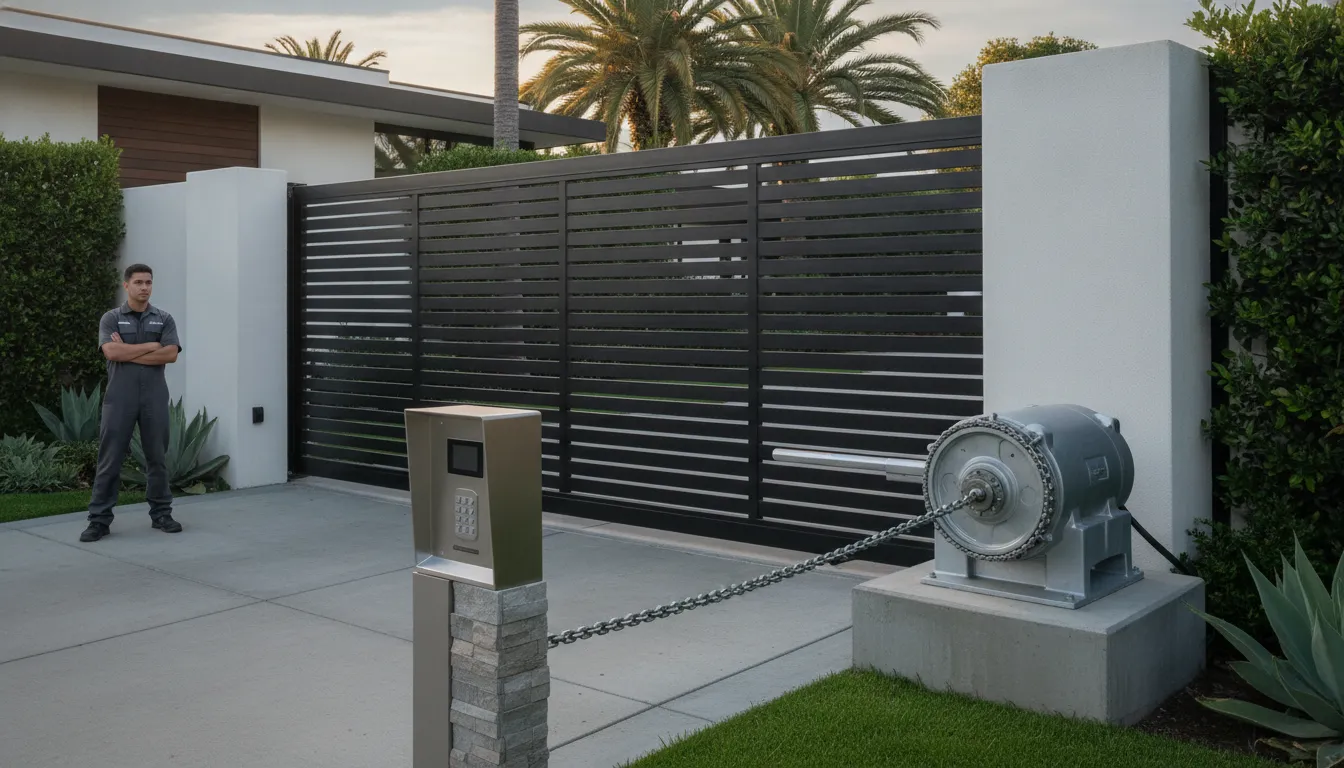
A telephone entry system for gate access gives visitors a direct way to reach a resident, property manager, or staff member before the gate opens.
Talk with InteleGates about the right telephone entry system for your gate.
What Is a Telephone Entry System for Gate Access?
InteleGates describes a telephone entry system for gate access as a visitor-call station connected to an authorized person's phone and the property's electric gate operator. A visitor selects a contact, discusses the visit, and receives an approved release through the integrated access-control system.
The system connects three working parts: the entry equipment at the driveway or property entrance, a phone or network pathway, and the electric operator that moves the gate. Together, these parts create a visitor experience based on communication and authorization. The exact equipment and connection method depend on the property, gate type, traffic pattern, and existing controls.
Telephone entry is useful when visitors need to reach someone who is away from the entry point. A homeowner can respond from a designated phone. A property manager can coordinate calls for a multifamily community. Staff at a commercial site can handle arrivals without placing a separate credential in every visitor's hands.
The entrance call station
The gate-side station is the visitor's first point of contact. Depending on the selected system, it may include a directory, call button, dialing interface, speaker, and microphone. The station needs a practical position for drivers and pedestrians. Mounting height, approach angle, weather exposure, lighting, and distance from the moving gate all influence the experience.
A directory also needs an administrative plan. Single-family properties may have only a few contacts. Multifamily and commercial sites may need a larger directory with offices, suites, units, or departments. The call station should make the intended contact easy to locate while fitting the entrance layout and the property's daily traffic.
The phone or connectivity pathway
After a visitor selects a contact, the system routes the call through its configured communications pathway. Depending on the equipment, that pathway may use a telephone connection, cellular service, an internet gateway, or another supported network arrangement. The receiving party may answer on a mobile phone, landline, or connected device.
Connectivity deserves attention during planning. The entrance may sit far from the building, behind walls, or in an area with changing signal conditions. The selected system should match the available power, wiring, network, and service environment. A clear plan also identifies who receives calls and how contact information is maintained when residents, tenants, or employees change.
The authorized release and gate operator
The authorized person speaks with the visitor and decides whether the visit should proceed. When access is appropriate, the person uses the system's supported release control. The equipment then passes the command to the connected electric gate operator. The motor and operator perform the physical movement of the gate, while the telephone entry equipment handles communication and authorization.
This relationship is important. A call station is one part of a complete access-control installation. The operator, power supply, release logic, safety devices, wiring, and communication equipment need to work together. InteleGates provides access control system services for property owners and managers planning a coordinated setup.
How Does the Visitor-Call Workflow Work?
InteleGates uses a straightforward visitor-call model: the person at the entrance contacts an authorized user, the user discusses the visit, and an approved command reaches the gate operator. The steps below show the general sequence while leaving equipment-specific controls to the selected system.
- The visitor arrives. A driver or pedestrian approaches the designated entry point and positions themselves where the call station can be used safely and comfortably.
- The visitor selects a contact. The visitor uses a directory, call button, or dialing interface to reach the resident, property owner, office, or staff member connected to the entrance.
- The system routes the call. The entry equipment sends the call through its configured telephone, cellular, internet, or network pathway.
- The authorized user answers. The resident, manager, or staff member speaks with the visitor and learns who has arrived and why they need access.
- The authorized user releases the gate. If the visit fits the property's access policy, the user activates the supported release control. The release method varies by equipment.
- The operator moves the gate. The connected electric gate motor and operator receive the command and perform the programmed movement alongside the site's safety equipment.
- The visitor proceeds. Once the entrance is available, the visitor follows the property's traffic flow. The gate returns to its configured operating sequence.
The call conversation is the defining feature of this workflow. It lets the person responsible for the property respond to a specific arrival rather than relying on a single shared method for every visitor. It also creates a clear connection between the entry station, the user receiving the call, and the motor that moves the gate.
Equipment-specific behavior can vary. Some systems use a directory, while others use a call button or a defined dialing pattern. Some release controls are activated during the call, while others use an associated interface. A professional assessment confirms how the parts should communicate before the system is installed or integrated.
Which Properties Benefit From Gate Telephone Entry?
Gate telephone entry is a strong fit for properties where visitors need a convenient communication path and access decisions belong to residents, managers, or staff. The right design depends on the number of users, arrival volume, operating hours, and the gate operator already serving the entrance.
Single-family homes and residential estates
At a single-family home, the system can connect guests, delivery drivers, caregivers, and service professionals with the resident. The homeowner can answer from a designated phone and make an informed decision about the arrival. This is useful when the entrance is separated from the house or when the property receives visitors throughout the day.
Residential planning should account for the driveway approach, pedestrian access, call-station position, and the gate motor's operation. The system can also be evaluated alongside remotes, keypads, or other methods used by household members. The goal is a smooth division between routine users and visitors who need a conversation before entry.
Multifamily buildings and HOA communities
Multifamily properties and HOA communities often have a larger resident directory and more frequent user changes. Telephone entry can give each resident a consistent way to handle guests while keeping the entrance connected to a property-level access process. Management also needs a clear method for updating resident names, phone numbers, units, and authorized contacts.
Traffic planning is especially important for communities with several entrances, pedestrian gates, delivery areas, or separate lanes. A professional review can map which users receive calls from each entry point and how the telephone system works with the electric operators already in place.
Commercial and managed properties
Offices, managed parking areas, warehouses, and other commercial properties may receive vendors, contractors, customers, and visitors whose access depends on the staff member responsible for the arrival. Telephone entry gives designated personnel a direct communication path at the entrance.
Commercial planning should consider arrival volume, staff schedules, operating hours, and the distinction between employees and visitors. Employees may use cards, RFID, keypads, or remotes for routine access, while telephone entry handles guests who need assistance. InteleGates can assess the property as part of its broader access-control and electric gate motor services.
Telephone Entry vs. Intercom, Keypad, Card, and RFID Access
Each access method serves a different user experience. Telephone entry centers on a visitor call and an authorized release. An intercom centers on voice or video communication through matched devices. A keypad uses a code. Card and RFID systems use assigned credentials for registered users.
| Access method. | Best fit. | Primary interaction. | Visitor path. |
|---|---|---|---|
| Telephone entry. | Homes, multifamily properties, and managed sites. | Visitor call followed by authorization. | Visitor contacts a resident, manager, or staff member. |
| Intercom. | Sites where direct voice or video communication is central. | Two-way voice, with video when supported. | Visitor communicates through the matched station or device. |
| Keypad. | Known users with an assigned code. | Code entry. | Visitor uses a property-approved code or another method. |
| Card reader. | Residents, employees, and registered users. | Card presented to a reader. | Visitor uses telephone entry, intercom, or staff assistance. |
| RFID. | Frequent users with enrolled tags. | Credential detected by a reader. | Visitor uses a separate communication path. |
Telephone entry and intercom systems
Telephone entry and intercom systems both support a conversation at the entrance. Telephone entry commonly routes the call to a designated phone or supported device. An intercom commonly uses a matched station, handset, video unit, or networked device. The best choice depends on the property, the users who will answer, the available connectivity, and the preferred equipment.
Video capability can be useful when visual communication is part of the property's visitor process. Audio telephone entry can be a practical fit when a resident, manager, or staff member needs to answer from a phone. A professional assessment can compare the communication path, operator compatibility, and user experience before selecting equipment.
Credential methods for routine users
Keypads, cards, and RFID are useful when a property has repeat users whose access can be assigned and managed. A keypad may serve a defined group that uses a property-approved code. Card access can support employee or resident administration. RFID can suit frequent drivers who use an enrolled credential.
These methods can work alongside telephone entry rather than replacing it. Residents or employees can use their routine credentials, while guests contact an authorized person from the entrance. That combination gives each user group a path that matches how often they arrive and how much assistance they need.
InteleGates also provides gate automation services to help coordinate access devices with the electric operator that moves the gate. The operator and access equipment should be considered together so a selected credential or approved release produces the expected gate response.
What Should a Professional Site Assessment Cover?
A telephone entry system needs to fit the property around it. A site assessment reviews the path from visitor call station to authorized user, release command, electric gate motor, operator, and safety equipment. It also identifies the practical conditions that affect daily use.
Gate operator compatibility
The existing operator is central to the assessment. The entry equipment must communicate with the control system in a way that supports the intended release function. The technician reviews the operator type, motor condition, control enclosure, movement pattern, traffic level, and relationship to other access devices.
Operator placement matters as well. A chain-drive operator on a sliding gate, for example, must be considered alongside the call station, control equipment, and vehicle approach. Swing gate operators require their own assessment of leaves, clearances, hinges, and movement zones. The equipment selection should match the gate configuration rather than treating every entrance the same.
Mounting, approach, and usability
The call station should be reachable from a driver's position without forcing an awkward stopping angle. Pedestrian users need a practical path that keeps them clear of moving equipment. The review can consider mounting height, visibility, lighting, weather exposure, vehicle clearance, and the position of the operator and control enclosure.
These details shape the everyday experience. A station that is easy to locate and use helps visitors complete the call without interrupting traffic. A thoughtful layout also makes service access more practical for technicians and property personnel.
Power, wiring, and connectivity
The assessment identifies how the call station, operator, and related controls receive power. It reviews available circuits, cable routes, connection points, existing wiring, and the distance between the entrance and the building. Depending on the chosen equipment, the system may rely on telephone service, cellular connectivity, an internet gateway, or another supported path.
Connectivity should be evaluated in the actual operating environment. Walls, distance, outdoor exposure, and changing signal conditions can influence communication. Planning should also identify the users who receive calls and the process for updating contact information when a resident, tenant, manager, or employee changes.
Safety equipment and complete-system testing
A telephone entry installation works alongside the gate's operating and safety equipment. The assessment can review vehicle detection, obstruction protection, warning devices, release logic, and the operator's response to an authorized command. The entry equipment should be coordinated with these functions rather than treated as an isolated phone device.
Before the system is considered ready, the call station, communication path, release control, operator, and safety devices should be tested together. This confirms that the intended user receives the call, communication is clear, the release command reaches the operator, and the gate responds as planned.
For broader operator planning, property owners can review InteleGates gate automation information. Access-control planning can also be paired with the company's electric gate system repair service when an existing operator or control system needs professional attention.
How Do You Keep a Telephone Entry System Reliable?
Reliability comes from treating the entry station, communication pathway, electric gate operator, power supply, safety equipment, and user records as one connected system. A change in one part can affect how visitors call, how residents respond, or how the gate moves.
Ongoing professional service can review the call station's condition, audio quality, mounting, weather exposure, and connection to the operator. It can also examine power connections, release behavior, safety devices, and the way the system works with keypads, cards, RFID, remotes, or management controls.
When is a service assessment useful?
An assessment is useful when the property layout or user groups change. Examples include a new gate operator, a new entrance, changes in residents or staff. A new access method, repeated communication interruptions, inconsistent release signals, or a gate that does not respond as expected. It is also useful when a property manager wants to coordinate several access methods under one operating plan.
Multifamily and commercial properties should give special attention to user administration. Resident, tenant, employee, vendor, and management records may change at different times. A clear process helps calls reach the intended person and keeps the entry experience aligned with current property operations.
What can a professional visit evaluate?
A professional visit can evaluate the call station, speaker, microphone, directory or dialing interface, mounting position, power, connectivity, release logic, and electric gate operator. It can review the relationship between telephone entry and other access-control equipment. Where applicable, it can also examine the safety equipment and the path used for remote or portal management.
The most useful verification is a complete call-to-gate test. The technician confirms that a visitor call reaches the intended user, communication is understandable. The authorized release reaches the operator, and the gate responds properly alongside its safety functions. InteleGates serves Los Angeles and Orange County with electric gate motor, gate automation, access-control, repair, and maintenance services.
Contact InteleGates to plan or service a telephone entry system for your gate.
Frequently Asked Questions
What is a telephone entry system for gate access?
It is a visitor communication and access-control system that lets a person at the entrance call an authorized resident, manager, or staff member. After the conversation, the authorized user can send a supported release command to the connected electric gate operator. The exact call path depends on the equipment and property.
Can a telephone entry system work with an existing gate operator?
It may work with an existing operator when the equipment, controls, power, and release logic are compatible. A professional assessment reviews the motor, operator, control enclosure, access devices, wiring, and safety equipment together. This confirms the practical integration path before a system is selected or connected.
Is telephone entry different from an intercom?
Both systems support visitor communication, but they use different equipment and communication paths. Telephone entry commonly routes a call to a designated phone or supported device. An intercom commonly uses a matched station, handset, video unit, or networked device. The right choice depends on the property and user experience.
Which properties use telephone entry systems?
Telephone entry can fit single-family homes, residential estates, multifamily communities, HOA properties, offices, managed parking areas, warehouses, and other sites where visitors need to reach an authorized person. The system should be matched to traffic, users, operating hours, connectivity, and the electric gate operator.
Plan Your Gate Telephone Entry System With InteleGates
A telephone entry system works best when visitor communication and gate operation are planned together. InteleGates can review the entrance, access-control needs, phone or network pathway, existing operator, and related safety equipment for properties in Los Angeles and Orange County.
Request a professional gate access assessment from InteleGates.