
InteleGates Guide
Vertical Lift Gate Operators: Uses, Benefits, and Service Considerations
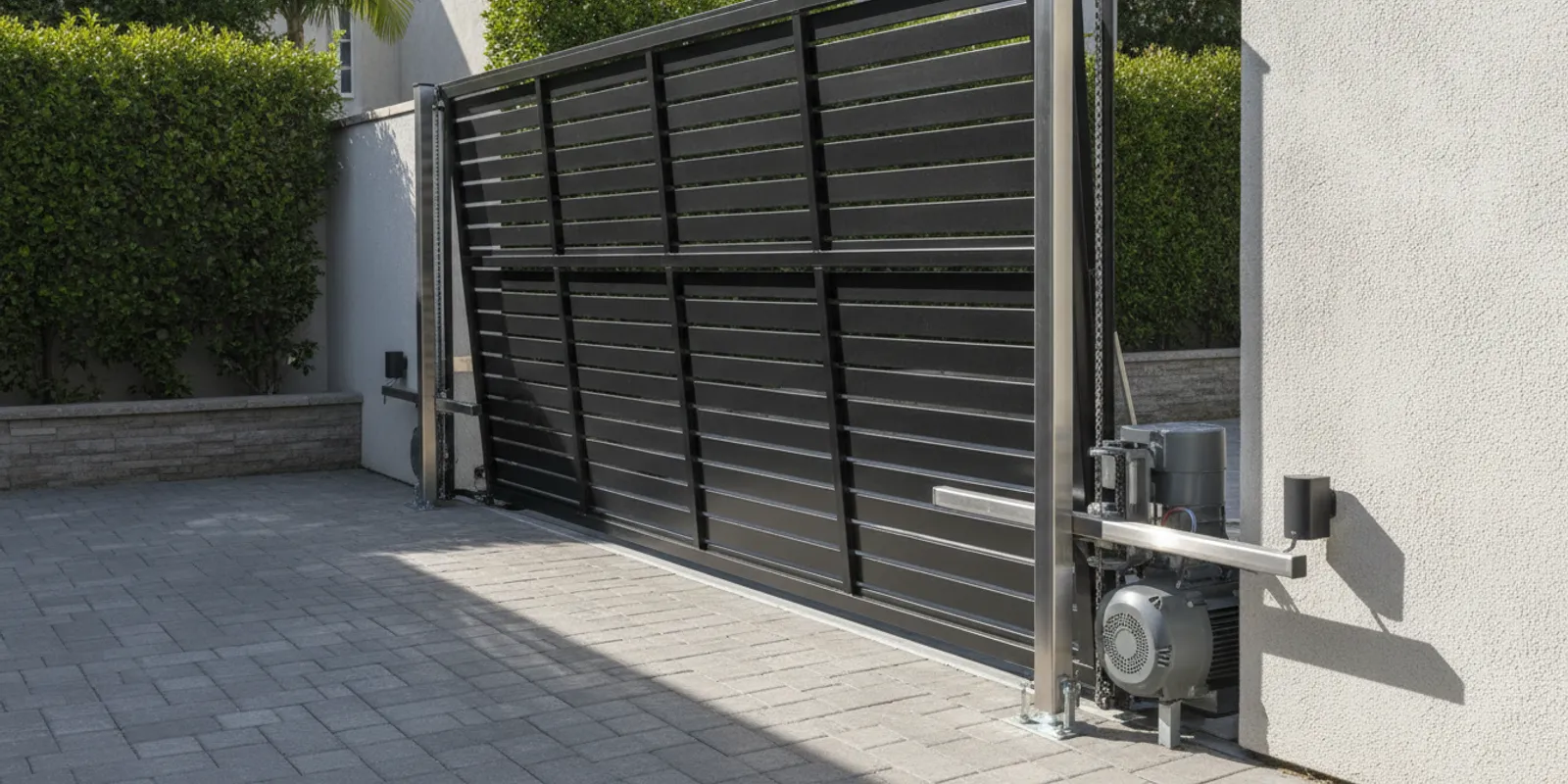
A vertical lift gate operator moves a gate upward rather than swinging it across a driveway or sliding it along a fence line. The arrangement can work well where a property needs a straight-up gate path and has enough overhead clearance. Choosing the right vertical lift gate operator involves more than matching a motor to a gate: the layout, gate movement, access controls, and safety devices must work together.
Request a gate automation assessment
What is a vertical lift gate operator?
A vertical lift gate travels upward along a guided path to open and lowers to close. Its operator supplies the movement, while the gate structure and guidance components keep the gate traveling in the intended direction. The operator is one part of a complete automated system; the gate, controls, sensors, and site conditions all affect how it operates.
This layout differs from familiar sliding and swing arrangements. A sliding gate moves sideways along its travel path. A swing gate rotates on hinges through an arc. A vertical lift gate instead needs room above its closed position and a clear vertical route for the gate as it opens. A property may have limited room for a gate to swing or slide, but the vertical format is suitable only if the height, support structure, and overhead area can accommodate the movement.
The term vertical lift gate describes the gate's movement; it does not describe a single universal operator or configuration. Gate dimensions, weight, frequency of use, available power, and the existing equipment all inform which operator and controls are appropriate. For background on the broader electric gate systems that can be automated, start with the property's actual gate and operating conditions.
Where can a vertical lift driveway gate make sense?
Vertical lift layouts may be considered at residential driveways, commercial entrances, and industrial sites when the property can support upward travel and the approach path needs to remain clear. A professional should evaluate the site rather than assume the format fits based on a photo or a general description.
- Residential properties: A vertical lift driveway gate may suit an entrance where a side-to-side path or a swing arc would interfere with the driveway layout. The available vertical space and the relationship between the gate and nearby structures still need to be checked.
- Commercial properties: A managed entrance may benefit from an automated opening sequence that works with its vehicle flow and entry controls. The operator and access method should be selected around the site's pattern of use.
- Industrial properties: A site with a tall, clear opening may consider a vertical arrangement where the gate's movement and the operator match the expected operating demands. The system should be evaluated as a complete installation, including controls and detection devices.
Other formats may be a better match when there is not enough overhead room, the supporting structure is unsuitable, or the gate cannot travel freely along its guides. Comparing formats during an assessment helps a property owner understand the practical tradeoffs. It is helpful to consider the whole approach to the entrance, not just the gate opening. A vehicle may need space to wait clear of a public road or another circulation area. A pedestrian route may cross near the gate, and neighboring structures may limit the usable vertical path. Those conditions affect how an automated opening fits the property day to day. The assessment should take account of how the gate will be used, where vehicles stop, and how the movement area relates to people and nearby features. For a property manager, the decision may also involve coordinating access for multiple users and keeping the entrance usable during service. For a homeowner, the most important questions may be how the gate operates with the driveway layout and which access method is convenient. At a commercial or industrial site, the owner or manager can explain vehicle flow and expected operating patterns. These details give a technician useful context without requiring the property owner to choose a motor or design the system. InteleGates also works with gate automation for existing gates and can assess whether the operator arrangement suits the gate already in place.
What are the benefits and tradeoffs?
The central advantage of the vertical lift format is its direction of travel. It does not need a broad swing arc or a long lateral path beside the opening. That can make it worth evaluating at a constrained entrance where the site can provide the required height and structure. An automated operator can also make opening and closing more convenient when coordinated with the property's chosen access methods.
Those advantages come with specific planning needs. A vertical route must remain clear throughout the gate's travel. Overhead structures, lighting, landscaping, vehicles, or future construction can affect the available clearance. The gate's alignment and supporting components matter as well: resistance or binding can put added demand on the operator and interfere with consistent operation. An assessment should distinguish a space advantage from an operating advantage. A vertical lift arrangement may leave the side of the driveway open, but it still needs adequate vertical travel and an appropriate structure. If trees, a roofline, signs, or other features overlap the travel area, the apparent clearance may not be usable throughout the full movement. A property should also consider how a raised gate affects the view and function of the entrance. These are reasons to compare the actual layout and gate condition before treating the vertical format as the obvious choice.
Consider the following at a high level when comparing a vertical lift configuration with common alternatives:
| Consideration | Vertical lift | Sliding | Swing |
|---|---|---|---|
| Gate travel | Upward along a guided path | Sideways along its travel path | Rotates through an arc |
| Space to evaluate | Overhead clearance and vertical travel area | Lateral room beside the opening | Clear area for the swing arc |
| Important system match | Gate structure, guidance, operator, and controls | Gate travel, operator, and path clearance | Gate configuration, operator, and opening arc |
| Typical assessment question | Can the gate rise and lower freely within the site? | Is there a clear path alongside the opening? | Is there enough room for the gate to swing? |
This is a planning comparison, not a substitute for evaluating the existing gate and its hardware. A property's usable dimensions and the gate's condition determine whether a particular format is appropriate. In addition, a powered configuration must be assessed for its actual use. Unified Facilities Criteria guidance for gates advises powered operators for vertical lift gates unless use is infrequent and manual operation is reasonable.
How should the operator and access controls work together?
The operator moves the gate; access-control equipment determines how an authorized user requests that movement. These parts should be planned together so an entry method sends a compatible signal and the gate responds as intended. Controls may include a keypad, telephone entry, card reader, remote control, intercom, or other equipment selected for the property.
For example, a residence may need a straightforward remote-opening method, while a shared property may need a visitor to contact a resident through an entry device. A commercial facility may have separate ways to accommodate staff, visitors, or routine vehicle access. These examples describe different operating needs, not a one-size-fits-all equipment list. The number and type of entry devices should reflect the way the property is managed. A residence may prioritize a familiar way to open the gate from a vehicle, while a shared property may need a clear process for guests who do not have a remote. A facility manager may also need to consider how staff access is handled and who can update user permissions. Before equipment is selected, note which users need access, how they will identify themselves or request entry, and whether the operator can be coordinated with the chosen controls. A service professional can review compatibility and placement as part of the overall system assessment.
During planning, discuss who needs to use the entrance, how they should request entry, and where the control devices can be placed for practical access. The operator, controls, and any detection devices should be considered as one coordinated system. Learn more about available access control systems, including gate keypad systems and telephone entry.
Vehicle detection is another topic to raise where it applies to the site's operating plan. An underground loop sensor can detect a vehicle at a designated point and can be part of a coordinated gate system. Its placement and connection need to suit the entrance and how vehicles approach it. InteleGates provides underground vehicle detection service as part of its gate automation work.
What safety considerations belong in the plan?
Every automated gate needs an assessment of its movement, the people and vehicles around it, and the devices intended to help manage operation. For a vertical lift layout, the evaluation should account for the gate's full path as it rises and lowers, not just the opening in its closed position.
- Travel area: Identify the full vertical movement zone and look for obstacles, changes in clearance, or areas where people may pass near the moving gate.
- Gate condition and alignment: Have the gate and its associated components assessed for smooth, consistent travel before decisions are made about operator work.
- Controls and detection: Review how users activate the gate and which sensors or other devices are appropriate to the configuration and site.
- Operating expectations: Explain how frequently the gate is expected to operate and whether different users or vehicles follow different access procedures.
- Ongoing checks: Include the operator, controls, sensors, and the gate's movement in a planned service review rather than considering the motor in isolation.
Do not treat a new operator as a cure for every movement problem. An expert assessment can help distinguish an operator issue from a concern involving the gate's travel, controls, or related equipment. InteleGates focuses on electric gate motor and automation service, with diagnosis considered before replacement recommendations. For help with an existing system, see gate operator repair and diagnostics.
What should a professional site assessment cover?
A useful assessment begins with the installed gate and the property's real operating needs. The property owner or manager can help by describing the gate's history, the problem or planned change, and how people currently use the entrance. The service professional can then review the configuration and identify what information is needed before recommending work.
- Confirm the gate format and movement. Review whether the gate lifts vertically, its travel path, and whether the full movement area is available.
- Consider the existing gate and operator. The assessment should account for the gate's condition, installed operator and controls, and any symptoms or changes in operation.
- Review site and use conditions. Discuss overhead clearance, access patterns, expected frequency of operation, vehicle approach, and any physical constraints around the entrance.
- Coordinate access-control needs. Identify how residents, staff, visitors, or other users should request opening, then consider compatible controls and detection equipment.
- Explain the service recommendation. The next step should reflect the diagnosed condition and system needs, whether that involves repair, maintenance, or an installation project.
InteleGates serves residential, commercial, and industrial properties in Los Angeles and Orange County with electric gate motor, automation, and access-control service. Use the service area information to check coverage, or review electric gate repair service for an existing system that needs attention.
What should a vertical lift gate service plan include?
A maintenance plan should reflect the specific gate and the way it is used. Rather than assume every system needs the same service interval or checklist, ask the service professional what needs review for the installed configuration. A service visit can consider the operator and its controls alongside the gate's travel and related equipment. The property owner or manager can prepare for that conversation by noting when a change in operation began, whether it happens every time or only under certain conditions, and whether it affects one access method or all of them. Mention recent changes around the entrance or to its use as well. A clear description is more useful than guessing at a failed component, and the technician can use it as context while evaluating the equipment. Keep prior service records or equipment details available when possible, but do not delay requesting an assessment simply because a manual or model number is unavailable. A practical plan should also clarify which components are included in the service review and how the property can report a new concern.
Useful topics to cover include changes in sound or movement, intermittent operation, whether access devices respond as expected, and any changes to the area around the gate. Keep a record of recurring symptoms and when they occur. That information can help a technician understand the problem and diagnose the system before recommending a repair or replacement.
Maintenance is also a chance to revisit how the entrance is used. New residents, staff procedures, vehicle patterns, or changes to the surrounding area may affect how the controls and operating plan should work. If an access device no longer fits the property's needs, coordinate its service or update with the operator rather than making assumptions about compatibility. More information is available on electric gate maintenance.
Explore gate automation service
Frequently Asked Questions
Is a vertical lift gate the same as a swing gate?
No. A vertical lift gate moves upward and downward along a guided path. A swing gate rotates on hinges through an arc. The available space and the gate's configuration help determine which format is appropriate.
Can a vertical lift gate use access control?
Yes. An operator can be coordinated with compatible access-control devices such as keypads, telephone entry, remotes, or other equipment. The appropriate devices depend on who uses the entrance and how the system is configured.
Can an existing vertical lift gate be automated?
It may be possible, but the existing gate, its condition, travel path, supporting components, and site conditions need to be assessed first. A professional can determine what operator and controls are suitable and whether any other work should be considered.
What should I do if the gate moves inconsistently?
Note what happens and when, and arrange service for an assessment of the operator, gate movement, controls, and related equipment. Avoid treating the symptom as proof that the motor needs replacement; diagnosis helps identify the source of the problem.
Does InteleGates serve vertical lift gates in Los Angeles and Orange County?
InteleGates provides electric gate motor, automation, repair, maintenance, and access-control service in Los Angeles and Orange County. Contact the team with the property location and a description of the existing gate and its needs.
Contact InteleGates to discuss your vertical lift gate operator
A well-planned vertical lift system starts with the existing gate, the room it has to move, and the way people need to use the entrance. A professional assessment can connect those site details to an appropriate operator, access controls, and service plan.