
InteleGates Guide
Why Is My Gate Motor Making Grinding Noises?
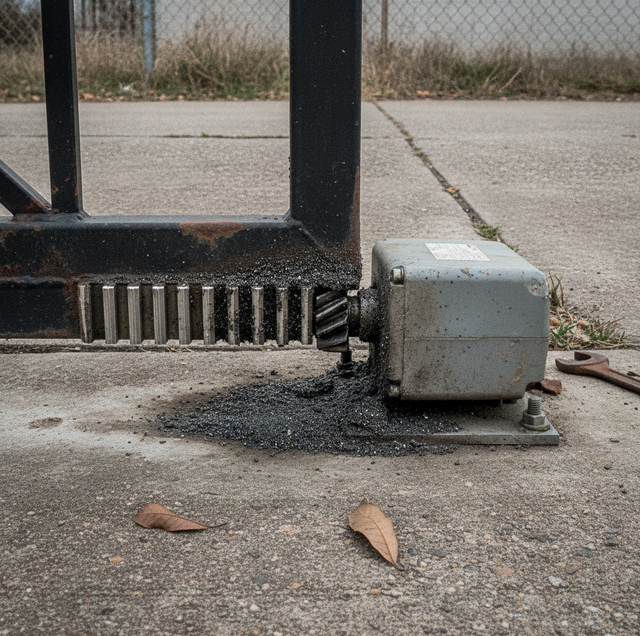
Quick Answer: A grinding automatic gate almost always means metal is wearing against metal somewhere in the drive. The usual sources are worn gear teeth or a failing gearbox inside the operator, a worn chain-drive component on a sliding gate, worn gate wheels and rollers or a dry, dirty track, a failing motor bearing, debris jammed in the path, or a binding swing-gate arm or hinge. The repair depends on where the noise starts, so a technician isolates the operator, chain drive, rollers, track, bearings, and hinges before servicing the affected part. Keep running a grinding gate and a small wear issue can become a larger mechanical failure, so early diagnosis matters.
The first time an automatic gate grinds, most people assume it needs oil and move on. A few weeks later, it is grinding louder, moving slower, and one morning it stalls halfway with the gears chewed up. Grinding is not a quirk you lubricate away. It is the sound of two metal parts that should be riding smoothly, making contact, and it points to a specific worn or misaligned component. The trick is figuring out which one before the damage spreads.
What Grinding Actually Tells You
A healthy gate operator hums or whirs. Grinding is a rougher, harsher sound, and it means the load is transferring through metal that is no longer meshing or rolling the way it was built to. On a smooth system, gear teeth engage cleanly, rollers spin on their bearings, and the gate coasts along its track. When any of those surfaces wears, bends, corrodes, or fills with grit, the parts start scraping instead of gliding, and that scraping is what you hear. So the noise itself is a clue: the question is whether it is coming from inside the operator or from the gate hardware it drives.
The Common Sources of the Grind
Grinding traces back to a handful of failure points. Here is where to look, and what each one usually sounds and feels like.
| Where the grind starts | What is happening | What you notice |
|---|---|---|
| Gearbox/gear teeth in the operator | Internal gears are worn, chipped, or losing lubrication | Grind seems to come from the motor housing itself, even with the gate held still |
| Sliding-gate chain drive | The chain, sprocket, or drive alignment is worn or out of adjustment | Rhythmic grinding that repeats as the gate travels; visible chain or sprocket wear |
| Gate wheels/rollers and track | Worn rollers or a dry, dirty, debris-filled track | Scraping or crunching that moves along with the gate, loudest at rough spots |
| Motor bearing | The bearing that supports the motor shaft is failing | A steady growl or whine that rises with motor speed |
| Debris in the path | A rock, screw, or buildup jammed in the track or rack | Sudden grinding or a hard catch at one point in the travel |
| Swing-gate arm/hinge | The operator arm or the gate hinge is binding or dry | Groaning or grinding at the pivot as the gate swings open or shut |
Inside the Operator: Gearbox and Motor
Most gate operators drive the gate through a gearbox that turns the motor's fast spin into slow, powerful movement. Those gears take the full load every cycle. Over years of daily use the teeth wear down, a tooth can chip, or the grease that cushions them dries out, and worn or dry gears grind. A failing motor bearing produces a different note, more of a growl or whine that climbs with speed, because the shaft is no longer spinning true. Either way, the noise originates in the operator housing rather than out at the gate, which is a strong hint that you are dealing with an internal part.
On a Slide Gate: Chain Drive and Alignment
A sliding gate with a chain-drive operator depends on the chain, sprockets, guides, and operator alignment working together. A loose chain, worn sprocket, shifted operator, or binding gate can make the drive scrape or load unevenly as the gate travels. The repeating rhythm helps a technician separate chain-drive wear from a roller, track, bearing, or gearbox problem.
Out at the Gate: Rollers, Wheels, and Track
A slide gate rolls on wheels or rollers, and a cantilever slide gate rides on roller assemblies mounted to its posts. Those rollers spin on bearings that eventually wear out, and the track they follow collects dirt, sand, leaves, and debris. A dry or gritty track turns the ride into metal-on-metal scraping; a seized roller drags rather than spins. Because salt-laden air and fine dust work into everything, rollers and tracks in those conditions corrode and clog faster than in dry, clean air. The tell is a scraping or crunching sound that travels with the gate and gets worse at the same rough spots each time.
Swing Gates: Arms and Hinges
A swing gate grinds in different places. Its operator pushes or pulls through an articulated or ram-style arm, and the gate itself turns on hinges. A dry, worn, or bent arm joint groans under load, and a rusted or sagging hinge grinds as the gate pivots. Because a swing gate's weight hangs off the hinges, a worn hinge also drops the gate's alignment, which makes the operator strain and the grinding worse. Watch and listen at the pivot points as the gate moves through its arc.
Why You Should Stop Running a Grinding Gate
It is tempting to keep using a gate that still works, just noisily. Resist it. Grinding means parts are actively wearing against each other with every cycle, and a heavy gate can quickly turn a small issue into a more extensive repair. Worn chain-drive parts, rollers, or a debris-filled track can let a sliding gate bind or leave its intended path, creating a safety concern around vehicles and people. Stop the equipment from repeated cycling and arrange a technician diagnosis before the operator or gate hardware is damaged further.
Finding the Source Before Service
A grinding noise can come from the operator or from the gate hardware it drives, so the same symptom can lead to very different repairs. A technician isolates the equipment safely, observes whether the noise follows the motor or the gate travel, and checks the chain drive, rollers, track, bearings, hinges, gearbox, and safety controls. That evidence narrows the fault without guessing.
From there, the service follows the source. Technicians clean and service the track, adjust or replace worn chain-drive components, replace damaged rollers or bearings, and service or rebuild a gearbox when the operator design and parts support it. Matching the repair to the source is what keeps the noise from returning.
The Payoff of Catching It Early
A grinding gate is one of the clearest early warnings an automatic gate gives you, and it rarely fixes itself. Caught early, the same worn roller or dirty track that grinds today is a quick service call; ignored, it becomes a stripped rack, a wrecked gearbox, or a gate off its track and out of use. Reading the noise, where it comes from, whether it moves with the gate, whether it happens by hand or only under power, tells you most of what a technician needs to know before they arrive. Treat the grind as the useful signal it is, and you get to fix the small problem instead of the big one.
Frequently Asked Questions
How can I tell whether the grinding is inside the motor or out at the gate hardware?
The source is usually narrowed by whether the noise follows the motor or the gate's travel. A technician isolates the operator safely and checks the gearbox, motor bearing, chain drive, rollers, track, and hinges. A noise that occurs only under power points toward the operator or drive; a noise that follows gate travel points toward the moving hardware.
Is it really that risky to keep using the gate while it grinds?
Yes, because the damage compounds mechanically, not just cosmetically. A grinding chain drive can damage the chain, sprocket, or operator, while worn rollers can make a sliding gate bind or leave its guide path. A cantilever gate with damaged guide rollers can become unstable around vehicles and people. The motor can also overheat as it strains against resistance, which can trip the thermal cutoff or damage the windings.
What makes a chain-drive slide gate grind specifically?
A chain-drive slide gate can grind when the chain is loose, a sprocket is worn, the operator has shifted, or the gate is binding on its rollers or track. The noise often repeats at the same point in travel. A technician checks the chain, sprockets, guides, operator alignment, rollers, and track together before choosing the correct service.
What maintenance actually prevents this kind of grinding?
Scheduled service helps keep the track, chain drive, rollers, hinges, bearings, and gearbox working together. A technician clears contamination, uses the lubricant suited to each component, checks chain tension and operator alignment, and tests the gate under power and through its safety cycle. On a busy commercial gate, regular inspection catches wear before it turns into grinding.
Why do gates in salt-air environments seem to wear out and grind faster?
Salt-laden air is corrosive, and it settles on and inside gate hardware continuously, not just during any one season. Salt accelerates rust on steel racks, roller bearings, hinges, fasteners, and the operator's internal parts, and corroded bearings and gear teeth grind long before clean ones would. Airborne dust and fine sand add an abrasive layer that grinds down lubricated surfaces. That combination means gates in salt-air environments need cleaning and re-lubrication more often, and their rollers, racks, and bearings tend to reach replacement sooner than identical gates in dry, clean air.
Does a worn gearbox mean I need a whole new operator, or can it be repaired?
It depends on the operator's design and how far the wear has gone. Some gearboxes can be serviced, and some models support replacement gears, seals, or motor bearings. A technician can determine whether the operator is serviceable or whether a full operator replacement is the more reliable path after checking the housing, wear pattern, and parts support for that model.
Getting a Grinding Gate Diagnosed
The one thing a grinding gate rewards is a fast, correct diagnosis, matching the repair to the real source, whether that is a simple cleaning of the track or a gearbox that needs rebuilding. Because the wrong fix (oiling a gate that actually has a stripped pinion) wastes time while the damage grows, it pays to have someone identify the source before parts fail outright. The sooner the grind is traced, the smaller the repair tends to be.
Hearing a grinding gate motor? — Have the source diagnosed and serviced by gate specialists before the gears or track give out. InteleGates Inc. serves Los Angeles, Long Beach, and Anaheim. Call (833) 468-4283.