
InteleGates Guide
Access Control Systems for Gated Properties
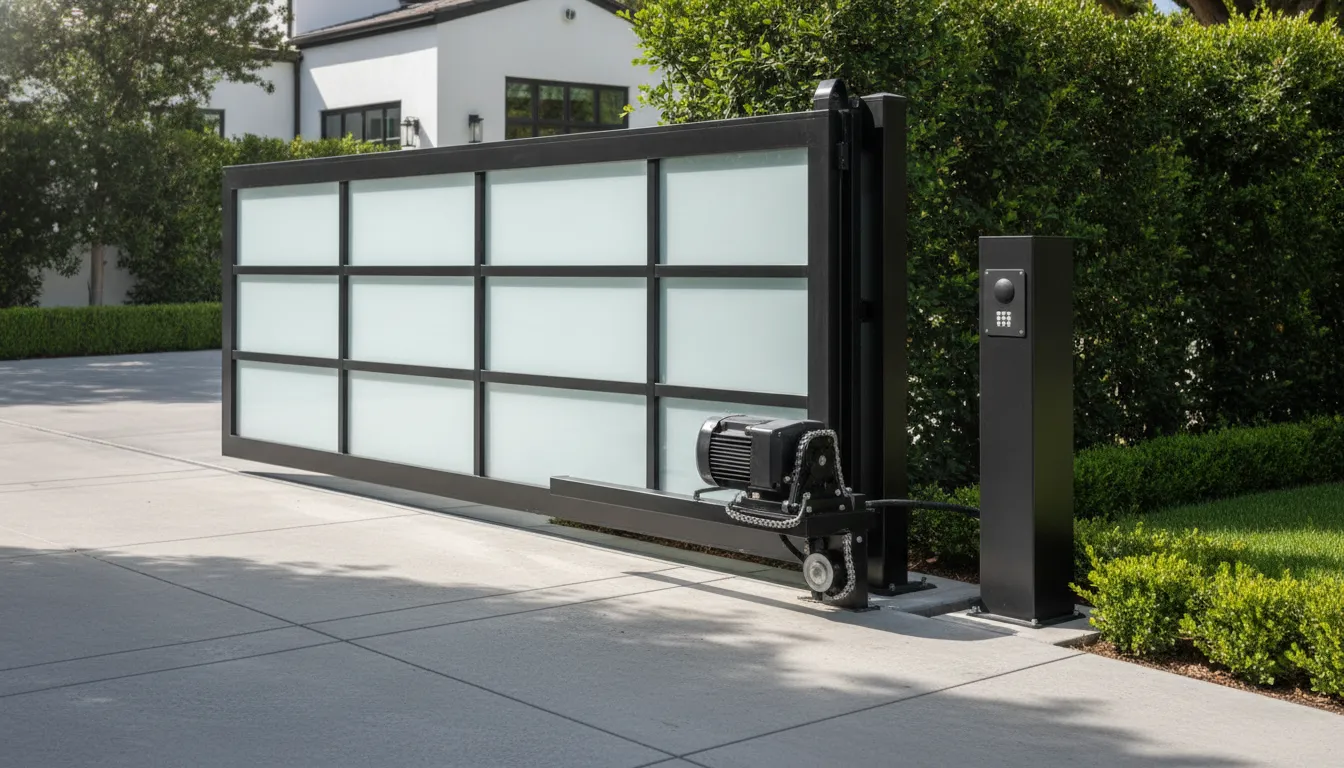
Article summary: Access control systems connect a credential or visitor request to a permission decision. This guide explains the equipment and planning choices for gated properties.
A gated entrance is only as dependable as the equipment working behind it. A keypad, telephone entry panel, remote, or RFID reader must communicate with the controller, electric gate operator, safety devices, and the property's traffic pattern. When those pieces are selected separately, residents may wait. Visitors may be unclear about whom to contact. Operators may also be asked to handle traffic they were not configured to manage.
Access control systems connect a credential or visitor request to a permission decision, then release the gate or entry point through the appropriate operator, lock, or relay. For Los Angeles and Orange County properties, the right setup depends on who needs access, how vehicles and pedestrians move, and how the equipment works together.
InteleGates evaluates residential, commercial, and multi-unit entrances as complete electric gate systems. That means considering entry methods alongside motors, sensors, power, wiring, and user volume rather than treating one device as the solution. The first step is understanding what the system includes and how each part contributes to a reliable entry experience.
Talk with InteleGates about your gated property's access control needs.
What Are Access Control Systems for Gated Properties?
Access control systems are coordinated equipment and management processes that determine whether a person or vehicle should be allowed through a controlled entrance. At a gated property, the system connects the way a user identifies themselves with the equipment that releases the gate. The goal is not to add a standalone gadget. It is to make the entry point work consistently for residents, guests, vendors, employees, deliveries, and other authorized users.
A useful definition from the National Institute of Standards and Technology describes physical access control as a system that uses authentication and authorization to control entry by people or vehicles. In practical terms, the equipment follows a chain. A credential is presented, and a reader interprets it. A controller checks the permission. An approved signal then reaches the release device or electric gate operator.
The credential and reader identify the access request
The credential is what the user presents. Depending on the property and its daily traffic, that may be a keypad code, key card, RFID credential, remote, telephone entry call, or audio/video intercom interaction. The reader or entry device receives that request. It may read a credential directly or pass a visitor's call to an authorized resident or property manager.
Choosing the right entry method requires more than selecting the newest reader. A private driveway, an Orange County apartment community, and a busy commercial entrance have different user groups and traffic patterns. The system should accommodate normal daily access while giving the property manager a practical way to handle guests, vendors, deliveries, and changes in permissions.
The controller connects permission to the gate equipment
The controller is the decision point between the reader and the release hardware. It evaluates whether the presented credential or approved request is permitted, then sends the appropriate signal. At a vehicle gate, that signal may activate the electric gate operator. At a pedestrian opening, it may release a magnetic lock or another compatible access device.
This is why the controller cannot be evaluated separately from the operator, safety sensors, power, wiring, and traffic pattern. A reader may function correctly while the gate still responds poorly because the supporting equipment or site conditions have not been assessed as a complete system.
Management keeps the system aligned with the property
Management may be handled locally or through a connected platform, depending on the equipment and property requirements. The important question is how permissions are administered as residents move, employees change, vendors need access, or a property adds another entrance. In Los Angeles and Orange County, InteleGates evaluates the full access path, including the credential method, controller, release device, electric operator, and site layout, before recommending equipment. That technician-led assessment helps match access control systems to how the property actually operates.
How Gate Access Control Works From Credential to Operator
A gate access request moves through several connected decisions before the operator starts. The credential reader, controller, relay, gate motor, safety devices, and management rules must work as one system. That is why access control systems should be evaluated with the operator, power, wiring, sensors, and traffic pattern, rather than treated as a standalone keypad or intercom. The basic sequence is:
- A person or vehicle presents a request. A resident may use a remote, key card, RFID credential, keypad, or telephone entry system. A visitor may call through an intercom or request entry through another approved method. The reader or entry device captures that request and passes it to the control equipment.
- The system identifies the credential. The controller receives the credential data or the approved request from the entry device. Credentials can include physical tokens, codes, remote controls, or other methods selected for the property's users and daily traffic. The right choice depends on who needs access, how often they enter, and how visitors, vendors, deliveries, and emergency responders are handled.
- The controller checks the permission. Access control is fundamentally an authorization decision: the system compares the request with its configured rules and determines whether entry should be allowed. Management may need to add, change, or revoke permissions as residents, employees, vendors, or access requirements change. The controller then sends the appropriate signal through a relay or connected output.
- The approved signal reaches the gate equipment. At a vehicle entrance, the relay can communicate with the electric gate operator or another release device. Depending on the design, a separate lock or controlled pedestrian entry may respond instead. The operator's condition, the release hardware, and the access equipment must be compatible. A signal from a credential reader cannot compensate for a failing motor, damaged wiring, or an improperly matched control circuit.
- Safety and position conditions are confirmed. Gate automation must account for the movement of vehicles and people. Safety sensors, position inputs, and underground vehicle detection such as LOOP sensors can affect whether the gate continues, stops, or remains open. These devices are part of the operating sequence, not optional accessories to overlook during system planning.
- The event returns to management. Depending on the equipment, the system may record the request, the decision, and the resulting gate action for later administration. A site assessment helps determine whether a simple local arrangement or a more connected management approach fits the property's terrain, user volume, traffic flow, and automation needs.
The same sequence applies across a private driveway, an Orange County multifamily entrance, or a commercial property, but the equipment and permissions should match the site. InteleGates installs, repairs, and maintains access control systems throughout Los Angeles and Orange County, coordinating the entry equipment with electric gate motors and the surrounding automation.
For the formal definition of physical access control and authentication at an access point, see the NIST explanation of physical access control systems.
Which Entry Methods Fit Your Property and Users?
The best entry method depends on who needs access, how often they arrive, and how visitors should be handled. A private residence may need a dependable remote and a clear way to admit guests. An apartment community may need resident credentials, visitor communication, and a process for vendors or deliveries. A commercial entrance may need separate permissions for employees, managers, and scheduled service traffic.
These methods are not interchangeable accessories. Each one sends a request through the access control system, which then works with the gate operator and related equipment to allow the appropriate movement. The table below outlines where each method commonly fits.
| Entry method | Best fit | Practical consideration |
|---|---|---|
| Telephone entry | Residents, tenants, and visitors at homes, apartments, and HOAs | Visitors can contact a resident or property staff member before access is released. See telephone entry systems for a dedicated option. |
| Audio or video intercom | Properties that need direct voice or visual communication at the entrance | Video can help users identify a visitor. Audio may be appropriate where the entrance layout and traffic pattern make conversation clear. |
| Keypad | Authorized users who can share or remember a PIN | Useful for selected entrances and user groups, but permissions should be managed carefully when residents, staff, or vendors change. |
| Key cards and RFID | HOAs, apartments, offices, and other properties with recurring users | Individual credentials can support organized access for residents, employees, or approved contractors. Lost or inactive credentials should be handled through the system's management process. |
| Remote gate opener | Residents, employees, and authorized vehicle users | Remotes provide convenient vehicle access when users are known and the entrance is designed for that traffic. Review remote gate openers when comparing vehicle-entry options. |
| Visitor and resident workflow | Multi-unit, commercial, and managed properties with different user groups | Residents, guests, vendors, deliveries, and emergency responders may need different paths or permissions. The entry method should reflect those real operating patterns. |
Many properties use a combination rather than one universal credential. For example, residents may use RFID or remotes for routine vehicle access, while visitors use telephone entry or an intercom. A separate keypad may serve a service entrance, provided the property has a clear administrative process for the people who use it.
Selection also depends on the electric gate operator, safety equipment, power, wiring, and available space at the entrance. Traffic volume matters as well. A method that works smoothly for a private driveway may create delays at an apartment or commercial entrance with frequent arrivals. In Los Angeles and Orange County, a site assessment should account for the property layout. Terrain, user volume, and the way residents, guests, vendors, and employees actually move through the entrance. InteleGates can evaluate those conditions before recommending an access control arrangement.
What Supporting Hardware Makes a Gated System Reliable?
The entry device is only one part of a dependable gated entrance. The electric gate operator, locks, sensors, power supply, wiring, and traffic layout must work as one system. When those relationships are considered together, an access decision can be accepted, verified, and carried through to the correct movement of a vehicle or pedestrian gate.
The operator and locking hardware
The electric gate operator provides the movement that opens and closes the vehicle gate. An access controller or relay communicates the approved request to that operator. The lock serves a different function: it helps hold the entry point in its intended position. For pedestrian and vehicle paths, magnetic gate locks may be part of the equipment plan, depending on the gate design, traffic pattern, and required release behavior.
These components should not be selected in isolation. A controller that is well matched to the credential reader can still produce an unreliable entrance if the operator, lock, or available power does not suit the site. Relays and interface modules also need to be compatible with the equipment they connect. In practice, a site assessment looks at the complete path from an approved request to the physical release and movement of the gate.
Sensors that support safe movement
Safety sensors help the operator respond to conditions around the moving gate. Their placement and coverage are evaluated with the gate's travel area and the way people and vehicles use the entrance. Vehicle detection serves another purpose. A loop detector can identify a vehicle at the driveway and support an automated opening or closing sequence when integrated with the gate controls. See how gate loop detectors function in an automated entrance.
The vehicle path and pedestrian path should be considered separately. A driveway may need vehicle detection and operator controls, while a pedestrian entrance may rely on a reader, intercom, release device, and magnetic lock. Combining both paths without accounting for their different users can create confusing traffic flow or an access method that does not fit daily use.
Power, wiring, and site conditions
Reliable operation depends on suitable power, correctly planned wiring, and equipment locations that fit the property. Long runs, exposed areas, existing conduit, and limited cabinet space can affect what can be installed and how components communicate. The controller, relay, reader, lock, sensors, and operator all require a coordinated plan rather than disconnected additions.
For Los Angeles and Orange County properties, that review should include terrain, driveway geometry, traffic volume, residents or staff, visitors, deliveries, and emergency access. InteleGates evaluates access control alongside the motor, sensors, power, wiring, and traffic pattern. Then recommends equipment for the actual property instead of treating one component as the entire solution.
How Should Owners Match Access Control to Property Type?
The right arrangement depends less on the label of the property than on who needs access, when they arrive, and how the entrance is managed. A private driveway may serve a small, familiar group. An apartment community may need to distinguish residents, guests, vendors, and emergency responders. A commercial entrance may have employee traffic, deliveries, and changing permissions throughout the day. Each situation calls for a different balance of convenience, administration, and traffic control.
Private estates and residential driveways
Private estates usually have a smaller user group, but visitor access still needs a clear plan. A remote, keypad, telephone entry system. Or intercom may be appropriate depending on how often guests arrive and whether the owner wants to speak with visitors before opening the gate. The electric gate operator, vehicle path, safety equipment, and available power must work with the selected access method. A site assessment can also account for service personnel, deliveries, and temporary access without making the daily entry process unnecessarily complicated.
HOAs, apartments, and multi-unit communities
Multi-unit properties need consistent administration as residents move in, move out, or change vehicles. Managers may need separate access arrangements for residents, guests, vendors, and emergency responders. Key cards, RFID credentials, remotes, keypads, and telephone entry can be combined when the property has more than one type of user. The important question is how permissions will be issued, updated, and removed over time. Managers should also consider whether the entrance can handle visitor calls and resident traffic without creating delays during busy periods.
Commercial properties and managed facilities
Commercial owners and facility managers often need access rules that follow employee roles, delivery schedules, tenant use, or changes in occupancy. A credential system may be useful where many authorized users need managed entry, while a telephone or intercom method can help with visitors who are not regular users. The access equipment should be evaluated alongside the gate operator, controller, locks, sensors, wiring, and traffic pattern. InteleGates services major motor brands without a manufacturing bias, allowing the existing equipment and the property's actual requirements to guide the recommendation.
High-traffic entrances
Busy entrances require attention to throughput as well as authorization. A system that works well for a quiet residence may create unnecessary interruptions when vehicles arrive in groups. Managers should identify peak arrival periods, turning space, pedestrian movement, delivery activity, and the process for handling visitors who do not have a credential. Underground vehicle detection, including loop sensors, may be part of an automated gate arrangement, but it must be considered with the complete operator and safety system. Future changes matter too. New tenants, additional users, another entrance, or a revised visitor policy can affect the controller and administration needs.
For a property-specific recommendation, review gate access control systems with an experienced installer. InteleGates can assess the users, traffic flow, existing electric gate equipment, and access requirements before recommending an installation or service approach.
What Should Los Angeles and Orange County Managers Plan Before Installation?
A successful installation starts with the property, not a catalog of readers or keypads. For a Los Angeles estate, an Orange County condominium, or a commercial entrance with steady deliveries. The access control system must work with the electric gate operator, safety equipment, power, wiring, and daily traffic pattern. A professional site assessment helps identify those conditions before equipment is selected.
Start with the entrance and the way people use it
Review the terrain, driveway slope, gate position, turning radius, lane width, and visibility from the approach. A vehicle entrance that works for residents may become difficult when a delivery van, moving truck, or emergency vehicle needs additional room. Managers should also map the normal traffic pattern, including where vehicles queue, where pedestrians walk, and whether an exit lane needs separate control.
List the people and vehicles that need access. Residents, guests, vendors, employees, deliveries, and emergency responders may have different entry requirements. User volume matters as well. A private driveway may need a simple, dependable arrangement, while an apartment or HOA entrance may require a more structured process for visitors, temporary credentials, and resident changes. These decisions help determine whether telephone entry, intercoms, keypads, RFID, remotes, or a combination will fit the property.
Confirm infrastructure, exposure, and operating conditions
Power and wiring routes should be reviewed alongside the operator and access equipment. The assessment should identify available power, controller placement, communication needs, conduit paths, and the location of safety sensors and vehicle detection. Underground vehicle detection, including LOOP sensors, can support automated gate operation, but its role depends on the driveway layout and the desired sequence of vehicle movement. The system should also account for pedestrian paths so vehicle controls do not become the only design consideration.
Southern California properties still face meaningful exposure to sun, wind, dust, irrigation, and occasional heavy rain. Equipment location, enclosure conditions, and wiring protection should be considered accordingly. Slopes, tight approaches, coastal air, and high-traffic entrances can affect how the operator and connected equipment are selected and serviced. InteleGates evaluates access equipment with the gate motor, sensors, power, and traffic pattern rather than treating a reader as an isolated device.
Plan permissions, emergency access, and future service
Before work begins, confirm who can approve changes, where equipment may be mounted, and whether an HOA, landlord, property owner, utility, or local authority must review the project. Establish how emergency responders, service vendors, and temporary visitors will be handled. Also decide who will manage permissions after installation and how quickly access should be updated when residents, employees, or vendors change.
Finally, plan for inspection and ongoing service. Keep equipment locations, user responsibilities, and contact procedures clear for the next manager or technician. InteleGates provides gate access control systems for residential, commercial, and multi-unit properties throughout Los Angeles and Orange County, with planning based on the actual site and its operating demands.
When Do Access Control Systems Need Professional Service?
Access problems rarely come from one component in isolation. A credential reader, controller, relay, lock, loop sensor, safety device, and electric gate operator must work together. When the system behaves inconsistently, professional service helps identify whether the cause is access permissions, equipment condition, wiring, power, traffic detection, or the operator itself.
Credentials work sometimes, but not reliably
Intermittent key cards, RFID credentials, remotes, keypad codes, or mobile access should be evaluated rather than repeatedly replaced. A reader may be affected by its condition or connection, while the controller may have an outdated permission record. For a property manager, the problem may also involve a resident, employee, vendor, or former user whose access needs to be added, changed, or revoked. A service technician can review the access path and the current permission requirements together.
Calls, releases, or visitor access fail
A failed telephone-entry call or intercom connection can prevent visitors from reaching the right resident or staff member. A delayed release may point to the controller, relay, magnetic lock, communication path, or operator response. These symptoms matter at homes, apartment communities, offices, and other properties where deliveries, guests, employees, and emergency responders depend on predictable entry. InteleGates provides access control system repair for systems that need diagnosis across those connected components.
Loops, safety sensors, or the operator behave unexpectedly
False loop activation can cause a gate to respond when no vehicle should be requesting entry. A safety sensor that repeatedly stops movement, or an operator that sounds strained or moves inconsistently, deserves prompt evaluation. Vehicle detection and safety equipment must be considered alongside the gate motor, power, wiring, and traffic pattern. InteleGates can assess access control system maintenance needs as part of the broader automated gate system, including underground vehicle detection where applicable.
Most gate problems can be diagnosed during the initial service visit. Repair time depends on the cause of the problem, parts availability, and the condition of the gate and operator. InteleGates diagnoses the problem before recommending replacement, then explains the service path based on the property's equipment and daily use.
Talk with InteleGates about access control for your property.
Frequently Asked Questions
What are access control systems?
Access control systems manage entry by identifying a person, resident, vehicle, or visitor. Checking the permission associated with that credential or request, and signaling the appropriate gate operator, lock, or release device. At a gated property, the system may combine a telephone entry station, intercom, keypad, RFID reader, remote, magnetic lock, safety sensors, and vehicle detection loops. The right combination depends on the property layout, users, traffic, and gate equipment.
What are examples of access control systems for gates?
Common examples include telephone entry, audio or video intercoms, PIN keypads, key card and RFID readers, remote gate openers, magnetic gate locks, and vehicle loop detectors. These components serve different entry situations. A manager may use a telephone entry system for visitors, RFID credentials for residents or employees. Remotes for regular vehicle users, and a loop sensor to help the operator respond to a vehicle at the entrance.
What are the main components of a gated access control system?
The main components are the credential or visitor request, reader or call station, controller, relay, electric gate operator or lock, safety devices, power and wiring, and management method. Each part must work with the others. A reliable design considers the gate type, traffic flow, pedestrian movement, vehicle detection, and how permissions will be added, changed, or removed.
Can access control work with an existing electric gate?
Often, access equipment can be integrated with an existing electric gate operator when the operator, controls, safety equipment, power, and wiring are suitable. An inspection should confirm how the current system responds to an access signal and whether the gate can complete its cycle safely. InteleGates can assess the existing equipment before recommending an installation, repair, replacement, or other service path.
When should a property manager request service?
Request professional service when credentials work intermittently, visitors cannot complete calls, the gate releases slowly. A loop activates at the wrong time, safety sensors stop normal operation, or the operator strains during a cycle. Most gate problems can be diagnosed during the initial service visit. Repair time depends on the cause of the problem, parts availability, and the condition of the gate and operator.
Plan Access Control for Your Gated Property
A gated driveway, apartment entrance, HOA community, or commercial property needs access equipment that fits the operator, traffic pattern, users, and site conditions. InteleGates installs, repairs, and maintains electric gate motors and access control systems throughout Los Angeles and Orange County. The team can review your current equipment or help plan a new system around telephone entry, intercoms, keypads, RFID, remotes, magnetic locks, and vehicle detection.
Contact InteleGates to plan access control for your gated property.