
InteleGates Guide
Barrier Arm Gate Repair for Commercial Sites
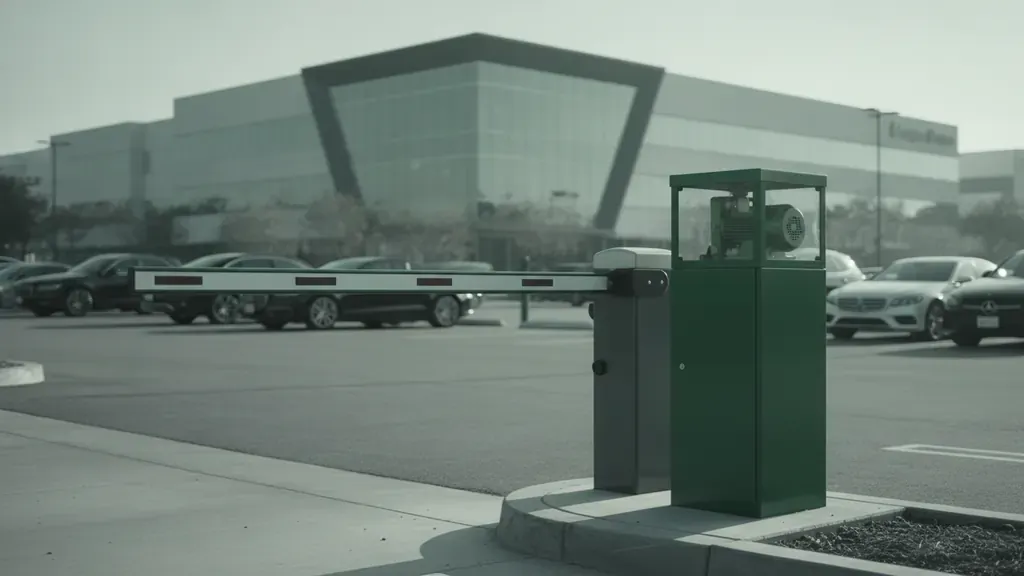
A barrier arm gate repair issue can stop vehicles at a parking structure, warehouse entrance, office campus, or multifamily property. When the arm moves slowly, stays raised, refuses an access command, or stops before the lane is clear, the problem may involve the operator motor, controls, detection, wiring, or the arm assembly. InteleGates helps commercial property owners in Los Angeles diagnose the system before recommending the next service step. For broader electric gate motor repair services, the same diagnosis-first approach applies across the operator system.
Contact InteleGates for barrier arm gate repair in Los Angeles
Barrier arm gate repair is the professional diagnosis and service of the motorized operator, arm assembly, controller, access devices, vehicle detection, and related wiring that coordinate a commercial vehicle entrance. A repair visit should identify the cause of the failure, check the complete operating sequence, and recommend repair or equipment replacement based on the condition of the system.
This article is written for parking facility managers, commercial property owners, warehouse operators, office managers, and multifamily teams responsible for reliable vehicle access. It focuses on practical failure patterns and service decisions rather than a do-it-yourself procedure. Barrier arm systems are part of a larger access-control environment, so the operator and the devices that command it need to be evaluated together.
What Does a Barrier Arm Gate Operator Do?
A barrier arm gate operator raises and lowers a horizontal arm across a vehicle lane. The operator receives a signal from an access-control device or lane system, activates its motor, and coordinates the arm movement with vehicle detection and safety equipment. The motor cabinet, controller, arm support, and related devices work as one commercial entrance system.
Barrier arms are common at parking lots, parking structures, office campuses, warehouses, and other commercial entrances where vehicles need a clear, controlled path. The arm provides a visible lane signal, while the operator supplies the movement. A card reader, keypad, remote control, telephone entry system, or other authorized control can send the opening command.
That division matters when service is needed. A driver may report that the arm is not working, but the cause could be outside the arm itself. A failed credential reader can prevent an open command. A damaged loop detector can misread vehicle presence. A control-board issue can interrupt communication between the access device and motor. A professional assessment follows the signal from the access device through the controller and into the operator.
For a broader overview of commercial equipment and lane planning, see InteleGates' barrier arm gate operator guide for commercial sites. This repair article addresses the next question property managers face when an installed system is no longer performing consistently.
What Are Common Barrier Arm Opener Failures in Commercial Settings?
Common commercial barrier arm failures include an arm that will not raise or lower, slow or uneven movement, intermittent response to an access command, unexpected stops, repeated cycling, impact damage, and a lane that remains open or closed. The underlying cause may be mechanical, electrical, control-related, or connected to vehicle detection.
Commercial equipment often operates through repeated cycles, changing weather, vehicle traffic, and frequent interaction with access controls. The first symptom does not always identify the failed component. These are several patterns that deserve prompt professional attention:
- The arm does not move: The operator may not be receiving power or an opening command, or the motor and controller may need service.
- The arm moves slowly or shakes: Irregular movement can point to wear, resistance, alignment concerns, or a motor and drive assembly that needs evaluation.
- The arm stops before completing its cycle: Limits, controls, detection, or the operator's mechanical movement may need to be checked as one sequence.
- The access device responds but the arm stays down: The reader or keypad may be communicating inconsistently with the controller, or the controller may not be passing the command to the operator.
- The arm remains raised: Vehicle detection, control logic, limits, or a component in the closing sequence may require service.
- The arm has visible impact damage: A collision can affect the arm, support, cabinet, internal drive components, wiring, and alignment even when the motor still runs.
- The lane cycles repeatedly: A faulty command, detector signal, control input, or configuration issue can create repeated operation that needs a complete diagnostic review.
Property managers should record when the symptom occurs, which lane is affected, whether the access device responds, and whether the problem is constant or intermittent. That information helps a technician reproduce the failure and distinguish an operator problem from a control or detection problem. Avoid bypassing controls or adjusting electrical components in an active commercial lane. Professional service protects the equipment and keeps the diagnosis tied to the way the entrance actually operates.
How Do High-Cycle and Standard Barrier Arms Differ During Repair?
High-cycle and standard barrier arm systems can require different repair decisions because traffic frequency, cycle history, component wear, and operating conditions affect the equipment differently. A high-traffic parking entrance needs an assessment of repeated operation, motor response, arm balance, controls, and detection. The correct recommendation comes from the system's actual condition and use.
Cycle demand is one of the first questions for a commercial repair visit. A garage serving an office building may have concentrated morning and evening traffic. A warehouse entrance may experience bursts of fleet and delivery activity. A multifamily property may have steady resident traffic with additional visitor and service-vehicle cycles. Each pattern gives the technician context for evaluating the operator.
| Factor | Why it matters | What the technician reviews |
|---|---|---|
| Traffic pattern | Repeated opening and closing changes how wear appears. | Peak periods, queue behavior, lane count, and operating history. |
| Motor and drive response | Irregular movement can reveal resistance or component wear. | Movement, sound, start and stop behavior, and operating consistency. |
| Arm balance and alignment | The arm must travel through its intended path without binding. | Arm support, mounting position, alignment, clearance, and visible damage. |
| Control inputs | An operator cannot follow a command it never receives correctly. | Reader, keypad, remote, telephone entry, controller, and wiring signals. |
| Vehicle detection | Detection influences the timing of an opening and closing cycle. | Underground LOOP detection, lane position, detector response, and related connections. |
| Service access | Future care is easier when equipment and records remain accessible. | Cabinet condition, technician access, system history, and maintenance needs. |
A high-cycle environment does not automatically determine the service outcome. It does tell the technician to look closely at repeated-use components and the relationship between the motor, arm, controller, and detection. The goal is a reliable recommendation based on the entire system, not a decision based only on the age of one part.
Should a Commercial Barrier Arm Be Repaired or Replaced?
A commercial barrier arm should be repaired when the operator and related equipment remain serviceable and the underlying failure can be corrected reliably. Replacement may be appropriate when major components are no longer serviceable, damage affects the system's operation, or the existing equipment cannot support the property's current traffic and access requirements. A technician should diagnose the problem before recommending replacement.
Repair and replacement are not interchangeable service steps. A professional starts by reviewing the symptom, testing the operator cycle, checking controls and detection, and examining the arm and cabinet. The recommendation should account for the failed component, the condition of the rest of the equipment, traffic demands, service access, and how the system integrates with the property's access controls.
Situations that may support repair
- The motor and cabinet are in serviceable condition.
- The failure is isolated to a component or connection that can be corrected.
- The arm assembly remains aligned and mechanically sound.
- The controller and access devices can communicate as intended after service.
- The existing setup continues to match the lane and traffic requirements.
Situations that may support equipment replacement
- Major damage affects the cabinet, motor, arm support, or related drive components.
- Repeated failures show that the current equipment is no longer dependable for the entrance.
- The operator cannot support the property's current traffic pattern or access-control needs.
- Replacement parts or technical support for the existing system are no longer practical.
- A broader system change is needed to coordinate the operator with updated controls or vehicle detection.
These categories are not a substitute for a site assessment. InteleGates' approach is to diagnose the problem before recommending replacement, then explain what the system needs to operate consistently. That keeps the property manager's decision connected to the equipment in the lane and the way the facility uses it.
What Is Included in Professional Barrier Arm Gate Repair?
Professional barrier arm gate repair includes a review of the operator motor, arm assembly, controller, access-control inputs, vehicle detection, wiring, movement, and operating sequence. The technician identifies the source of the failure, explains the service path, completes the appropriate repair or adjustment, and tests the entrance under its intended operating conditions.
A complete visit may include the following diagnostic areas:
- Symptom review: The technician discusses what the property team observed, when it happened, and which lane or user group is affected.
- Operator and arm inspection: The motor cabinet, arm support, movement, alignment, and visible condition are evaluated.
- Control and power checks: The service review follows the command path through the controller and related wiring.
- Access-control testing: Readers, keypads, remote controls, telephone entry, or other connected devices are checked for the signal that should activate the operator.
- Detection review: Underground LOOP detection and other related devices are evaluated for the way they respond to a vehicle in the lane.
- Operating-cycle testing: The arm is tested through its intended movement so the repair recommendation reflects the complete sequence.
Because each commercial entrance has its own equipment, wiring, traffic pattern, and access requirements, service should be performed by a qualified gate automation professional. InteleGates provides electric gate system repair for property owners and managers who need a practical diagnosis of the motor and access system.
How Can Parking Facilities Reduce Barrier Arm Disruptions?
Parking facilities can reduce barrier arm disruptions by scheduling professional inspections, documenting recurring symptoms, keeping access-control and detection equipment coordinated, and responding when movement or command response changes. Routine service is most useful when it reflects actual lane traffic, weather exposure, equipment history, and the property team's operational needs.
Maintenance does not replace repair when a system has already failed, but it gives property managers a way to identify changes earlier. An inspection can review the operator cabinet, arm movement, control response, detection, connections, and the condition of equipment exposed to the commercial environment. Service records also help a technician compare a current symptom with earlier adjustments or repairs.
Property teams should document which lane is affected, the time of day, the access device in use, the arm position when the issue occurs, and any visible impact or unusual sound. Clear records are especially useful for intermittent failures that may not appear during a short visit. Managers should also make sure operators know how to report a malfunction and who is authorized to request service.
For a broader maintenance plan, see InteleGates' electric gate system maintenance service. When a system's access controls also need attention, access control system service can be considered alongside the operator review.
Commercial Parking Gate Repair Service in Los Angeles
Commercial parking gate repair in Los Angeles should account for the barrier arm operator, traffic pattern, access controls, vehicle detection, lane layout, and the property's service requirements. InteleGates works with commercial property owners and managers on electric gate motor diagnosis, repair, installation, and maintenance for parking facilities, offices, warehouses, and multifamily properties.
InteleGates serves Los Angeles and Orange County with a focus on electric gate motors and access control systems. The team can evaluate barrier arm openers as part of the complete entrance rather than treating the horizontal arm as an isolated component. That matters when a parking facility has a reader, keypad, remote, telephone entry system, or underground vehicle detection connected to the operator.
When planning a service visit, have the property address, affected lane, equipment brand if known, access device involved, and recent symptoms available. Share whether the arm is stuck up, stuck down, slow, intermittent, or affected by a recent impact. This gives the technician a useful starting point for a focused commercial assessment.
For related motor diagnosis, review the electric gate motor installation and service information and contact InteleGates to discuss the property-specific repair need.
Schedule a professional barrier arm gate repair assessment with InteleGates
Frequently Asked Questions About Barrier Arm Gate Repair
Why is my commercial barrier arm gate not opening?
The cause may be the access device, controller, wiring, vehicle detection, power supply, motor, or arm assembly. InteleGates diagnoses the command path and operating cycle before recommending the appropriate service.
Can a barrier arm operator be repaired after a vehicle impact?
Often, the repair decision depends on the condition of the arm, support, cabinet, motor, controls, wiring, and alignment. A professional inspection can identify affected components and determine the appropriate repair or replacement path.
How often should a commercial barrier arm be serviced?
Service intervals should reflect traffic volume, equipment condition, weather exposure, access-control complexity, and the property's operating history. A professional can recommend a maintenance approach based on the entrance's actual use.
Can barrier arm repair include access-control equipment?
Yes. A barrier arm may depend on a card reader, keypad, remote, telephone entry system, controller, or vehicle detector. Checking those connected devices helps identify whether the failure starts at the operator or elsewhere in the entrance system.
Does InteleGates service parking facilities in Los Angeles?
InteleGates serves Los Angeles and Orange County with electric gate motor and access control installation, repair, and maintenance. Contact the team with the property and lane details to discuss the next service step.
Talk with InteleGates about commercial barrier arm gate repair.