
InteleGates Guide
How Does Gate Access Control Work?
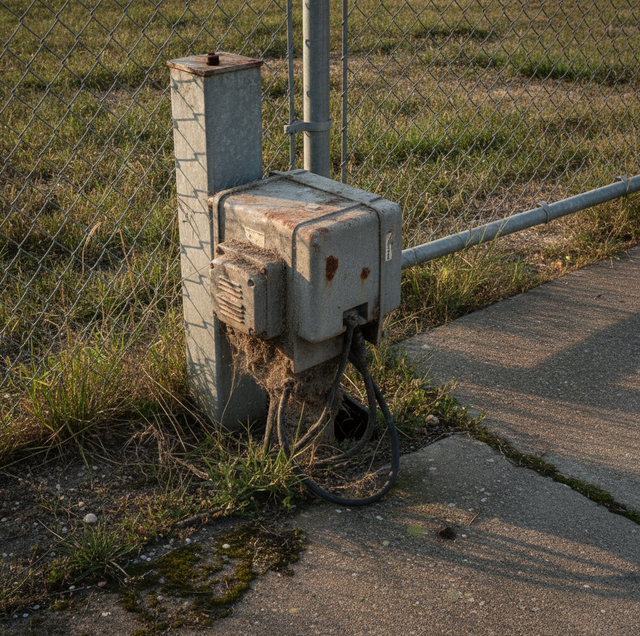
Gate access control is the working link between the credential reader, the control board, and the electric gate operator. When a resident, employee, or visitor presents an approved credential, the controller evaluates the signal and tells the operator when to run the gate. In practice, reliable access depends on matching that equipment to the gate's movement, traffic pattern, and site conditions.
At InteleGates, we look at the whole operating chain rather than treating a keypad, intercom, or app as a standalone gadget. The technician checks how the access device communicates with the controller, how the operator responds, and how detection and safety equipment behave during a cycle. That is the practical starting point for choosing or servicing access control at a community or commercial property.
The Core Idea: Verify, Then Open
Every access control system, no matter how basic or advanced, works the same way underneath. A person presents some form of credential, a code, a card, a phone, a face, or a plate, and the system checks it against a list of who is allowed in. If the credential is valid, the system signals the gate operator to open. If it is not, the gate stays shut. Everything else, the keypads and readers and apps, is just different ways of presenting and verifying that credential. Once you see it that way, the options stop being a confusing list of gadgets and become a choice about how you want people to identify themselves.
The Main Types of Access Control
Systems differ mostly in the kind of credential they use, and each suits a different situation.
| Type | How access is granted |
|---|---|
| Keypad / PIN | A code entered on a keypad at the gate |
| Card or fob reader | A card or key fob presented to a reader |
| Intercom/callbox | A visitor calls in, and someone buzzes them through |
| Telephone/cellular entry | The system dials a resident who opens the gate by phone |
| Mobile app | A smartphone opens the gate to the internet or cellular |
| License plate recognition | A camera reads the plate and opens for approved vehicles |
| Biometric | A fingerprint or face verifies an individual |
Keypads are the simplest and oldest approach, a shared or individual code entered at the gate, and they work well where simplicity matters most. Card and fob readers provide each person with their own credential that can be deactivated if lost. Intercoms and telephone-entry systems handle visitors by connecting them to a resident or an office to be let in. Mobile apps let people open the gate from their phone and let managers grant or revoke access remotely. License plate recognition opens automatically for known vehicles, making entry easy for regular traffic, and biometrics ties entry to a specific person. Many properties combine a few of these, one method for residents, another for visitors, another for staff.
Residents, Visitors, and Staff Are Different Problems
A big reason access control seems complicated is that a single property usually has to handle several kinds of people. Residents or employees need fast, everyday entry, which favors fobs, plates, or an app. Visitors and deliveries need a way to request access without their own credentials, which is what intercoms and telephone entry solve. And management needs to control the whole list, adding new people, removing those who leave, and keeping a record of who came and went. A well-designed system layers the right method onto each of these groups rather than forcing everyone through one door. Getting that mix right is what most separates a smooth gate from a frustrating one.
Why the Environment Matters
Gate systems on busy properties get heavy daily use, and the surrounding conditions are hard on the equipment. Salt air corrodes electronics and metal, and dust works into moving parts and readers, so gate operators, keypads, and card readers wear faster in those settings than in dry, clean air. That is worth factoring into the choice, because a system is only reliable if its hardware holds up to the environment it lives in, and it means weather-rated equipment and regular maintenance matter as much as the features. A slick access system that fails in the salt and dust is not much of an upgrade.
Frequently Asked Questions
Are keypad codes and card fobs easy to clone or share?
Codes get shared by word of mouth, which is a keypad's real weakness, so give each user a unique PIN and change them when someone leaves rather than running one code for everyone. Fobs vary by chip: older 125 kHz proximity cards can be copied at a kiosk in seconds, while encrypted 13.56 MHz smart credentials (the ones that do a challenge-response handshake) resist cloning. If control matters, ask what frequency and encryption the reader uses, not just whether it takes a fob.
Should a visitor intercom run over a cellular or a wired phone line?
Both connect a visitor to a resident, but the wiring underneath differs. A traditional callbox uses a copper phone line or a POTS connection, while a cellular intercom uses a SIM card and a carrier plan. Cellular equipment can work where no phone line reaches and may include video calling and remote opening through an app, but performance depends on the carrier plan and signal strength at the gate. On a large property, a technician should verify the signal at the entrance before choosing cellular.
Can I control gate access from my phone?
Yes, with a mobile app-based system. These let residents or staff open the gate from a smartphone, and managers can grant or revoke access remotely while the controller records the access event. The technician still needs to confirm that the app, receiver, controller, and operator communicate reliably during a gate cycle.
What is license plate recognition at a gate?
It is a camera-based system that reads the license plate of an approaching vehicle and opens the gate automatically for plates on the approved list. It makes entry smooth for regular traffic since no code or fob is needed, and it creates a record of vehicles entering. It works alongside other methods for visitors and pedestrians who do not have a registered plate.
How do gates stop tailgating and passback abuse?
Layering methods handle who gets a credential, but two people entering on one is a separate problem. Tailgating, where a second car slips through behind an authorized one, is limited by anti-passback logic: the system refuses to grant the same credential entry again until it has logged an exit, which also flags a fob that gets handed back over the fence. Vehicle-loop detectors and a timed gate that closes quickly behind each car reduce the window further. For staffed sites, pairing a reader with a camera and an audit log turns a shared-credential problem into a traceable one.
Does an outdoor gate need surge and lightning protection?
Yes, and it is easy to overlook. A gate operator sits at the end of a long buried power and low-voltage run, which acts like an antenna for surges from nearby lightning strikes and utility events, and a single hit can take out the control board, the receiver, and the readers at once. Surge protection devices on the power feed and on the loop and intercom lines, plus a proper ground rod at the operator, absorb most of that. In salt-air environments, the ground connection itself corrodes, so it should be checked during service, since a corroded ground quietly leaves the electronics unprotected.
The Right Credential for the Right People
Gate access control works by verifying a credential and opening the gate for valid ones, and the many system types, keypads, fobs, intercoms, apps, plate readers, and biometrics are just different ways of presenting that credential. The best setup layers the right method onto residents, visitors, and staff, and uses hardware tough enough for the local environment. Understand that, and choosing a system becomes a clear decision about how you want your gate to work rather than a guess among gadgets.
If you are planning or upgrading gate access for a community or commercial property, we can design a system that fits your traffic and holds up to the coast. InteleGates Inc. serves Los Angeles, Long Beach, Anaheim, and the surrounding area. Call (833) 468-4283 for a consultation.