
InteleGates Guide
Barrier Arm or Sliding Gate? Picking the Right Parking Entrance
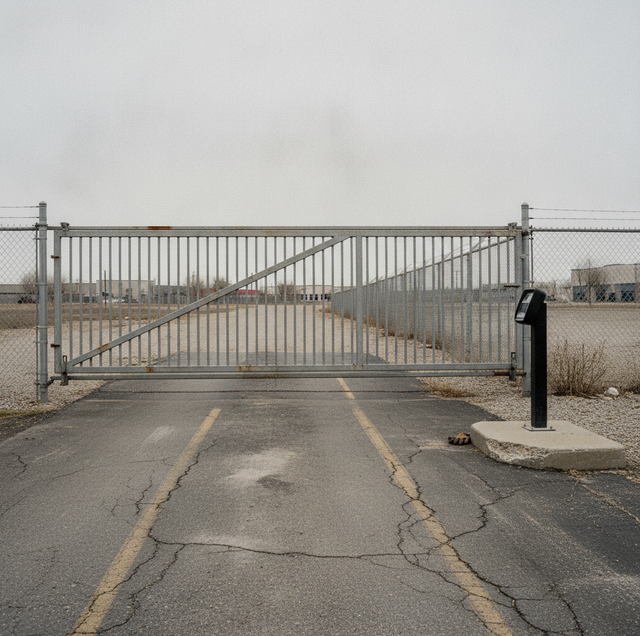
Quick Answer: A barrier arm moves cars through a parking entrance quickly and meters traffic; it is not a full-height closure for the opening. A sliding gate closes the entrance off as a full-height barrier, stops vehicles and people, and suits after-hours lockdown, though it cycles more slowly and needs a side room to open. High-volume, ticket-or-badge lots lean toward the arm; perimeter control leans toward the slide. Many properties run both.
When we evaluate a parking entrance, we start with what the operator must do: move vehicles through a defined lane or close the opening between cycles. A barrier arm and a sliding gate can use the same credential reader, but their motors and safety controls serve different traffic patterns. A technician compares cycle demand, lane layout, pedestrian movement, and service access before recommending equipment.
What Each One Is Built To Do
A barrier arm, also called a parking gate arm, is a lightweight aluminum or fiberglass boom on a pivot. It rises and drops in a couple of seconds, clears the lane for one car, then comes back down. That single-car-per-cycle rhythm is the whole point. Arms are built for throughput and metering: one vehicle in, one vehicle out, thousands of times a day. They pair naturally with ticket dispensers, pay-on-foot stations, RFID readers, and windshield transponders, which is why you see them at parking structures, toll lanes, and staff lots where volume is constant.
A sliding gate is a full-height barrier that moves sideways across the opening. It comes in two common forms. A track slide rolls along a rail set into the driveway. A cantilever slide hangs from rollers on posts to one side and floats above the ground, so nothing crosses the drive lane, which matters where debris, drainage, or snow would foul a floor track. Either way, when a sliding gate is closed, the opening is closed. It is a wall that happens to move, and that difference in kind is the heart of this comparison.
The Distinction That Actually Matters: Traffic Control Versus Safety
Here is the trap most parking-entrance decisions fall into. A barrier arm looks like a gate, so people assume it secures the entrance. It does not. An arm manages traffic. A person can duck under it on foot. A determined driver can push through and snap the boom, which is designed to break away rather than transfer the impact to a car. And even when it is down, the opening on either side of the boom is wide open. The arm is a signal and a speed bump for honest drivers, not a barrier to dishonest ones.
A sliding gate is the opposite. Its job is to deny the opening. Closed, it stops vehicles that have no credentials and pedestrians who would otherwise stroll beside a car. That makes the slide the tool for perimeter control, after-hours lockdown, and any lot where the concern is not just moving cars but keeping the wrong ones and the wrong people out. Think of the arm as a turnstile you can drive through, and the slide as a door. A turnstile counts and paces the crowd; a door decides who gets in. Once you frame it that way, most entrances sort themselves.
Comparing The Two On What You Actually Buy
| Factor | Barrier arm | Sliding gate |
|---|---|---|
| Primary purpose | Traffic control, metering, ticket/toll | Securing the opening, perimeter defense |
| Cycle speed | Fast, seconds per car | Slower, not ideal for constant flow |
| Control level | Low, does not close the opening | High, full-height barrier |
| Pedestrian control | None, people walk under or around | Blocks foot traffic when closed |
| The opening width suited | Standard single lane | Standard to very wide openings |
| Side room needed | Minimal, arm swings up | Runback space to one side is required |
| Operator and upkeep | Lighter duty, simpler | Heavier operator, more to maintain |
Speed and Cycle Time
Throughput is where the arm wins outright. A boom clears in a few seconds and resets fast, so a busy garage entrance can pass a steady line of cars without the queue backing into the street. A sliding gate has to travel its full width open and then closed, which takes noticeably longer per cycle and, on a high-traffic lane, either creates a queue or forces you to hold the gate open. If the lane sees constant in-and-out traffic all day, the arm is the throughput tool.
Safety and Pedestrian Control
Safety where the slide wins outright. Only the sliding gate actually closes the opening to vehicles and to people on foot. If your entrance needs to deny access after hours, protect a fleet yard, or keep pedestrians from wandering into a lot beside a badged car, the arm cannot do it, and the slide can. This is not a tuning difference; it is the difference between a device that meters and one that blocks.
Opening Width and Side Room
Width and space steer the choice, too. Arms handle a standard single lane and ask for almost no room to either side, since the boom swings up into the air. Sliding gates cover everything from a standard drive to a very wide opening, but they need somewhere to go. A track slide needs a clear rail the width of the opening. A cantilever slide needs a runback, roughly the opening width again in clear space to one side for the counterbalanced tail to retract into. If you have a wall, a building corner, or a property line right at the edge of the drive, that runback constraint can decide the gate type for you before anything else does.
Operator Load and Maintenance
Barrier-arm operators move a lighter arm through a short cycle, while sliding-gate operators carry a full gate panel over a longer travel path. The operator, rollers, guides, chain drive, and safety devices therefore need to be matched to the gate's weight and traffic. The right maintenance interval follows those operating conditions, not a generic equipment label.
Safety Applies To Both
Whatever you choose, a parking entrance moves a heavy or fast object where cars and people are, so safety devices are not optional for either. Both an arm and a slide should run inductive-loop detectors in the pavement that sense a vehicle and keep the arm up or hold the gate open so the equipment never comes down or closes on a car. Both should carry photo-eyes, the beam sensors that halt and reverse motion when something breaks the beam. And both operators should reverse on obstruction, backing off when they meet resistance rather than forcing through. On a sliding gate, the exposed moving edge and the gap where the gate passes the post also need guarding so nothing gets pinched. Skip these, and a fast-cycling arm or a heavy slide becomes a hazard, so treat the loops, photo-eyes, and reversing logic as part of the install, not an upgrade.
Why Many Lots Run Both
The comparison is not always either-or. Plenty of properties install a barrier arm and a sliding gate at the same entrance and let each do its job by time of day. During business hours, the arm handles the crowd, cycling cars through on badges or tickets while the slide sits open and out of the way. After hours, the slide closes and locks the opening down while the arm stands idle. You get daytime throughput and nighttime control from a single entrance, without compromising on either. If your lot is busy by day and needs to be sealed by night, running both is often the honest answer rather than asking one device to be something it is not.
A Salt-Air Wear Factor Worth Planning For
One environmental reality shapes the maintenance side. In salt-laden air, gate operators, tracks, rollers, and electronics corrode faster than they would in dry, clean air. Salt film creeps into bearings, pits fasteners, and degrades exposed connections, and the harder-working sliding-gate operator has more of those surfaces to attack. That does not tilt the choice toward one type; it just means whichever you install should be specified with corrosion-resistant hardware, sealed enclosures, and a service interval that assumes the air is working against it. Planning for those conditions up front reduces avoidable downtime and premature operator failure.
Frequently Asked Questions
Which is more secure, a barrier arm or a sliding gate?
The sliding gate, and it is not close. A barrier arm is a traffic-control device, not a control device: the boom is designed to break away, a car can push through it, and a person can walk under it or around either end because the opening itself is never closed. A sliding gate is a full-height barrier that physically seals the opening against both vehicles and pedestrians when it is shut. If the goal is to deny access rather than pace it, only the slide qualifies.
Which handles a busy garage or high-traffic lane better?
The barrier arm, because it cycles in seconds and resets immediately, can pass a continuous line of cars without the queue spilling into the street. A sliding gate has to travel the full opening width to open and again to close, which takes long enough that constant in-and-out traffic will either back up behind it or force you to hold it open, defeating the point. For a garage that meters one car per cycle on tickets or transponders, the arm keeps the lane moving.
Do I need a side room for a sliding gate?
Yes, and the amount depends on the type. A track slide needs clear, level rail running the full width of the opening. A cantilever slide needs a runback: roughly the opening width again in clear space to one side, so the counterbalanced tail section has somewhere to retract. If a building corner, wall, or property line sits right at the edge of the drive, that runback can rule out a cantilever and push you toward a track slide or a different layout, so it is worth measuring before you commit.
Can I use a barrier arm and a sliding gate together?
Yes, and it is a common setup. Pair a barrier arm for daytime throughput with a sliding gate for after-hours lockdown at the same entrance. During business hours, the slide stays open while the arm meters cars on their credentials; after closing, the slide shuts and secures the opening while the arm rests. The two can share the same readers and controller, so drivers see one system even though two devices are doing separate jobs.
What safety features keep either one from hitting a car or a person?
Three things, and both types need all of them. Inductive-loop detectors buried in the pavement sense a vehicle and keep the arm up or the gate held open so it never comes down on a car sitting in the lane. Photo-eyes, the infrared beam sensors flanking the opening, stop and reverse the motion the instant something crosses the beam. And the operator should reverse on obstruction, backing off when it meets resistance instead of forcing through. A sliding gate also needs its leading edge and roller gaps guarded against pinching.
Which needs more maintenance in salt-air environments?
The sliding gate, generally. It runs a heavier operator with more rollers, guides, and drive components, and every one of those surfaces is exposed to the salt-laden air that pits metal and creeps into bearings. A barrier arm moves far less mass and has fewer parts to corrode, so it tends to ask less over its life. Either device lasts longer when it is specified with corrosion-resistant hardware and sealed enclosures, and put on a service interval that assumes salt is at work.
Book a site walk to match the right entrance solution to your lot — get the throughput or control your property actually needs. InteleGates Inc. serves Los Angeles, Long Beach, Anaheim, and the surrounding area. Call (833) 468-4283 for a consultation.