
7 Signs Your Gate Motor Is About to Fail
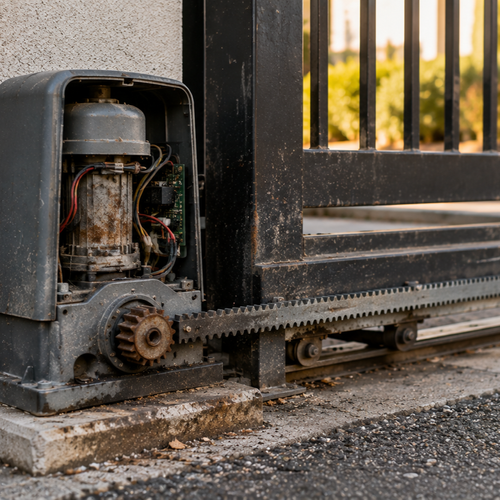
Quick Answer: A gate motor usually shows signs of trouble before it quits: the gate moves slower or more jerkily than it used to, it makes grinding, humming, or straining noises, it responds inconsistently or needs several tries, the motor gets hot or trips its breaker, or the gate stops partway. These point to a motor wearing out, often worsened by coastal salt air, heavy daily cycling, or age. Catching the signs early lets you repair or replace the motor on your schedule instead of being locked out — or in — when it fails completely.
A gate motor is the workhorse you never think about — until the morning it groans, crawls halfway, and quits with your car on the wrong side. Like most hardworking machines, a gate operator rarely dies without warning. It labors, complains, and slows down for weeks or months first. Learning to read those signals lets you handle a failing motor on your terms, rather than scrambling when the gate finally gives out and access stops cold.
Why a Motor Gives You a Warning
A gate motor moves a heavy gate dozens or hundreds of times a day, and in a coastal metro, it does so while salt air corrodes its components and dust works its way into the mechanism. As the motor wears — or as the parts around it degrade — it loses the smooth, consistent power it once had, and that shows up in how the gate moves, sounds, and responds. Each sign below reflects a specific kind of strain, so noticing them is really noticing the motor losing its health step by step. The earlier you catch it, the more options you have.
The Warning Signs to Watch
Slower or Jerky Movement
A healthy gate opens and closes smoothly at a consistent speed. When it starts moving noticeably slower than it used to, or its motion becomes jerky, hesitant, or uneven, the motor is struggling to drive the gate the way it once did. Gradual slowing is one of the earliest and most common signs that a motor is wearing out.
Strange Noises
New sounds are information. Grinding, scraping, humming, clicking, or straining noises that weren't there before signal that something in the motor or drive mechanism is wearing, binding, or failing. A motor that hums but barely moves the gate, or grinds as it runs, is telling you its internal components or gears are in trouble.
Inconsistent or Unreliable Response
If the gate works sometimes and not others, needs several remote presses to respond, or behaves unpredictably, the motor or its control electronics may be failing. Intermittent operation often precedes total failure, as a struggling motor or a degrading control board becomes less and less reliable before giving out entirely.
Overheating or Tripping the Breaker
A motor that's working too hard runs hot, and an overworked or failing motor can overheat and trip its breaker, especially under the strain of heavy daily cycling. If your gate stops after running for a while and the motor is hot, or the breaker keeps tripping, the motor is drawing more power than it should — a clear sign of trouble.
Stopping Partway or Failing to Complete the Cycle
When the gate consistently stops halfway, fails to fully open or close, or reverses unexpectedly, the motor may no longer have the power to complete its travel, or a related component is failing. A motor that can't finish the job it used to do easily is nearing the end of its reliable life.
Visible Wear, Corrosion, or Damage
Look at the operator. Rust and corrosion — accelerated by coastal salt air — worn or damaged gears, loose mounting, or water intrusion all weaken the motor and its housing. Visible deterioration of the operator is a direct sign that it needs attention before the damage causes a failure.
| Sign | What it usually means |
|---|---|
| Slower or jerky movement | Motor losing power; wear in the drive |
| Grinding, humming, straining noises | Worn gears or failing internal parts |
| Inconsistent or unreliable response | Failing motor or control electronics |
| Overheating or tripping the breaker | Motor overworking; drawing too much power |
| Stops partway, won't complete cycle | Motor lacks power or a part is failing |
| Rust, corrosion, visible damage | Coastal/age deterioration of the operator |
A gate motor that repeatedly overheats or trips its breaker is drawing too much current and shouldn't be run hard until it's checked. Don't keep cycling a straining, overheating motor or repeatedly resetting the breaker — that can damage the motor or create an electrical hazard. Have it inspected.
Don't Wait for the Lockout
The reason these signs matter is that they escalate. Slowing becomes stalling; intermittent response becomes no response; overheating becomes a burned-out motor. A gate motor that's giving warnings is on a path toward total failure — and total failure means a gate stuck open (a safety risk) or stuck closed (an access problem), often at the worst time. For a business, apartment complex, or gated community, that's traffic stopped and residents or customers locked out. Acting on the early signs lets you plan a repair or replacement, often catch it before related parts are damaged, and avoid the emergency. Catching a motor early sometimes means a repair will do where a dead one would have required full replacement.
Frequently Asked Questions
A gate motor's lifespan depends heavily on how much it's used and the conditions it operates in. A motor on a busy commercial or apartment gate cycling hundreds of times a day, or one exposed to corrosive coastal salt air, wears faster than a lightly used residential one. Rather than counting years, watch the warning signs — slowing, noises, overheating, unreliable response — which reflect the actual condition of your specific motor.
Gradual slowing is one of the most common early signs of a worn gear motor. As the motor loses power or the drive components wear, it can't move the gate at its original speed. Increased friction in the track or hinges can contribute, too. Because slowing tends to worsen over time and precede bigger problems, it's worth having the motor and gate hardware checked before the gate stalls completely.
A motor that hums or runs but barely moves the gate is struggling, which often indicates worn gears, a failing motor, a capacitor problem, or significant resistance to the gate's movement. The humming means it's getting power and trying, but it can't drive the gate properly. This is a sign of a motor or drive component nearing failure and should be diagnosed by a gate technician before it quits entirely.
Yes. Salt-laden coastal air is corrosive and attacks the metal components of a gate motor and its housing over time, accelerating rust and wear on gears, hardware, and electronics. Combined with dust and heavy daily cycling, coastal conditions shorten motor life and make regular maintenance more important. Visible corrosion on the operator is a sign that it needs attention before the deterioration causes a failure.
It depends on the motor's age, condition, and what's failing. Catching problems early sometimes allows a repair — replacing a worn part or component — that restores reliable operation. A motor that's old, badly corroded, or has failed major internal components is often better replaced. A gate technician can assess the operator and give you an honest repair-versus-replace recommendation based on its actual condition.
Read the Signs, Keep Your Gate Running
A failing gate motor announces itself through how the gate moves, sounds, and responds — slowing down, grinding or humming, working inconsistently, overheating, stopping partway, or showing corrosion. Each is a kind of strain, and together they trace a motor losing its health. Because a dead gate means lost access and lost safety acting on the early signs lets you fix the problem on your schedule, often more cheaply, instead of being locked out when the motor finally quits. When the signs appear, a prompt inspection is the smart move.
Gate motor slowing, grinding, or acting up? — Get it inspected and serviced by gate specialists before it fails completely. InteleGates Inc. serves Los Angeles, Long Beach, Anaheim. Call (833) 468-4283.
