
InteleGates Guide
How Often Should an Electric Gate Motor Be Serviced?
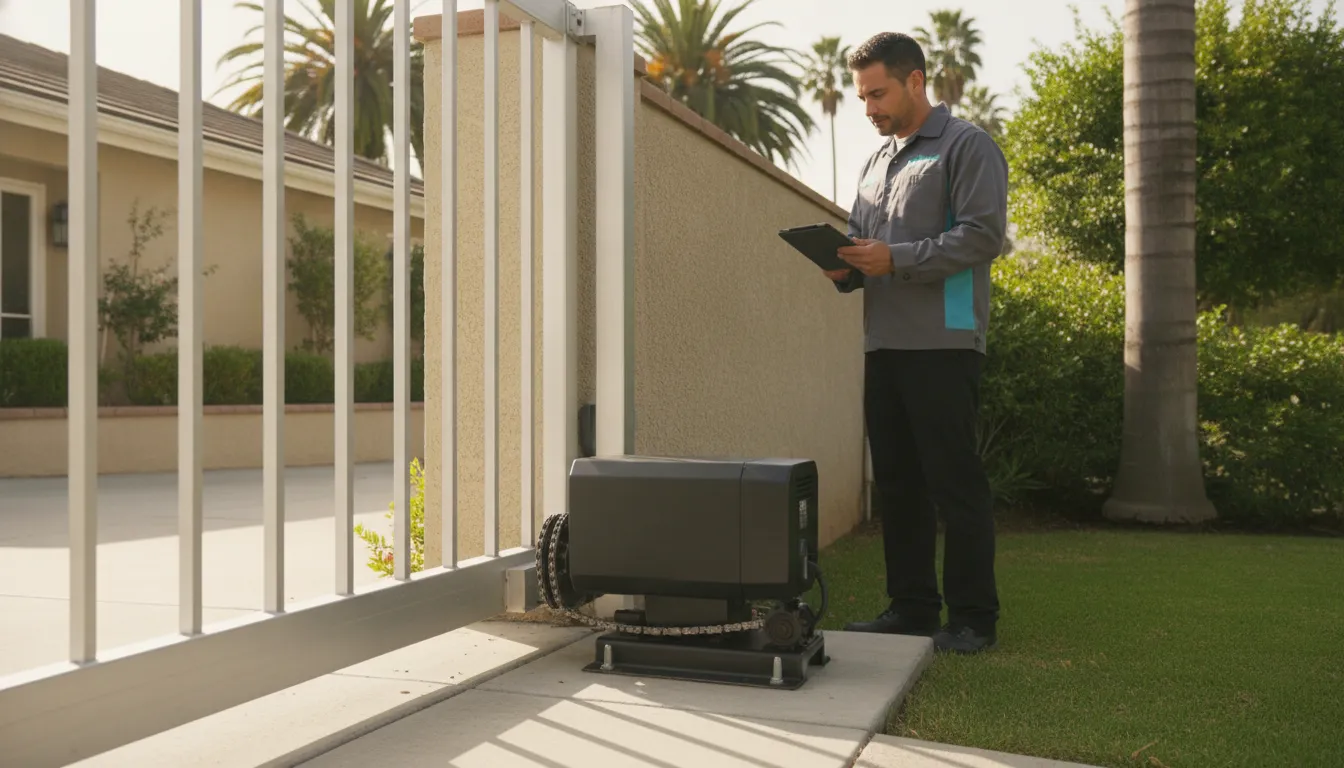
Gate motors can seem reliable until a fault interrupts access. Waiting for failure can worsen a small warning. This matters at busy commercial entrances and shared properties.
Schedule professional electric gate motor service with InteleGates
How Often Should an Electric Gate Motor Be Serviced? There is no single schedule for every system. Professional service should be planned around traffic cycles, weather and environmental exposure, equipment age, manufacturer guidance, and any change in operation. A lightly used residential motor may follow a different plan from a high-cycle commercial operator. Unusual noise, slow movement, intermittent controls, or mid-cycle stopping call for attention sooner. InteleGates can tailor electric gate motor maintenance for existing gate systems in Los Angeles and Orange County.
Effective service is more than checking whether the motor still runs. It means evaluating the operator, sensors, controls, electrical components, and moving parts as one system, then addressing developing wear before it affects dependable access. That system-wide approach is why regular service matters.
Why Regular Electric Gate Motor Service Matters
An electric gate motor is not an isolated part that can be judged by whether it still turns on. The motor or operator works with sensors, controls, electrical components, tracks, chains, and the gate's moving hardware. When one part begins to wear or fall out of alignment, the operator may work harder. Access may become inconsistent, and a small developing fault can become a complete failure.
Preventive professional service gives a technician an opportunity to evaluate that complete system before an access problem interrupts a home, multifamily property, or business. InteleGates customizes maintenance plans around usage frequency and environmental conditions rather than applying one schedule to every property. A lightly used residential system and a high-cycle commercial entrance do not place the same demands on the motor. Weather exposure, debris, equipment age, and manufacturer guidance also affect when service should be planned.
The point is not simply to keep the motor running. A service visit can identify conditions that affect smooth, predictable operation, including sensor behavior, control response, track condition, electrical connections, and signs of excess strain. Powered gates should be checked and maintained so they continue to operate safely. The U.S. Consumer Product Safety Commission's gate-operator standards resource provides broader safety context for powered access systems. The interaction between the motor, sensors, controls, and other components matters as much as the condition of any single part. Outdoor exposure can also affect operation over time, particularly when moisture, debris, or damaged connections are involved.
Waiting for failure changes the nature of the appointment. The property owner may then face a gate that stops halfway, fails to open, or behaves inconsistently. This can disrupt residents, employees, visitors, and delivery traffic. It can also make it harder to separate a motor problem from a sensor, track, control, or power-supply problem.
Professional electric gate motor maintenance is intended to find those issues early and support dependable operation on an existing gate system. InteleGates focuses on diagnosing the problem before recommending replacement, then addressing the cause rather than relying on a temporary fix. The right service cadence depends on the system in front of the technician, its operating environment, and how it is used.
How Often Should Residential Electric Gate Motors Be Serviced?
There is no single service interval that fits every residential electric gate motor. As a practical baseline, many residential systems should receive a professional service evaluation at least once a year. A lightly used driveway system in a protected setting does not experience the same demands as an estate gate exposed to coastal air, dust, rain, or frequent daily cycles. The right schedule starts with how the operator is used and how its surrounding conditions affect the motor, controls, sensors, and moving components.
Start with traffic and operating conditions
Cycle frequency is one of the clearest factors. A gate that opens and closes several times a day may need a different service plan from one used occasionally. The number of household vehicles, deliveries, guests, and access-control events all contribute to the workload. Heavy or repeated use can accelerate wear even when the gate still appears to operate normally.
Weather and exposure matter as well. Moisture, salt air, dirt, heat, and changing conditions can affect electrical components, sensors, chains, tracks, and other parts of the operator system. A property near the coast or beside an unpaved drive may require closer professional observation than a more sheltered location. Equipment age and condition should also influence the schedule. Older systems, previous repairs, and recurring faults warrant a more careful assessment rather than an arbitrary calendar promise.
Use manufacturer guidance, then adjust for the property
The manufacturer's service recommendations provide a useful starting point, but they do not replace a site-specific evaluation. A technician considers the equipment model, actual cycle demands, environmental exposure, and the condition of the complete existing gate system. InteleGates can inspect the motor or operator, controls, sensors, electrical components, track, and chain to determine what attention is appropriate. The goal is to identify wear before it becomes an access problem, not to apply the same schedule to every home.
Symptoms should move service higher on the priority list, even if the last visit was recent. Slow movement, unusual noise, intermittent controls, inconsistent sensor behavior, stopping partway, or failure to open or close can indicate a developing fault. These conditions call for professional diagnosis rather than homeowner adjustments or programming. InteleGates diagnoses the problem before recommending replacement. For additional context on planning a professional visit, review these electric gate maintenance tips, then have the schedule matched to the way your residential system actually operates.
How Does Commercial Gate Usage Change Service Frequency?
Commercial and multifamily properties place different demands on an electric gate motor than a lightly used residential driveway. A community entrance, parking area, office property, or delivery access point may cycle repeatedly throughout the day. Each cycle adds operating time and wear to the motor or operator, controls, sensors, electrical components, and the gate's moving hardware.
That does not mean every commercial system needs the same calendar-based service plan. A property manager should consider actual traffic volume, peak access periods, the age and condition of the equipment, exposure to coastal air or weather, and the manufacturer's guidance. As a planning baseline, commercial and multifamily systems should generally be evaluated at least twice a year, with more frequent professional attention when cycle volume, environmental exposure, or symptoms warrant it. InteleGates customizes maintenance plans around usage frequency and environmental conditions rather than assigning one interval to every property. A system that serves a small multifamily community may need a different level of attention than a busy commercial entrance.
High-cycle operation makes early symptoms more important
On a high-use property, a small change in performance can affect many residents, employees, vendors, or visitors. Slower movement, inconsistent remote or access-control response, unusual motor noise, a gate that stops partway, or sensors that behave inconsistently should be treated as service signals. Waiting for a complete failure can turn a developing operator, control, sensor, or power problem into an access-reliability issue.
Property managers should also account for the operating environment. Dust, debris, moisture, wind, and coastal exposure can affect sensors, wiring, moving parts, and control enclosures even when the gate does not cycle constantly. The motor is only one part of the system. Controls must communicate reliably, sensors must respond correctly, and the equipment must complete its cycle consistently under normal site conditions.
Plan around access reliability, not just a date
A service visit gives the property manager a clearer basis for scheduling. The technician can inspect the complete existing system and test motor performance. Controls, sensors, and relevant electrical components are also checked. This helps identify wear before it interrupts daily access. InteleGates diagnoses the problem before recommending replacement. Managers can then distinguish routine maintenance from a repair that needs attention sooner.
For commercial and multifamily properties in Los Angeles and Orange County, the right answer is a schedule based on cycle demand, site conditions, equipment history, and reliable operation. Keep service records and report changes promptly. This helps the technician build a practical plan instead of relying on a rigid schedule.
| System context | Planning factors | Seek attention sooner for |
|---|---|---|
| Light-use residential. | Cycles, exposure, age, and manufacturer guidance. | Slow movement or unusual noise. |
| Multifamily or shared residential. | Traffic, controls, environment, and service history. | Mid-cycle stopping or sensor issues. |
| Commercial or high-cycle. | Peak traffic, deliveries, equipment, and access reliability. | Any disrupted entry or exit. |
What Does a Professional Electric Gate Motor Service Include?
A professional service visit looks beyond whether the gate opens at the moment of arrival. The technician evaluates the motor or operator, the connected controls, and the mechanical components that affect its load and movement. This helps identify wear early and separates a correct repair from a temporary adjustment.
InteleGates works on existing gate systems and diagnoses the problem before recommending replacement. Depending on the equipment and its condition, a service visit may include:
- Lubrication of moving parts: The technician checks the points that require appropriate lubrication, including applicable chains, hinges, and other moving components. The goal is smooth movement without masking a worn or damaged part.
- Alignment and track inspection: The gate's travel, track, rollers, hinges, and related hardware are evaluated for binding, shifting, wear, or conditions that place unnecessary strain on the operator. Adjustments are made when the system requires them.
- Sensor cleaning and calibration: Safety sensors and detection devices are inspected for condition, positioning, communication, and reliable response. Their operation is tested as part of the complete system rather than treated as an isolated component.
- Controls and access equipment: Remotes, keypads, telephone entry systems, receivers, and other access controls are checked for intermittent behavior and proper communication with the operator.
- Electrical component checks: The technician evaluates power supplies, transformers, wiring, backup batteries, control boards, and connections for faults or signs of deterioration. Electrical issues can appear similar to motor failure, so diagnosis matters.
- Software and system updates: Where the equipment supports them, applicable software or firmware updates are reviewed. Settings and system operation may also be optimized for the installed equipment and its operating conditions.
- Performance and final testing: The complete system is cycled and tested under varied operating conditions. The technician verifies movement, stopping, sensor response, access controls, and overall operation before documenting findings and recommending next steps.
The exact scope depends on traffic, environmental exposure, equipment age, manufacturer guidance, and observed symptoms. If the system is already moving slowly, stopping halfway, or responding inconsistently, see our electric gate motor repair service rather than waiting for a complete failure.
What Signs Mean an Electric Gate Motor Is Overdue for Service?
An electric gate motor rarely fails without giving some warning. Changes in movement, sound, controls, or sensor behavior often indicate that the operator, motor, electrical system, or related hardware needs professional attention. Recognizing those changes early can help prevent a minor operating problem from becoming a complete access failure.
Slow movement is one of the clearest signs. If the gate takes longer than usual to open or close, or hesitates at a particular point, it needs attention. Read about why a gate opens slowly or stops during a cycle. The cause may involve the motor, track, chain, alignment, or power supply. The symptom does not identify the failed component by itself. A technician should evaluate the complete system rather than simply replacing the motor.
Stopping halfway deserves prompt attention, especially when the gate behaves differently from one cycle to the next. An operator that starts normally and then stops may be responding to resistance, a sensor signal, an electrical fault, or a control issue. Repeatedly cycling the equipment can increase wear and may leave the property inaccessible.
Listen for changes in sound
Grinding, rattling, straining, or other unusual noise can indicate mechanical wear or a gate that is placing abnormal load on the operator. A new sound is more useful diagnostically than a longstanding normal operating noise. The guide to signs your gate motor needs service covers additional symptoms that may appear before failure.
Pay attention to controls and sensors
Intermittent remotes, keypads, telephone entry controls, or other access devices can point to a control, wiring, power, or communication problem. Sensors that behave inconsistently, trigger unexpectedly, or prevent a cycle from completing also warrant professional evaluation. The issue may not be the sensor itself, and changing settings without identifying the cause can mask a larger fault.
Finally, a gate that will not open or close, works only intermittently, or reverses unexpectedly should not be treated as a normal service interval question. InteleGates diagnoses the problem before recommending replacement, then checks the motor, operator, safety devices, controls, and electrical components on the existing gate system. Professional evaluation is the appropriate next step when any of these signs appear.
How Should You Plan the Next Electric Gate Motor Service Visit?
A useful service visit starts with accurate information about how the system behaves in daily use. Before contacting a technician, gather the details that can help distinguish normal wear from a developing fault. The goal is not to troubleshoot the equipment yourself. It is to give the professional a clearer picture of the system and its operating conditions.
- Record how the system is used. Note whether the gate serves a private driveway, multifamily property, office, parking area, or another high-traffic location. Estimate whether use is light, moderate, or frequent, and mention any recent change in traffic patterns. Cycle frequency is one factor that helps shape a service plan.
- Describe the symptoms and when they occur. Write down whether the operator moves slowly, stops partway, makes an unusual sound, responds intermittently to a control, or fails to open or close. Include whether the problem appears during the first operation of the day, after repeated cycles, or only in certain weather. A short phone recording can also help show the behavior, provided nobody stands in the equipment's path.
- Gather the system history. Provide the motor or operator brand and model if available, the date of the last professional visit, previous repair records, and any known electrical or access-control work. Also mention exposure to coastal air, rain, mud, dust, or debris. Environmental conditions can affect components even when a gate is not used heavily.
- Share the manufacturer's guidance and property requirements. If you have installation documents or service records, make them available to the technician. Property managers should also explain access hours, resident or tenant traffic, delivery schedules, and any operational concerns that could affect testing.
- Set the schedule with a qualified technician. Do not wait for a complete failure when symptoms are already changing. A professional can review the system as a whole, including the motor, controls, sensors, electrical components, track, and chain. InteleGates diagnoses the problem before recommending replacement, so the next step is based on the observed condition rather than an assumption.
There is no single service interval that fits every electric gate motor. A technician can use the system's history, traffic pattern, environment, equipment condition, and manufacturer's guidance to recommend a practical schedule for the existing gate system.
Schedule professional electric gate motor service with InteleGates
Frequently Asked Questions
How often should a residential electric gate motor be serviced?
As a practical starting point, many residential systems should receive a professional service evaluation at least once a year. A professional should then adjust that cadence for daily cycle count, weather exposure, the motor's age and condition, manufacturer's guidance, and any changes in operation. Lower-use systems still need routine service because outdoor conditions can affect mechanical and electrical components. If the gate is slowing, stopping, making unusual sounds, or responding inconsistently, schedule an evaluation rather than waiting for the next planned visit.
Do commercial and multifamily gate motors need more frequent service?
Often, yes. Higher traffic creates more operating cycles and gives wear, alignment issues, sensor problems, and control faults more opportunities to affect access. A service plan should reflect actual traffic, the importance of reliable entry and exit, environmental exposure, and the equipment's condition. Property managers should also keep service records so recurring symptoms can be identified before they become an interruption.
What does professional electric gate motor service include?
A service visit can include inspection of the motor, moving parts, track or hinges, electrical components, controls, and safety sensors. InteleGates may lubricate moving parts, check alignment, inspect the track, clean and calibrate sensors, test components, apply appropriate software updates, optimize the system, and perform final testing. The exact scope depends on the existing gate system and its observed condition.
What should I do if the gate motor stops halfway?
Arrange professional service promptly and avoid repeatedly cycling a gate that is behaving unpredictably. A mid-cycle stop can involve motor strain, worn components, sensor or control problems, track issues, or an electrical fault. InteleGates diagnoses the problem before recommending replacement, then tests the broader system so the underlying cause is not overlooked.
Ready to Schedule Your Electric Gate Motor Service?
Regular professional service can help identify developing motor, operator, sensor, or control issues before they disrupt daily access. InteleGates can evaluate your existing gate system and recommend the appropriate next step based on its condition and use.
Schedule a professional electric gate motor service visit with InteleGates