
Why Your Electric Gate Reverses on Its Own: 9 Causes
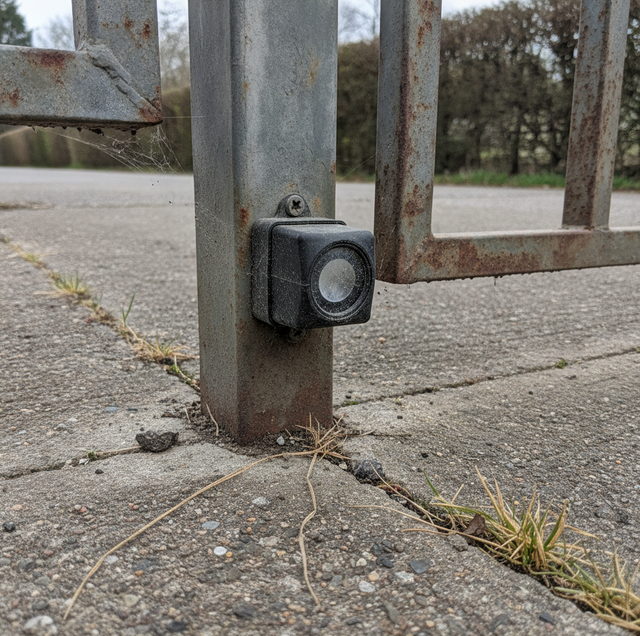
A gate that starts to close, then stops and rolls back open, is not misbehaving at random. It is doing exactly one thing: obeying a signal that says the path is not clear. The operator, which is the motor and control unit that drives the gate, is built to give up ground the instant it thinks something is in the way. So when your gate reverses on its own, the real question is not "why won't it close," it is "what is telling it to stop?"
Sometimes that signal is correct, and a safety device just did its job. Sometimes the gate is fighting its own worn hardware and reading the strain as an obstacle. And sometimes a wire, a sensor, or the control board has failed and is sending a phantom alarm. Sorting those three apart is the whole game, and you can get a long way toward the answer just by watching where and when the reversal happens.
Quick Answer: An electric gate reverses mid-travel because a safety input tells the operator the path is blocked, or because the gate meets resistance, it reads as an obstruction. The usual culprits are a broken or misaligned photo-eye beam, a triggered safety edge, debris in the track, a binding gate that drags on worn rollers, a sagging hinge, a force setting that is too sensitive, or a wiring or control-board fault. Check whether it reverses at the same spot every time (mechanical) or at random points (sensor or electrical), then clean the sensors, clear the track, and have a technician check the force settings and connections.
How the Operator Decides to Reverse
Every automatic gate operator watches two kinds of information while it runs. The first is what the safety devices report. The second is how hard the motor itself is working. Either channel can order a reversal, and each points to a different family of problems.
The safety devices are the ones most people know. A photo-eye is a pair of small heads mounted low on either side of the opening, one sending an infrared beam and one receiving it. While the beam is unbroken, the gate is free to move. Break that beam with a car, a trash can, a pet, or a stray branch, and the receiver stops seeing light, and the operator reverses before anything gets pinned. A safety edge, sometimes called a pressure edge, is a soft rubber strip along the leading part of the gate that senses contact and reverses on touch. These are supposed to trip. When they do, the system is working as designed.
The second channel is quieter. The operator measures how much effort the motor is drawing to move the gate. If the gate suddenly gets harder to push, the current climbs, and the operator interprets that spike as the gate hitting something solid. This is the force or obstruction-sensing feature, and it exists so that a gate never crushes a person or a vehicle it happens to catch. The catch is that the operator cannot distinguish between a real obstacle and a gate that has simply become hard to move on its own.
Think of it as a person carrying a heavy tray through a doorway with their eyes closed. They feel resistance and assume they have hit the frame, so they back up. They cannot see whether they actually struck the wall or whether the tray just got heavier. The operator is that person: they feel the load and react, without knowing the cause.
The Common Causes, Grouped by Signal
Safety-sensor trips.
The most frequent reason a gate reverses is a photo-eye that has lost its clean line of sight. The two heads have to stay precisely aimed at each other. A bump from a landscaping crew, a loosened bracket, a settling post, or a gate that vibrates over years of cycling can knock one head off axis, so the beam misses its target. To the operator, a missed beam looks identical to a blocked beam, and it reverses.
A dirty lens does the same thing. Road dust, spider webs, pollen, and grime build a film over the eye until the beam can no longer punch through. Low, direct sun can also overwhelm the receiver, washing out the beam it is trying to read. And a safety edge that has aged, cracked, or absorbed moisture can begin reporting contact that is not occurring.
Mechanical binding and real obstructions.
The other big family lives in the hardware. A gate that has started to drag is the classic false-obstruction case. Worn rollers on a slide gate, a sagging hinge on a swing gate, a bent or debris-clogged track, or a wheel that has gone flat all add friction. The gate still moves, but the motor has to strain, the current rises, and the operator reads that strain as a collision and backs off to be safe.
Then there is the honest version: an actual obstruction. A rock, a chunk of ice, a wind-blown branch, an accumulation of leaves in the track channel, or a shifted paver in the gate's path gives the gate something genuine to hit. Here, the reversal is the system protecting the gate and whatever it ran into.
Electrical and control faults.
The last group is wiring and electronics. A sensor wire that has worked loose at its terminal, corroded, or been nicked by a rodent can send an intermittent open-circuit signal that mimics a blocked sensor. The control board itself can develop faults, misreading inputs, or throwing reversal commands with no external trigger. On solar or battery-powered gates, a battery near the end of its life delivers sagging, unstable voltage, and an operator running on marginal power often behaves erratically, including reversing for no visible reason.
Reading the Pattern Before You Touch Anything
You can narrow the field considerably just by observing, and this costs nothing. The single most useful clue is location. Stand back and run the gate a few times, watching where it gives up.
If it reverses at the same point on every attempt, suspect the hardware. Something physical lives at that spot: a worn roller riding over a rough patch of track, a hinge that binds at a certain angle, a low tire, or debris lodged in one place. A repeatable location is the signature of a mechanical cause, because friction and obstacles do not move around.
If it reverses at random points, with no consistent spot, lean toward a sensor or electrical origin. A photo-eye catching a glint of sun, a loose wire making and breaking contact as the gate flexes, or a failing board will trip whenever conditions line up, not at a fixed place along the travel. Timing helps too: a gate that only acts up at certain hours may be reacting to sun angle on the photo-eye, while one that misbehaves regardless of time points more toward hardware or wiring.
What You Can Safely Do, and What You Should Not
A few checks are truly homeowner-safe. You can wipe both photo-eye lenses clean with a soft cloth and confirm the two heads appear to be pointing straight at each other. You can walk the full track and swing path and clear out leaves, gravel, branches, and anything else that does not belong. You can look for the obvious sag or a visibly flat roller. On many gates, these three steps resolve the reversal outright, because a dirty eye and a cluttered track are the most common triggers of all.
Beyond that, the work becomes a technician's job, and the reason is not fussiness. A gate operator is wired to mains voltage and drives the gate with enough force to injure someone. Adjusting the force or sensitivity setting, opening the control board, tracing and repairing sensor wiring, and replacing a failing board all put you close to live power and to a mechanism that can move under its own control. These belong to someone trained on that specific system.
One temptation deserves a direct warning. If the gate keeps reversing, do not simply turn the force setting up so it powers through. The force limit is a safety boundary, not a stubbornness knob. Cranking it up so the gate shoves past its resistance removes the very protection that prevents it from crushing a person or a car. The correct move is always to find and fix what is causing the resistance or the false signal, never to overpower it.
The Salt-Air Wrinkle
The surrounding air changes how often these faults show up. Salt-laden air is hard on the electrical side of a gate. Over time, it corrodes photo-eye contacts, wiring terminals, and the exposed connections on the operator's board, and corroded contacts pass current unreliably. That intermittence produces exactly the kind of random, hard-to-pin reversal that sends people chasing ghosts.
It cuts both ways, though. A gate in dry, dusty air rarely suffers salt corrosion, but it collects grit that films the photo-eye and packs the track, producing the mechanical and dirty-lens versions of the same problem instead. Neither environment is worse; they simply push the failure toward different causes, which is one more reason to read the pattern rather than assume.
Frequently Asked Questions
Pull the operator's manual release and move the gate by hand along its full travel. A spot where it drags, catches, or takes real muscle by hand is a mechanical bind sitting right there, since the motor plays no part when you disengage it. A gate that glides freely by hand yet still reverses under power points instead to a sensor, wiring, or control-board fault, because the physical path is clean and only the electrical side is objecting. Re-engage the operator before testing under power again.
Yes. Low sun shining directly into a photo-eye can blind the receiver so it can no longer distinguish its own infrared beam from the glare, and it reports the beam as broken even though nothing is in the way. This is why photo-eyes are carefully aimed and, in bad-glare spots, fitted with small shields or hoods to keep direct sun off the receiving head.
A technician can confirm this with a meter rather than a guess: they measure the operator's motor amp draw as the gate runs and compare it against the unit's rated force spec. A gate drawing more current than spec at a particular point along its travel indicates a bind is present there, not a real obstruction, since a true obstruction would not recur at the same measured spot. That amp reading turns a vague "it feels stiff" into a located fault the repair can target.
A safety edge is a pressure-sensitive rubber strip mounted along the gate's leading part that reverses the moment it physically touches something. A photo-eye is a light beam across the opening that reverses before any contact happens. They protect at different stages, so many gates carry both, and either one tripping will send the gate back.
No, and cranking a dial is not even how proper force is set. The operator learns the correct force through a calibration run: it drives the gate across its full travel during a setup cycle, senses the normal resistance, and that learned profile is later compared against, with the cycle often stopped by hand or a test object to confirm it reverses on contact. So the real fix is clearing the bind first, then running a fresh force-learn, not raising a limit that would only let the gate shove past people and vehicles.
Salt-laden air slowly corrodes the sensor contacts, wiring terminals, and the operator's circuit board, and corroded connections carry current so unreliably that they can cause intermittent false reversals. The lasting fix goes beyond wiping the lens: connections are sealed with dielectric grease, sensor housings are swapped for marine-rated or gasketed versions that keep salt film off the contacts, and the terminals are cleaned on a periodic schedule. That combination holds off the corrosion far better than cleaning the eye alone ever will.
Book a diagnostic gate service — get a reversing gate correctly diagnosed and repaired without guesswork. InteleGates Inc. serves Los Angeles, Long Beach, Anaheim, and the surrounding area. Call (833) 468-4283 for a consultation.
