
Your Driveway Gate Crawls and Groans in Los Angeles
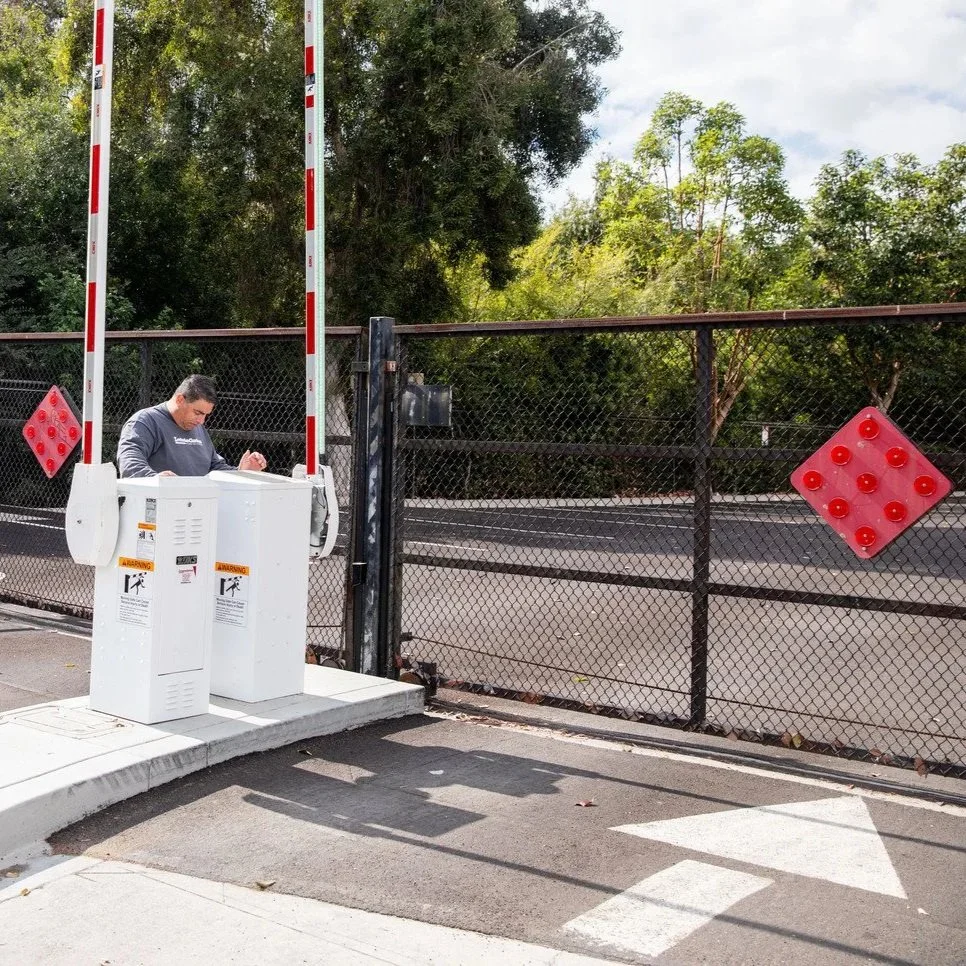
That slow grind, the shuddering stop halfway, and the fear it will quit completely is what an undersized gate motor looks like in real life.
You sit there in Los Angeles, CA, late for work, watching your driveway gate creep open like it is dragging a boulder behind it. That slow grind, the shuddering stop halfway, and the fear it will quit completely is what an undersized gate motor looks like in real life.
I have had more than a few homeowners call me saying, “Why is my automatic gate so slow all of a sudden?” The first thing they notice is the delay. The second thing they notice is the noise. What they do not see is the strain happening inside the motor housing every time that heavy driveway gate starts moving. An undersized gate motor does not just move more slowly; it also wears out more quickly. It works harder than it was ever designed to, which leads to overheating, rising repair bills, and eventually a gate that leaves you stuck either inside your property or out on the street.
The Weight Problem Most Homeowners Never Calculate
Most people never actually calculate how much their driveway gate weighs. They look at it and think, it is just steel and maybe some wood panels. In Los Angeles, CA, especially in hillside neighborhoods and custom properties, gates can be massive. Decorative iron, solid privacy panels, added security reinforcements, and long sliding spans all add weight. A motor that technically “can” move that gate on paper may not be rated for the real-world conditions it faces every day.
Gate motors are rated by torque and duty cycle. Torque is the twisting force that moves the gate. Duty cycle refers to how often the motor can operate within a certain time frame without overheating. Homeowners often misunderstand both. They assume that if the gate opens and closes, the motor must be properly sized. What matters is how hard it has to work to do it. If a motor runs at the edge of its torque capacity every single cycle, it overheats internally. That heat breaks down windings, weakens components, and dramatically shortens lifespan.
“Why Is My Gate Motor Overheating?” And What That Really Means
When someone searches “why is my gate motor overheating,” they are usually noticing one of three things. The motor housing feels hot to the touch. The gate stops working after a few cycles and then mysteriously works again later. Or the breaker trips unexpectedly. In Los Angeles, CA, where summer heat pushes temperatures up, an undersized gate motor has even less margin for error.
Heat is the silent killer inside a gate system. Electric motors convert electrical energy into mechanical movement. When they are overloaded, they convert more of that energy into heat instead. Internal insulation around motor windings begins to degrade. Bearings dry out faster. Gear assemblies wear unevenly. Over time, you end up replacing not just the motor, but sometimes the control board and wiring that were affected by repeated thermal stress. What started as a slightly slower gate turns into a full system failure.
Torque Versus Reality In The Driveway
A driveway in Los Angeles, CA, is rarely perfectly level. Many properties have slight inclines or long approaches from the street. Even a small grade change affects the load on a gate motor system. Sliding gates on inclines require more torque to start and maintain movement. Swing gates that fight gravity or wind resistance require additional force to close properly.
Manufacturers list torque ratings under ideal conditions. Real-world installations are rarely ideal. Add wind pressure, especially in open hillside areas, and that gate becomes a sail. Add debris in the track or slightly misaligned hinges, and resistance increases even more. An undersized motor might handle calm mornings just fine. On windy afternoons or after a bit of track buildup, it struggles. Homeowners see inconsistency and assume something is loose or broken. Often, the motor was simply never given enough power margin to handle normal environmental variation.
The Common Mistake Of Matching Motor To Gate Length Alone
One of the most common mistakes I see in the industry is sizing a motor based solely on the gate's length. Someone measures the span, sees a chart that says “good for gates up to 20 feet,” and calls it a match. Length tells only part of the story. Material density, reinforcement bars, solid versus open-panel design, and added features like decorative overlays all affect the total weight and wind resistance.
In Los Angeles, CA, privacy is a big factor. Solid wood or composite infill panels block visibility but dramatically increase surface area. That surface area catches wind and increases drag. A motor that might be adequate for an open bar design becomes undersized once solid panels are installed. Homeowners often upgrade the look of their gate years after initial installation without upgrading the motor. Then they start asking, “Why does my gate jerk when closing?” The system is simply overwhelmed.
Why An Undersized Gate Motor Costs More Over Time
At first glance, a smaller motor might seem like a cost-saving choice. Lower upfront price, same basic function. What does not show up on the invoice is the long-term cost of constant strain. An undersized gate motor operates closer to its maximum capacity every cycle. That means more wear per use.
Components fail sooner. Gears strip. Capacitors blow. Thermal protection switches trip repeatedly. Service calls become more frequent. In some cases, homeowners end up replacing the motor two or three times within the lifespan they could have achieved with one properly sized unit. Over time, the frustration builds. You start planning your departure five minutes earlier, just in case the gate hesitates again. That daily inconvenience is often what finally pushes people to address the root cause rather than patching symptoms.
“Do I Need A Bigger Gate Motor In Los Angeles?”
Homeowners in Los Angeles, CA, often ask directly, “Do I need a bigger gate motor?” The answer depends on a full evaluation of the gate motor system. We look at actual gate weight, hinge condition, track alignment, slope, wind exposure, and usage frequency. A residential property with multiple drivers coming and going throughout the day puts far more cycles on a system than a weekend-only property.
At Intelegates, we measure amp draw during operation to see how hard the existing motor is working. High amp draw under normal movement is a red flag. It tells us the motor is under strain. We also inspect gearbox wear and mounting integrity. A motor upgrade without correcting alignment or structural issues simply shifts stress elsewhere. Proper correction means matching torque capacity to real-world conditions, not just brochure numbers.
Wind, Hills, And Heavy Designs In Los Angeles, CA
Los Angeles, CA, presents unique challenges for gate motor systems. Hillside properties deal with grade changes that constantly load swing arms and sliding carriages. Coastal winds in certain areas add lateral force. High-end custom homes often feature oversized statement gates made of thick steel or layered materials.
All of those factors combine to push motors beyond basic residential specs. A system that might perform perfectly in a flat, sheltered suburban environment struggles in a canyon or exposed hillside. Homeowners sometimes believe their gate is just “getting old.” Age plays a role, but environment and original sizing decisions matter just as much. Upgrading to a motor with higher torque and an appropriate duty cycle often restores smooth, confident movement that people forgot their gate ever had.
Correcting Weight And Torque The Right Way
Fixing an undersized gate motor is not just about installing a stronger unit. A proper correction involves evaluating the entire gate motor system. We confirm that the track is level and debris-free. We check that hinges are not binding and that posts are stable. We verify that the power supply and wiring can support the upgraded motor without a voltage drop.
We also recalibrate control boards and limit settings so the new motor does not slam the gate or stop abruptly. Increased torque without proper configuration can create new stress points. The goal is balanced operation. A correctly sized motor should move the gate smoothly without audible strain. It should not hesitate at startup or struggle at the end of travel. In Los Angeles, CA, where properties vary widely, custom tuning is often necessary rather than one-size-fits-all adjustments.
The False Assumption That Slow Equals Safe
Some homeowners assume a slow-moving gate is safer. They believe that if it moves gently, it must be operating correctly. In reality, slow movement caused by underpowered motors is often a sign of strain, not safety. Safety comes from properly calibrated sensors, obstruction detection, and balanced mechanical movement.
A motor that barely has enough torque to move the gate may fail to reverse quickly if it encounters resistance. It may stall unpredictably. Properly sized systems operate within comfortable capacity, allowing safety features to function as designed. In Los Angeles, CA, where many properties have children, pets, and frequent foot traffic near driveway entrances, reliable operation is not just about convenience. It is about predictable performance.
Daily Frustration Is Usually A Mechanical Clue
When homeowners describe their experience, they rarely talk about torque or amp draw. They say things like, “It just sounds tired,” or “It feels like it might quit any day.” That instinct is usually accurate. A gate motor system gives audible and behavioral clues when it is overworked.
Grinding noises, delayed starts, uneven speed, and frequent resets all point to imbalance. Living with those signs creates low-level daily stress. You start wondering if tonight is the night it fails while you are blocking traffic. Addressing the sizing issue removes that tension. A properly matched motor operates confidently. You press the remote, and the gate responds without drama.
FAQs
How do I know if my gate motor is undersized?
An undersized gate motor often runs hot, moves the gate slowly, or struggles during windy conditions. You may notice tripped breakers, inconsistent performance, or repeated repairs. Measuring amp draw and comparing motor capacity to actual gate weight provides a clearer answer than guessing based on how it looks.
Can a gate be too heavy for its motor?
Yes, a gate can absolutely be too heavy or too wind-resistant for its motor. When weight or resistance exceeds the motor’s torque capacity, the system strains every cycle. Over time, that strain leads to overheating, premature wear, and eventual failure.
Does upgrading the motor mean replacing the whole system?
Not always. In many cases, upgrading to a properly sized motor can work with existing tracks, hinges, and controls, provided those components are in good condition. A full inspection determines whether other parts of the gate motor system also need adjustment or reinforcement.
Why does my gate work fine some days and struggle on others?
Variable performance often points to a motor operating near its limits. Changes in temperature, wind, or minor track debris can increase resistance just enough to push an undersized motor into strain. That inconsistency is a strong indicator that the motor lacks sufficient torque margin.
Is a stronger motor louder or more aggressive?
A properly sized motor should not be louder or more aggressive when configured correctly. In fact, it often operates more smoothly because it is not straining. Correct calibration of speed and limits allows for controlled, steady movement without harsh starts or stops.
InteleGates Inc. is a leading comprehensive gate access system service provider in Los Angeles and Orange County. We provide residential, commercial, and industrial solutions for installation, maintenance, and repair of electric gate motors and systems. We also offer emergency gate repair. Our skilled technicians can handle all types of issues, from simple to complex. Call us!
