
InteleGates Guide
Electric Gate Maintenance Programs for Property Managers
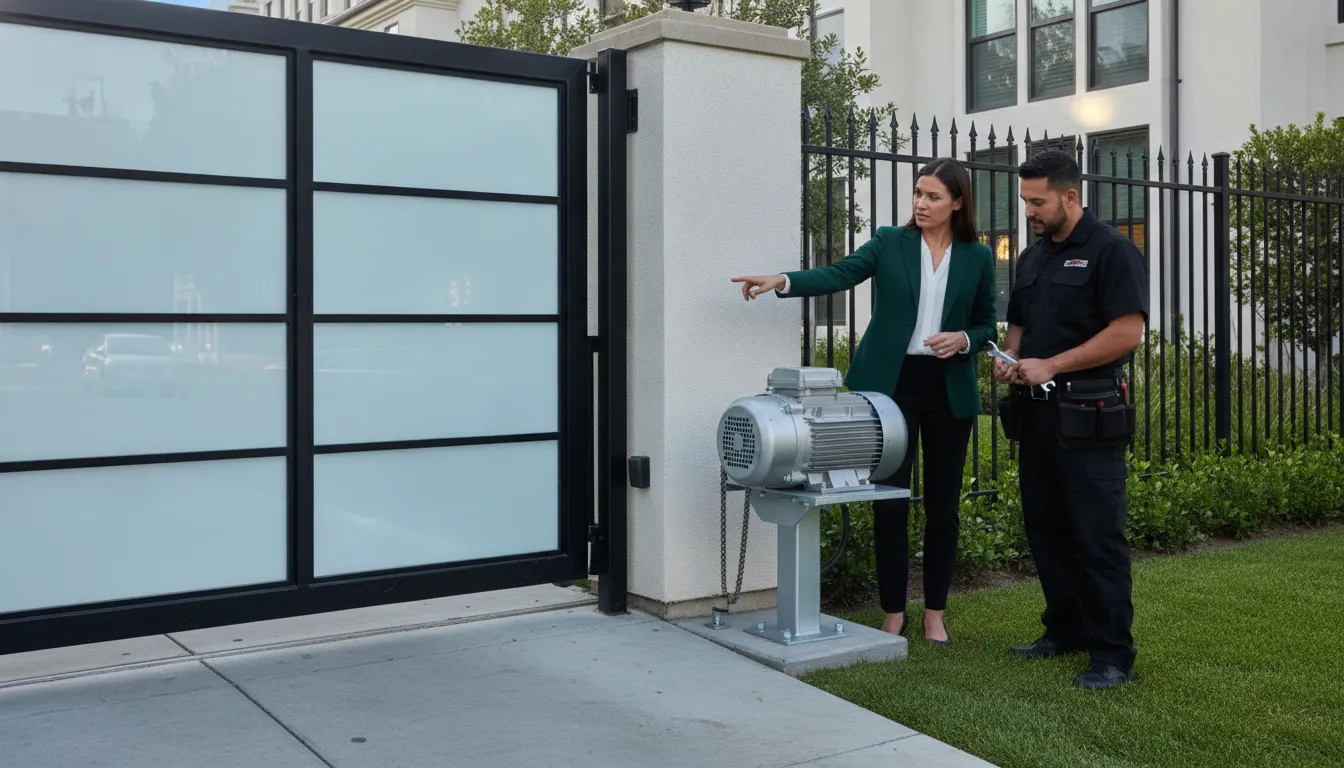
At a gated apartment community, one weak motor, sensor, or access-control component can affect residents, vendors, staff, and emergency personnel at the same entry. Reactive service may restore movement, but it does not give a property team a reliable way to track recurring wear across multiple entrances.
Electric gate maintenance programs help property managers plan inspections, document findings, and address developing equipment problems before they become disruptive access failures. The right scope depends on traffic, equipment, environmental exposure, and the conditions at each property.
For communities across Los Angeles and Orange County, a practical program should connect technician inspections with clear records. Access-continuity planning, and an escalation path when an operator or control system needs repair. That starts with understanding why planned service matters operationally.
Discuss a maintenance program for your apartment community with InteleGates.
Why Property Managers Need a Planned Gate Maintenance Program
For a gated apartment community, the entrance operator is part of the property's daily workflow. Residents need consistent vehicle access, vendors need a predictable way to enter for scheduled work. And management teams need visibility when an operator or access-control component begins to change. A recurring program gives those systems a defined place on the property calendar instead of leaving maintenance to the next complaint.
High-use communities place more cycles on motors, sensors, control boards, tracks, chains, wiring, keypads, telephone entry systems, and vehicle-detection loops. Environmental exposure and the condition of each installation also affect how equipment performs. That is why electric gate maintenance programs should be shaped around the site, its equipment, and its traffic patterns rather than copied from a generic checklist. InteleGates describes customized plans based on usage patterns and environmental conditions, which allows a property team to plan service around actual operating demands.
Regular inspection also creates an opportunity to identify developing problems while they are still easier to evaluate. Small changes in movement, unusual noise, inconsistent sensor response, or intermittent access-control behavior may be early signs that a system needs professional attention. The goal is not to replace equipment automatically. InteleGates diagnoses the problem before recommending replacement, so the property manager can understand what is happening and decide how to proceed with better information. A fire-district guide similarly emphasizes that emergency responders need dependable gate access to deliver prompt service. Read the emergency-access guidance.
Planned service should account for every entry that affects community operations. A main vehicle gate may have different demands from a resident-only entry, pedestrian access point, or service entrance. The program can track the operator, access-control equipment, observed condition, recommended follow-up, and the person responsible for coordinating the next step. This documented oversight helps property managers see recurring patterns across multiple entrances instead of treating each call as an isolated event.
Access management is part of the same operational picture. Reviewing gate access control systems can help teams consider resident credentials, visitor access, access logs, and backup or fail-safe planning alongside the mechanical operator. When inspection findings and access concerns are recorded together, vendors, residents, and emergency personnel are less likely to be affected by an avoidable interruption.
What Electric Gate Maintenance Programs Cover
A useful maintenance program looks beyond whether a gate opens when a resident presses a remote. It reviews the operator, safety devices, electrical components, access controls, and the records property managers need to plan follow-up work. The exact scope depends on equipment, traffic, environmental exposure, and site conditions.
For apartment communities, that broader view matters because one entry may serve residents, vendors, visitors, and emergency personnel. InteleGates supports sliding gates, swing gates, barrier arms, and vertical lift gates. Its maintenance service can include the following areas:
| Service area | Technician checks | Property-manager record |
|---|---|---|
| Motor and operator. | Operating cycle, unusual noise, response, operator condition, and final function. | Entry location, observed condition, and recommended follow-up. |
| Sensors and safety devices. | Photoelectric eyes, edge sensors, entrapment protection, calibration, and cleaning. | Devices tested, findings, and any escalation needed. |
| Control and power. | Control board, power supply, electrical connections, wiring, and signs of exposure or damage. | Component status, evidence of wear, and work-order priority. |
| Tracks, chains, and moving hardware. | Track or chain condition, alignment, rollers, sprockets, pulleys, brackets, and related wear. | Condition notes, service performed, and parts or repair recommendations. |
| Backup power. | Backup battery condition and system response when backup operation is relevant. | Battery status, access point, and next review item. |
| Access control and vehicle detection. | Telephone entry, intercoms, keypads, remotes, RFID or key cards, and vehicle-detection loops. | Entry method tested, user-impact notes, and access-control action items. |
The physical inspection may also include lubrication of appropriate moving components, component testing and cleaning, sensor calibration, software updates, and system optimization. These are technician-led services, not a checklist for residents or property staff to perform on their own. A documented visit should distinguish between a component that passed testing, a condition that needs monitoring, and a repair that needs to be scheduled.
Access-control testing deserves the same attention as the motor. A gate can move correctly while a telephone entry system, keypad, remote, or loop sensor creates an access problem. Reviewing these components together gives the property team a clearer picture of resident and vendor access across each entry. See the full electric gate system maintenance service scope for more detail.
How to Set Service Frequency for Multiple Gates
A maintenance schedule for an apartment community should reflect how each entry is used, not simply copy a calendar reminder from another property. A vehicle entrance serving hundreds of daily trips places different demands on its operator, sensors, and access controls than a secondary resident or pedestrian entry. Start by inventorying every gate, its operator type, the number of entries it serves, and the role it plays in daily operations.
Traffic volume is one of the clearest scheduling factors. High-cycle entrances used by residents, deliveries, vendors, and visitors may need closer observation than a lower-use gate. The number of entries also matters. A property with several vehicle gates, pedestrian gates. And access points needs a coordinated program that tracks condition across the entire system rather than treating one service visit as representative of every location.
Equipment age and condition should shape the plan as well. Older motors, control boards, power supplies, wiring, backup batteries, tracks, and chains may require more attention when their condition or service history indicates elevated risk. Operator type matters too. Chain-driven sliding systems and swing gate operators have different mechanical components and failure patterns. Barrier arms and vertical lift gates add another set of operating considerations. The schedule should follow the equipment actually installed at each entry.
Environmental exposure can accelerate wear. Dust, moisture, coastal air, heat, landscaping debris, and drainage conditions may affect moving components, sensors, electrical connections, and access-control equipment. A technician can use those site conditions, along with inspection findings, to adjust the scope and timing of recurring visits without inventing a one-size-fits-all interval.
Access-control complexity belongs in the same review. A gate using a keypad alone may require a different service focus from one coordinating telephone entry, intercoms, key cards, RFID, remotes, and vehicle-detection loops. Access logs, visitor activity, remote monitoring, and backup or fail-safe planning can help property teams identify which entries are most operationally important. See this automatic gate service schedule for additional scheduling considerations.
Finally, symptoms should move an entry out of a routine schedule and into professional evaluation. Slow movement, unusual noise, intermittent access, a gate that opens unexpectedly, or a keypad or telephone-entry system that stops working can signal a developing problem. InteleGates diagnoses the problem before recommending replacement, so service frequency and scope can be based on the actual condition of each system.
How Preventive Service Reduces Disruptive Gate Failures
For an apartment community, a gate problem rarely affects one person. A vehicle entry may serve residents, visitors, vendors, deliveries, and emergency personnel. A recurring service program gives a technician a chance to identify developing issues before they become a late-night access interruption. Regular inspections can catch problems while they are small, although no maintenance plan can guarantee that a failure will never occur. Service symptoms commonly include gates that will not open or close, unexpected movement, noise, and access-control faults.
Use early symptoms as escalation signals
A gate that opens periodically on its own needs professional attention, even if the behavior is intermittent. The same is true when an operator becomes louder than usual, struggles through part of its movement, or begins operating slowly. Those changes can point to an issue involving the operator, sensors, control components, wiring, track, chain, or another part of the system. A technician evaluates the complete operating sequence rather than treating the symptom in isolation.
Sensor interruptions deserve the same attention. Photoelectric eyes, edge sensors, and other entrapment-protection devices are part of a system that must be tested and inspected as equipment, not ignored because the gate eventually moves. A maintenance visit can also review power supplies, backup batteries, and vehicle-detection loops when those components affect consistent operation.
Include access control in the same service conversation
A gate may be mechanically sound while residents still cannot enter because a keypad, telephone-entry system, intercom, remote, or loop sensor is not responding. These failures create call volume and manual work for property staff. They can also disrupt vendor scheduling and visitor access. InteleGates supports access-control equipment such as keypads, telephone entry, intercoms, RFID, remotes, and vehicle-detection loops. The access device and the operator can therefore be evaluated as one connected system.
When a fault is found, InteleGates diagnoses the problem before recommending replacement. The objective is a durable resolution based on the actual cause, with appropriate components and final testing rather than a temporary workaround. For a problem that has already begun affecting entry or exit, property managers can request gate operator repair service and provide the observed symptoms, affected entry, and access-control behavior. That information helps the technician prioritize the evaluation without asking staff to perform repairs themselves.
Scheduling Maintenance Across an Apartment Community
A multi-entry property needs more than a recurring appointment on a calendar. Each vehicle gate, pedestrian entry, barrier arm, or telephone-entry point has its own traffic pattern, equipment condition, and access requirements. A practical schedule starts with a complete inventory, then assigns attention based on how each entry is used and what the property team needs to keep operating.
- Inventory every entry. Create a site list for each entrance and identify the operator, motor, sensors, control board, power supply, backup battery, track or chain, wiring, and access-control equipment. Record whether the entry uses a keypad, intercom, telephone entry, remote, key card, RFID, or vehicle-detection loop. This gives the technician and property manager a shared map instead of treating the community as one interchangeable system.
- Review access patterns before choosing dates. Note high-traffic entrances, delivery windows, resident move-ins, trash collection, and recurring vendor visits. Access logs, visitor access, remote monitoring, scalability, and backup or fail-safe operation are useful planning considerations for apartment communities. Property managers can also use key card access systems where controlled credentials make resident or staff access easier to organize.
- Coordinate resident, vendor, and technician access. Send clear notice through the property's normal communication channel, reserve access for vendors who need to enter, and identify a staff contact who can confirm entry conditions. If work affects a pedestrian route or vehicle entrance, plan an alternate access path before the visit. Do not close an entry without understanding how residents, deliveries, service providers, and emergency personnel will reach the property.
- Protect emergency access while work is scheduled. Emergency responders need dependable gate access to deliver prompt service. So the property team should confirm the planned operating state and any temporary access procedure with the appropriate local contacts. This is an operational coordination step, not a substitute for site-specific safety guidance or professional inspection. Source: fire-district guidance on dependable gate access.
- Record findings and assign follow-up. After each visit, document the entry inspected, date, equipment observed, tests completed, symptoms reported, recommended work, responsible owner, and follow-up status. Separate routine monitoring from issues that need technician escalation. Planned intervals and clear documentation help the property team spot recurring problems, coordinate approvals, and preserve continuity across multiple entries.
The right frequency depends on usage, environmental exposure, equipment condition, and site-specific demands. A service plan should be adjusted when traffic changes, an entry develops repeat symptoms, or access-control needs expand. InteleGates can assess the system and diagnose the problem before recommending replacement.
Records Property Managers Should Keep After Each Visit
A service visit should leave the property team with more than a work-order invoice. Keep a record that shows which entry was inspected, what the technician observed, what was tested, and what happens next. That history makes recurring electric gate maintenance programs easier to manage across a community with multiple vehicle and pedestrian access points.
Identify the entry and equipment
Start with the property name, entry or gate identifier, service date, and technician contact information. Record the equipment inspected at that location, such as the operator, motor, sensors, control board, power supply, backup battery, keypad, telephone entry system, remote receivers, or vehicle-detection loops. If a site has several similar entries, use consistent names and equipment labels so a manager can match the record to the correct access point later.
Document condition and testing
Note the observed condition, not just a pass or fail. The record can state whether the operator cycled normally, whether safety and access devices were tested. And whether there were signs of wear, damage, noise, slow movement, intermittent access, or wiring concerns. Include relevant photos or technician notes when they clarify the condition. Access logs, visitor access, remote monitoring, and backup operation may also be useful planning details for a property team overseeing gate access control systems, provided the record reflects what the property actually uses.
Assign actions and follow-up
Separate completed work from recommended work. List the action owner, priority, parts or approval that may be needed, and the follow-up status. A clear entry might show that the technician completed testing, the property manager owns an access-credential review, and a return visit is awaiting approval. InteleGates recommends planned intervals, operator-condition tracking, documentation, and escalation to qualified technicians as part of a maintenance approach. The purpose is continuity, not paperwork for its own sake.
One California municipal ordinance provides a useful general example of record fields, including inspection date, site address, property owner, inspector contact information, and inspector signature or stamp. That document is not Los Angeles or Orange County legal advice, and local requirements should be confirmed independently. Use it only as a prompt to make service records complete and easy to retrieve.
Choosing InteleGates for Electric Gate Maintenance Programs
For property managers in Los Angeles and Orange County, the right maintenance partner needs to understand more than the gate itself. A residential community may depend on several motors, sensors, control boards, keypads, telephone entry systems, remotes, and vehicle-detection loops working together. InteleGates focuses on the electric gate motors and electronic access-control equipment that keep resident, vendor, and property operations moving. The company serves apartment and multi-unit residential properties throughout the region, making local equipment knowledge and practical scheduling part of the service conversation.
InteleGates uses an owner-involved, technician-led service model. That gives property managers a direct path to experienced evaluation rather than a generic checklist disconnected from the equipment on site. The technician can review how each operator is being used, which access-control components affect daily entry, and where recurring symptoms may point to a larger system issue. A maintenance plan can then be shaped around site conditions, equipment type, traffic, and environmental exposure instead of forcing every property into the same program. The company outlines this approach through its electric gate maintenance service, with inspections and system care matched to how the property operates.
The scope can include sliding gates, swing gates, barrier arms, and vertical lift gates, along with the motors and supporting electronics that operate them. A visit may involve reviewing sensors, wiring, power supplies, control boards, backup batteries, chains, tracks, keypads, intercoms, telephone entry, or loop sensors. The goal is not to recommend a replacement simply because a system has become inconsistent. InteleGates diagnoses the problem before recommending replacement, so the property manager has a clearer basis for deciding what should be serviced, repaired, or replaced.
When repairs or component changes are appropriate, InteleGates emphasizes permanent solutions, authentic replacement components, and comprehensive final testing rather than temporary fixes. That approach matters in a community where an operator may appear to work during one visit but fail again under normal resident traffic. Testing should confirm the motor response, safety devices, access-control inputs, and related operating functions before the equipment is returned to service. InteleGates describes this professional operator diagnosis and repair work for the Los Angeles and Orange County area on its gate operator repair service page.
For managers comparing providers, the practical question is whether the partner can connect recurring maintenance to real operating conditions and document what the equipment needs. InteleGates brings that motor, operator, and access-control focus to planned service discussions without promising a fixed interval or one-size-fits-all result. To review the equipment at your property and discuss an appropriate maintenance approach, contact InteleGates.
Frequently Asked Questions
How often should an electric gate be serviced?
There is no single schedule for every apartment community. Service frequency should reflect traffic volume, the number of entrances, equipment age, environmental exposure, and the condition of the operator and access-control components. A technician can use service findings and recurring symptoms to shape a practical maintenance schedule for each property.
What problems should property managers report promptly?
Report gates that will not open or close, move slowly, stop unexpectedly, make unusual noise, or open without the expected command. Keypad, telephone-entry, remote-control, loop-sensor, and backup-battery problems also deserve attention because they can interrupt resident, vendor, or emergency access. Early diagnosis helps the property team plan the next step instead of waiting for a complete failure.
What does an electric gate maintenance program include?
A program may include inspection and testing of motors, sensors, control boards, power supplies, wiring, tracks, chains, backup batteries, and access-control equipment. Depending on the system, service can also include cleaning, calibration, lubrication of appropriate moving components, software updates, and final operational testing. The exact scope should match the equipment installed at each entry.
Can property managers handle gate maintenance themselves?
Property managers can track symptoms, access interruptions, service records, and changes in usage. Motor, electrical, sensor, and access-control work should be handled by a qualified technician rather than improvised on site. InteleGates diagnoses the problem before recommending replacement, then tests the system after service to confirm the planned work addressed the issue.
Ready to Plan Reliable Gate Maintenance?
A maintenance program can help your team organize service across multiple entries, document equipment conditions, and address developing operator or access-control issues before they disrupt daily operations. InteleGates can discuss the needs of your apartment community and the equipment already in place.
Contact InteleGates to discuss an electric gate maintenance program.