
Electric Gate Won’t Open or Close? What’s Stopping It
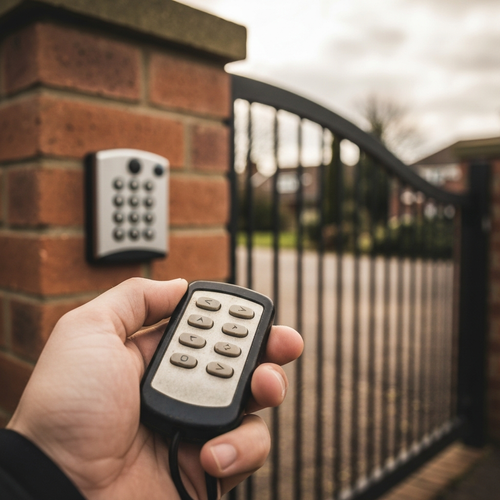
Quick Answer: An electric gate that won't open or close is usually stopped by one of a few things: no power (a tripped breaker, dead backup battery, or blown fuse), a remote or keypad problem, a blocked or misaligned safety photo-eye sensor, an obstruction or debris in the track, or a failed motor or control board. The gate often refuses to move to protect itself or whatever's in its path. Start with power and the safety sensors, since those cause most no-move problems, then call a gate technician for motor, board, or wiring faults.
You pull up to your gate, hit the remote, and nothing happens — no hum, no movement, just a gate sitting there while you're blocked in or out. An electric gate that won't open or close is more than an inconvenience; for a home, it's a control and access problem, and for a business or apartment complex, it can stop traffic entirely. The good news is that a gate has a short list of failure points, and the most common ones are quick to check before you assume the worst.
A Gate That Won't Move Has Lost Power, a Signal, or a Clear Path
An electric gate needs three things to operate: power to run the motor, a signal telling it to move, and a clear, unobstructed path to travel. Lose any one of those, and the gate stays put. Many gates are also built to refuse to move when their safety sensors detect something in the way — so a "dead" gate is sometimes a gate doing its job. That's why troubleshooting starts with the basics: is it getting power, is it getting the signal, and is something stopping it?
Start With Power
A Tripped Breaker, Blown Fuse, or Dead Backup Battery
The first thing to check is whether the gate has power at all. A tripped breaker, a blown fuse, or — for solar and battery-backed gates — a dead or failed battery will leave the gate completely unresponsive. Coastal power flickers and storms can trip breakers, and backup batteries wear out over time. Find the gate's breaker and reset it once; if the gate has a battery backup, a battery that's reached the end of its life is a very common reason an otherwise healthy gate suddenly won't move.
No Power From a Solar or Utility Source
If the opener runs on solar, dirty panels, shading, or a failed charge controller can starve it of power. If it's hardwired, a problem in the supply line cuts it off. A gate that's totally silent — no attempt to move, no clicking — points strongly toward a power problem rather than a mechanical one.
Then the Signal
A Remote or Keypad Problem
If the gate has power but won't respond to your remote or keypad, the issue may be the access device, not the gate. Dead remote batteries, a remote that's lost its programming, a keypad with a wiring or code issue, or a failed receiver can all break the signal. A quick test: try a different remote, the keypad, or a manual control. If one method works and another doesn't, you've found the culprit.
Then the Path and the Hardware
A Blocked or Misaligned Safety Sensor
Electric gates use safety sensors — photo-eyes — that stop the gate from closing on a vehicle, person, or pet. If something blocks the beam, the sensors are knocked out of alignment (common with daily traffic), or their lenses are dirty or fogged, the gate may refuse to close (or open) as a safety response. A blinking light on the sensor often signals the problem. Cleaning and realigning the photo-eyes resolves a large share of "won't close" calls.
An Obstruction or Debris in the Track
For sliding gates, especially, debris in the track — rocks, dirt, leaves, or a bent track section — physically blocks the gate or the rollers. The gate hits the resistance and stops to avoid damage. Coastal dust and grit build up in tracks over time, so a clogged track is a frequent cause of a sliding gate that won't travel.
A Failed Motor, Control Board, or Wiring
If power is good, the signal is reaching the opener, and the path is clear, but the gate still won't move, the problem is likely in the operator itself — a failed gate motor, a fried control board (often from a power surge or moisture intrusion in coastal air), or damaged wiring. These are internal faults that need a gate technician to diagnose and repair.
| What you find | Likely cause | First step |
|---|---|---|
| Gate totally silent, no response | No power — breaker, fuse, or battery | Check/reset power; test battery |
| Works on one control, not another | Remote, keypad, or receiver fault | Test each access method |
| Won't close, sensor light blinking | Blocked/misaligned photo-eye | Clean and realign sensors |
| Sliding gate stalls or grinds | Debris or damage in the track | Inspect and clear the track |
| Powered, signal good, still dead | Failed motor or control board | Call a gate technician |
Don't try to force an electric gate open or closed by hand while it's still powered and engaged, and don't disable the safety sensors to make it move. Gates are heavy and the operator carries real force; forcing one can damage the mechanism or injure you. If you need to move it manually, use the proper manual-release procedure for your gate.
What to Check Yourself and When to Call
A property owner or manager can safely handle the first-line checks: confirm the gate has power and reset the breaker once, test each access method (remote, keypad, manual control) to isolate a signal problem, clean and realign the safety sensors, and clear visible debris from a sliding gate's track. These resolve many no-move situations, especially power and sensor issues.
What needs a professional is anything inside the operator — the motor, the control board, the wiring — or a gate that's off its track, binding, or mechanically damaged. Those involve heavy components, electrical faults, and forces that make DIY risky. For a business, apartment, or gated community where the gate controls access for many people, a gate that's down is worth a prompt service call to restore secure access.
Frequently Asked Questions
Total silence — no movement, no clicking — usually points to a power problem. Check whether the breaker has tripped, a fuse has blown, or, on a solar or battery-backed gate, the backup battery has died. Coastal power flickers can trip breakers, and backup batteries wear out over time. If power is confirmed and the gate is still dead, the issue may be the control board or motor, which needs a technician.
When the gate has power but ignores the remote, the problem is usually in the signal path: dead remote batteries, a remote that lost its programming, a keypad fault, or a failed receiver. Test a different access method — another remote, the keypad, or a manual control. If one works and another doesn't, you've isolated the faulty device, which can often be reprogrammed, repaired, or replaced.
A gate that opens but won't close is often reacting to its safety sensors. The photo-eyes that prevent the gate from closing on something may be blocked, knocked out of alignment by traffic, or dirty, causing the gate to refuse to close as a safety measure. Check for a blinking sensor light, clean the lenses, and confirm the sensors are aimed at each other. Realigning them resolves many won't-close problems.
Yes. Sliding gates roll along a track, and debris such as rocks, dirt, leaves, or a bent section can block the gate or its rollers, causing it to stall or grind to a stop. Coastal dust and grit accumulate in tracks over time. Inspecting and clearing the track is a good DIY step; if the track is bent or damaged, or the rollers are worn, a technician should service it.
Only using the proper manual-release procedure for your specific gate, and with the operator disengaged. Electric gates are heavy, and their operators apply significant force, so forcing a powered, engaged gate by hand can damage it or cause injury. Most gates have a manual-release key or lever for power outages and emergencies. If you're unsure how to release yours safely, it's best to have a technician handle it.
Work Power, Signal, Then Path
An electric gate that won't open or close has lost one of the three things it needs: power, a signal, or a clear path. Start at the simplest end — check power and reset the breaker, test each access method, clean and realign the safety sensors, and clear the track. Those steps fix most no-move situations. If the gate has power, gets the signal, and has a clear path but still won't budge, the fault is in the motor, board, or wiring, and that's a technician's job. For any property where the gate controls access, getting it moving again quickly keeps people secure and traffic flowing.
Gate stuck open, closed, or completely dead? — Get fast diagnosis and repair from gate specialists who restore secure access. InteleGates Inc. serves Los Angeles, Long Beach, Anaheim. Call (833) 468-4283.
