
InteleGates Guide
Commercial Gate Automation in Los Angeles Guide
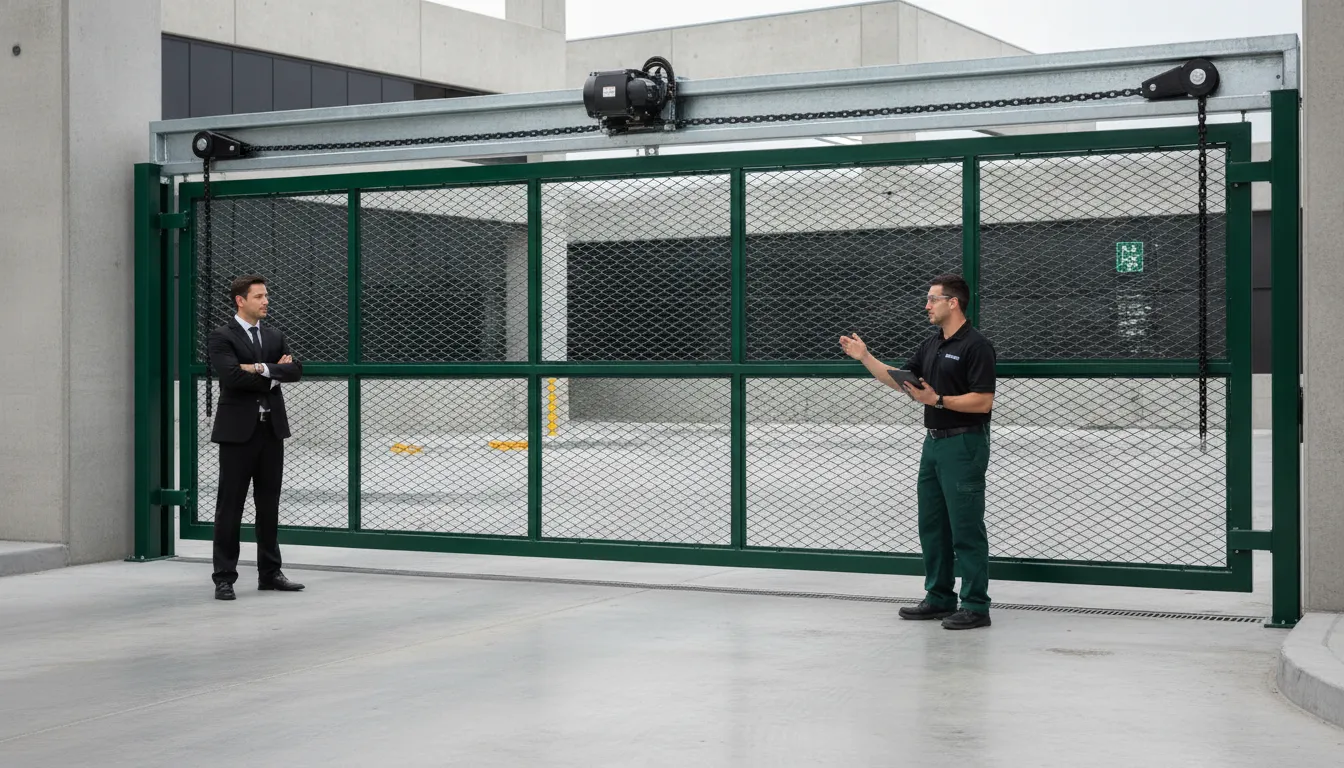
For a facility manager, an automated vehicle entrance is part of the daily operation, not a standalone piece of equipment. Parking structures, warehouses, and office properties may need dependable entry flow, coordinated access control, and a plan that limits disruption when the operator or motor needs service.
Talk with InteleGates about your commercial gate system.
Commercial gate automation in Los Angeles means matching the operator, vehicle flow, access method, and service plan to a property's actual demands. High-cycle traffic may call for a different arrangement than a residential driveway, while card readers, keypads, remotes, vehicle detection, or telephone entry must work with the gate system as one operating workflow.
InteleGates serves commercial properties across Los Angeles and Orange County from its Manhattan Beach base, providing electric gate motor and access-control installation, configuration, repair, and maintenance. The right starting point is a practical site assessment, followed by a closer look at how commercial equipment must handle traffic, controls, and continuity differently from residential systems. For broader context, review gate automation for Los Angeles properties before comparing those requirements.
What Separates Commercial Gate Automation from Residential Systems?
The main difference is not simply the size of the property. A commercial system has to support the way vehicles, employees, tenants, deliveries, and visitors move through the site throughout the operating day. A parking structure may have repeated entry and exit traffic, while a warehouse may need controlled access for staff vehicles, vendors, and scheduled deliveries. An office property may have different access rules for employees, visitors, and service providers.
Traffic flow shapes the equipment decision
Residential access is often organized around a small number of familiar users. Commercial gate automation must account for higher-cycle vehicle entry, changing traffic patterns, and the consequences of a queue at the entrance. The operator category, gate arrangement, vehicle detection, and control method should be evaluated together rather than selected from a generic equipment list. Sliding-gate and swing-gate operators may suit different site layouts, while barrier arms can serve vehicle lanes where the workflow calls for a clear open-and-close sequence.
Access control is part of the operating system
The motor cannot be planned separately from the way people are authorized to enter. Card readers, keypads, RFID, telephone entry, intercoms, remote controls, and vehicle detection may each fit different users and entry conditions. A facility manager should be able to explain who needs access, when access should be available, and how visitors or deliveries are handled. That information helps a technician coordinate the operator with the access-control system and test the complete sequence.
Continuity matters beyond the gate itself
When a commercial entry point is poorly configured or repeatedly unavailable, it can disrupt parking, deliveries, employee arrival, and tenant operations. A professional assessment considers the existing gate, motor, controls, and daily traffic before recommending a change. InteleGates provides electric gate system installation and related access-control service for commercial properties in Los Angeles and Orange County. The goal is a system that fits the facility's actual workflow, with configuration and testing that support dependable daily operation.
How High-Cycle Operators Fit Parking Structures and Warehouses
The operator category should follow the way vehicles move through the property, not the other way around. A parking structure may need controlled entry at a narrow lane, while a warehouse may need a wider opening that supports scheduled deliveries, employee access, and occasional service traffic. Sliding gates, swing gates, barrier arms, and vertical lift gates each create a different operating pattern.
Sliding and swing operators
A sliding gate can suit a property where the gate moves laterally along a defined line and the site has room for that travel path. A swing-gate operator may fit an entrance where the leaves can move through a clear arc without interfering with vehicles, pedestrians, walls, or loading activity. The existing gate, available clearance, grade, and traffic direction all affect whether either arrangement is appropriate.
Barrier arms for parking facilities
Barrier arms are commonly used at parking structures and controlled vehicle entrances because the arm regulates vehicle flow without closing a full gate across the lane. They can integrate with card readers, keypads, and remote controls, allowing the access method to match the property's users and operating schedule. See this guide to barrier-arm operators for commercial sites for more context on parking and commercial applications.
Vertical lift gates for constrained entrances
A vertical lift operator can be considered when the entrance does not provide a practical path for a sliding or swinging gate. Its suitability depends on the structure, clearance, vehicle path, and how the gate must be controlled. A warehouse or commercial facility may also have operational constraints that are not visible from the driveway alone, such as delivery sequencing or limited staging space.
That is why a site assessment is part of responsible equipment planning. InteleGates evaluates the existing gate and operator, access-control requirements, traffic movement, and available clearances before configuration and testing. The company provides site assessment, operator installation and configuration, access-control setup, and system testing for commercial properties. The goal is a system that fits the facility's actual workflow, with fewer surprises during daily operation.
Which Access Controls Work with Commercial Automated Gates?
The right access method depends on who needs to enter, how often they arrive, and whether the facility needs a record of each authorized vehicle or visitor. A parking structure may need fast, repeatable entry for assigned users, while a warehouse may need controlled access for employees, vendors, and scheduled deliveries. These workflows can use one method or several coordinated methods.
| Access method | Where it fits | Planning question |
|---|---|---|
| Keypad | Employee entrances, shared facilities, and locations where authorized users enter a code. | Who should receive access, and how will codes be managed when access changes? |
| Card reader or RFID | Parking structures, office properties, and repeat vehicle entry with assigned credentials. | Does the credential system need to coordinate with an existing access-control platform? |
| Telephone entry or intercom | Visitor entry, tenant communication, and sites where a person must approve access remotely. | Who answers entry calls, and how should approved visitors be identified? |
| Remote control | Designated staff, service personnel, and controlled entrances with a smaller user group. | How will remotes be assigned, tracked, and removed when personnel or vendors change? |
| Vehicle detection and loop sensors | Vehicle approaches and exit lanes where the system needs to detect a vehicle's position. | Where should detection occur to support orderly movement and reliable gate operation? |
Barrier arms can integrate with card readers, keypads, and remote controls, making them practical for controlled parking entrances. Other commercial automated gates may combine a keypad for staff, telephone entry for visitors, and vehicle detection for the lane itself. The important decision is not selecting a single popular device. It is matching the access workflow to the gate operator, lane layout, traffic pattern, and people responsible for approving entry.
Facility managers can review commercial gate access-control planning before defining the system requirements. For properties that need visitor communication, telephone entry systems for gate access may be part of the overall configuration.
InteleGates approaches the project through site assessment, access-control setup, configuration, and system testing. That process helps confirm that the selected method works with the existing gate motor and supports the way the property actually operates.
What Safety Planning Should Commercial Gate Operators Include?
Safety planning begins with the movement around the gate, not just the motor. A commercial site assessment should identify where vehicles queue, where pedestrians walk, how drivers see the opening, and what could happen if a vehicle stops beneath or near a moving gate. Parking structures, warehouses, and office properties may have different traffic patterns, so the operator, controls, and protective devices should be considered as one system.
Assess hazards before selecting controls
Vehicle detection and loop sensors can help the system recognize traffic in the operating area. InteleGates documents underground vehicle detection and loop sensors among its access-control offerings. Their suitability depends on the site layout and the intended entry workflow. Other planning questions include whether drivers have a clear view of the gate, whether lighting supports visibility, and whether the controlled movement is appropriate for the lane width and traffic direction.
Access methods also affect safe movement. Card readers, keypads, remote controls, telephone entry, and intercoms should be coordinated with the gate operator so authorization does not create confusing or unexpected movement. A facility plan should define who can initiate an opening, how the gate responds to a vehicle detection signal, and how staff will recognize an abnormal condition. These are design and configuration decisions for a qualified service provider, not DIY programming or repair tasks.
Use testing to verify the complete system
Testing should cover the operator, access controls, detection devices, travel path, and expected traffic sequence. InteleGates provides site assessment, operator installation and configuration, access-control setup, and system testing. A professional review can also identify visibility or operating conditions that were missed when the equipment was selected.
The U.S. Consumer Product Safety Commission explains that its staff participates in the UL Standards Technical Panel for ANSI/UL 325, which addresses safety for door, drapery, gate, louver, and window operators and systems. That source is useful background when discussing gate-operator safety standards. It does not by itself establish that a particular installation is certified or approved. Site-specific safety planning should remain grounded in the equipment, layout, controls, and testing documented for that property.
How Should a Facility Plan Commercial Gate Automation in Los Angeles?
- Document traffic and entry goals. Start with how the property operates, not with a preferred operator. Record the number and type of vehicle entrances, busy periods, delivery patterns, tenant or employee access, visitor handling, and any locations where vehicles must be detected before movement. Parking structures, warehouses, and office properties may need different entry workflows. The goal is dependable vehicle flow with minimal disruption to daily site operations. A clear operating brief also helps the service team evaluate whether a barrier arm, sliding-gate operator, swing-gate operator, or vertical lift arrangement fits the property.
- Inspect the existing gate and operator. Have a qualified technician assess the gate, motor, controls, wiring, access devices, and site conditions together. A malfunction does not automatically mean the operator should be replaced. InteleGates emphasizes diagnosing the problem before recommending replacement, which can identify a repair or configuration issue and clarify the condition of equipment already installed. The company services electric gate motors and access-control systems, rather than installing gates or fences themselves. For existing equipment concerns, review electric gate system repair and diagnostics as part of the planning process.
- Choose the access workflow. Match the control method to the people and vehicles using each entrance. Depending on the facility, the plan may include card readers, keypads, RFID, remote controls, telephone entry, intercoms, vehicle detection, or underground loop sensors. Barrier arm systems can integrate with card readers, keypads, and remote controls, but the correct arrangement depends on the traffic pattern and how access should be authorized. Define who can enter, how visitors are handled, and what happens when an access device is unavailable.
- Configure and test the complete system. Site assessment, operator configuration, access-control setup, and system testing should be treated as one project. Testing should cover normal entry, authorized and unauthorized access attempts, vehicle detection, control-device communication, and the way the system behaves during the site's actual traffic flow. This professional sequence helps uncover coordination problems before they interrupt operations.
- Plan ongoing service. Assign responsibility for reporting changes in operation and schedule professional reviews before minor issues become operational interruptions. InteleGates serves Los Angeles and Orange County, with more than 25 years of electric-gate industry experience represented by owner Ron Albert's direct involvement in communication and service. Review professional gate-system maintenance when building the facility's service plan.
Commercial Gate Automation Service and Maintenance for Los Angeles Properties
Commercial properties need service planning that reflects how the site actually operates. Parking structures, warehouses, and office properties may depend on consistent vehicle entry, coordinated access control, and minimal disruption during service. InteleGates provides electric gate motor and access-control service across Los Angeles and Orange County, with the company based in Manhattan Beach.
Diagnosis comes before replacement
When a commercial gate system stops working as expected, the first step is to identify the cause. InteleGates diagnoses the problem before recommending replacement, examining the operator, gate movement, controls, detection equipment, and the way those components interact. That approach helps facility managers distinguish an operator issue from an access-control or site-configuration issue. The goal is a clear service plan, not an automatic equipment change.
Service can include electric gate motors, access-control equipment, configuration, testing, and repair. InteleGates works on existing gates and gate systems. It does not install gates or fences. For facility managers, that distinction makes the project scope easier to define before scheduling work. The company can also coordinate with the property's entry requirements, including card readers, keypads, remote controls, telephone entry, intercoms, vehicle detection, and loop sensors.
Maintenance that fits the property
Professional maintenance should account for traffic patterns, entry workflows, operator condition, and access-control coordination. A site assessment gives the technician the information needed to check system operation and identify service priorities. Testing after configuration or repair confirms that the operator and related controls work together as intended. InteleGates recommends professional gate-system maintenance at least every six months.
Ron Albert brings more than 25 years of electric-gate industry experience and remains directly involved in customer communication and service. Facility teams can use electric gate system repair and diagnostics and professional gate-system maintenance resources when coordinating ongoing work for Los Angeles or Orange County properties.
Contact InteleGates to coordinate commercial gate service for your property.
Frequently Asked Questions
How does commercial gate automation differ from a residential system?
Commercial systems are planned around higher vehicle traffic, repeat entry cycles, and the operating needs of a parking structure, warehouse, or office property. The operator, access controls, vehicle detection, and safety equipment must work together without creating unnecessary disruption to daily site operations.
Which access controls can work with an automated commercial gate?
The appropriate access method depends on the entry workflow. Commercial sites may use keypads, card readers, RFID, telephone entry, intercoms, remote controls, or underground vehicle detection and loop sensors. A site assessment helps match the control method to traffic patterns, users, and how visitors or deliveries should be handled.
What does a commercial gate automation site assessment include?
A professional assessment reviews the existing gate, operator, entry layout, traffic flow, access-control requirements, and site conditions. The service plan can then address operator selection, configuration, access-control setup, testing, and coordination with the facility's operating schedule. Existing equipment should be diagnosed before replacement is recommended.
What does ongoing commercial gate maintenance cover?
Maintenance focuses on the electric gate motor, operator, access-control equipment, safety devices, and related operating conditions. Professional service can identify developing problems, verify system operation, and coordinate repairs or adjustments before a gate issue interferes with normal property access. InteleGates services electric gate systems and access controls, not gates or fences themselves.
Contact us about your commercial gate system
Facility managers need gate automation that fits vehicle flow, access-control needs, and the realities of an operating property. A conversation with InteleGates can help clarify the right assessment and service priorities for your site before equipment decisions are made.
Contact InteleGates to discuss a commercial gate automation assessment.